
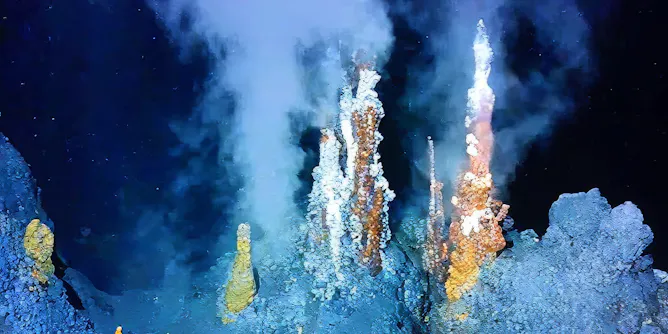
Deep oceans contain microbes with yet-to-be-discovered properties that could drive future innovations in biotechnology.
Articles on AlphaFold
Displaying all articles
While AI can streamline certain parts of the scientific process, a philosopher argues that it cannot replace human expertise and collaboration.
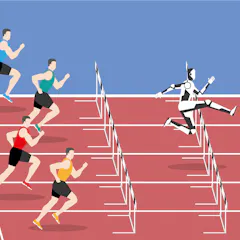
AI’s advantage over humans comes down to 4 dimensions: speed, scale, scope and sophistication. Whether AI can replace you depends on how much one or more of the S’s matter in what you do.
Neurosymbolic AI combines the learning of LLMs with teaching the machine formal rules that should make them more reliable and energy efficient.
‘Dual-use’ AI systems for scientific research might also help nefarious actors create chemical or biological weapons.
We’ve only just scratched the surface of what AI can achieve in science.
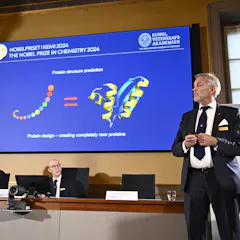
AI will feature in future Nobel prizes as scientists exploit the power of this technology for research.
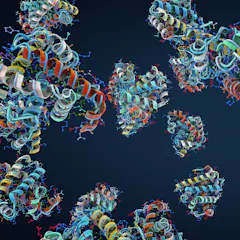
The prize honors innovation at Google DeepMind and in academia. Three researchers share the award for using machine learning to predict proteins’ 3D shapes and design the molecules from scratch.

Science has a need to verify results, but DeepMind’s protein prediction tool doesn’t work this way.
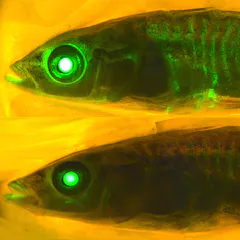
The AI AlphaFold can figure out the three-dimensional protein structure any string of amino acids will become. It has now exceeded its training by figuring out what makes some proteins glow.
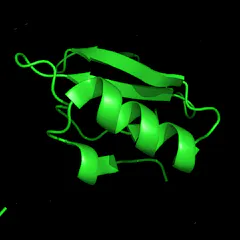
Scientists in an artificial intelligence lab have made a breakthrough in solving the problem of how proteins fold into their final three-dimensional shape. The work could speed up creation of drugs.
Top contributors
-

Professor of Chemistry, Connecticut College
-
Professor of Artificial Intelligence, University of Bath
-
Assistant Professor of Philosophy, University at Albany, State University of New York
-
2024 Biodefense Fellow at the Council on Strategic Risks and PhD Candidate in Biosecurity at the School of Population Health, UNSW
-
Associate Professor of Population Health, UNSW
-
Professor of Computer Science, City St George's, University of London
-
Affiliate, Berkman Klein Center for Internet & Society, Harvard University
-
Professor in Marine Microbiology, University of East Anglia
-
Adjunct Lecturer in Public Policy, Harvard Kennedy School; University of Toronto
-
Associate Tutor and PhD Candidate in Philosophy of Science, Manchester Metropolitan University