
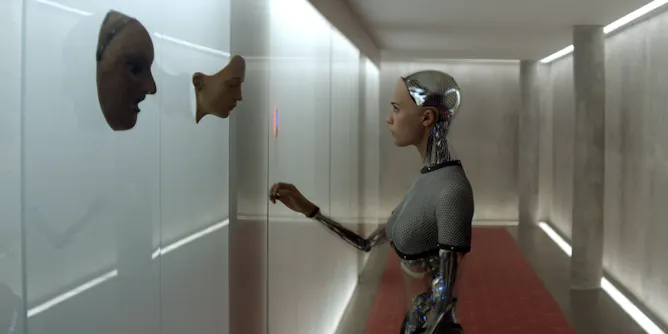
More than a decade after its release, the film Ex Machina has proven a insightful forerunner to current debates about AI.
Articles on AlphaGo
Displaying all articles
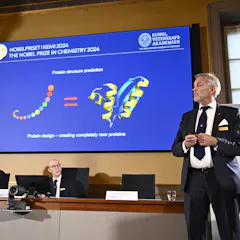
AI will feature in future Nobel prizes as scientists exploit the power of this technology for research.
The prize honors innovation at Google DeepMind and in academia. Three researchers share the award for using machine learning to predict proteins’ 3D shapes and design the molecules from scratch.
AlphaZero is a machine capable of defeating the most complex board games for the human mind, based only on its own learning experience, not on accumulated human knowledge.
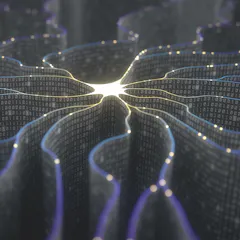
Machine learning is changing the world in ways that we are just beginning to appreciate. But could it change the way we do science and the reasons why we do science?

It’s time programmers looked out old computer text adventures like Zork and Colossal Cave from the 1970s and 1980s.

The history of human-machine collaboration suggests that AI will evolve into a “cognitive partner” to humankind rather than as all-powerful, all-knowing, labour replacing robots.
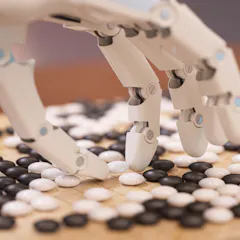
The new AlphaGo Zero artificial intelligence took just days to learn to play Go from scratch, with no human intervention. It even learned strategies never seen before in human play.
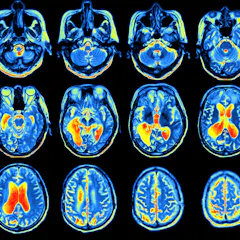
Computers today are fast and powerful but they still can’t think like a human when it comes to some tasks we find easy. That’s why tech companies are turning to neuroscience for help.

The artificial intelligence that beat a world master at the game of Go is now to be directed at more complex global problems. So what can we expect?
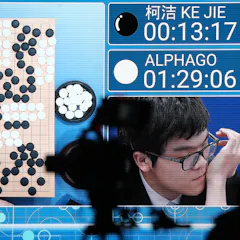
Google’s AlphaGo victory over the human world champion shows how far things have come since DeepBlue.
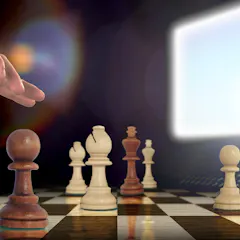
Twenty years after Deep Blue beat Garry Kasparov at chess, artificial intelligence can make games more fun, and perhaps even endlessly enjoyable, if it learns to adapt.
Several methods can teach an algorithm to learn. With more or less important datasets, which are or are not previously labeled and categorized.
Top contributors
-

Professor of Neuroscience and Mathematics, The University of Queensland
-
Professor in Computing and Information Systems, Edge Hill University
-
Associate research scientist Cambridge Judge Business School and lecturer GEM, GEM
-
Associate professor, University of Toronto
-
Head of the Marketing Innovation and Distribution Program at EMLV, Pôle Léonard de Vinci
-
Assistant Professor of Integrative Biology & Computer Science and Engineering, Michigan State University
-
Professor, Harvard University
-
Research Associate for Artificial Intelligence and Data Analytics, University of York
-
Full Professor in Management, PSB Paris School of Business
-
Doctoral Researcher, University of York
-
Senior Research Fellow, University of York
-
Professor of Chemistry, Connecticut College
-
Professor of Artificial Intelligence, University of Bath
-
Professor, ESCP Business School
-
Professor of Visual Culture, Birmingham City University