

The Australian government will temporarily suspend data-sharing regulations so Optus can work with banks and agencies to prevent identity theft.
Articles on Data security
Displaying 21 - 40 of 90 articles

An additional verification step can go a long way to protect your online stuff – but not all methods are equally safe.

If you’ve been affected by the Optus data breach, the danger is far from over – no matter what the purported hacker is claiming.

Up to 9.8 million Australians have been affected. Here’s what you can do to proactively defend yourself.

In the development of ever smarter homes, Amazon could soon have access to the maps of our houses created and stored by Roomba vacuums.

TikTok has admitted its Chinese employees have access to user data collected outside China.
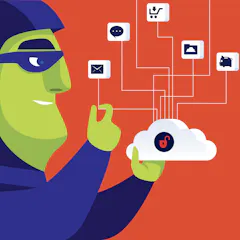
Cloud services are convenient, but if an organization isn’t careful about how it uses them, the services can also give data thieves an opening.
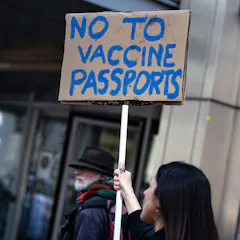
Vaccine passports can and have been used to increase surveillance by governments. Transparency and accountability are crucial for protecting the privacy of civilians.

Federal and state governments are turning to a facial recognition company to ensure that people accessing services are who they say they are. The move promises to cut down on fraud, but at what cost?

Creating and managing strong passwords is easier said than done. But it’s worth doing to protect your security online.

Ireland is under pressure to investigate, and potentially fine, Facebook for alleged data breaches under GDPR.
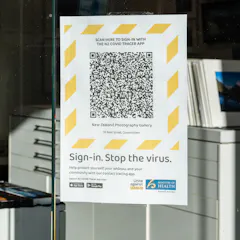
New Zealanders will travel more during the summer period and it is more important than ever to use the contact-tracing app to improve our chances of controlling any potential outbreaks.

Cyberattacks on Australian healthcare facilities are on the rise.

Manufacturers will increasingly track the products they sell to make recycling them more profitable.

Universities hold valuable information but are large and porous communities, with legacy IT systems often adding to the risks. But following a few basic rules can help counter cyber attacks.

For decades experts have puzzled over why most people claim to have privacy concerns, but few actually do enough about it.

Effective national leadership and trust in government appear to be prerequisites for countries to achieve widespread digital contact tracing.

Artificial intelligence insatiable data needs has encouraged the mass collection of personal data, placing privacy at risk. But AI can help solve the very problem it creates.

One bespoke contact tracing device is a bluetooth ‘pen’ device, which can be handed in if diagnosed without relying on smartphones.
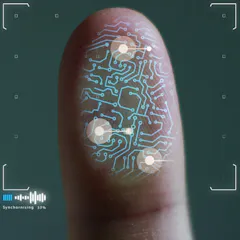
While the data from a fingerprint is very hard to retrieve, cybercriminals can get around biometric technology in various ways. And having a weak passcode is like giving them a hall pass.
Top contributors
-

Professor of Cyber Security Practice, Edith Cowan University
-
Associate Professor in Psychological Science, Western Sydney University
-
Professor of Cybersecurity, Head of School of Computer Science and Informatics, De Montfort University
-
Associate Professor in Cyber Security Studies, Macquarie University
-
Lecturer in Cyber Security Studies, Department of Security Studies and Criminology, Macquarie University
-
Researcher, Digital Wellbeing, Western Sydney University
-
Professor of Information Systems, Carnegie Mellon University
-
Reader, University of Glasgow
-
Head, The Cyber Academy, Edinburgh Napier University
-
Fellow of the Faculty of Engineering and Information Technology, University of Technology Sydney
-
Lecturer in Information Security, Governance and Leadership / Design Thinking, The University of Queensland
-
Honorary Senior Fellow, The University of Melbourne
-
Associate Professor at the School of Computing and Information Systems, The University of Melbourne
-
Assistant Professor of Computer Science and Electrical Engineering, University of Maryland, Baltimore County
-
Research Scientist, Networks Group, CSIRO