
Recent data breaches damaged trust in New Zealand’s health system. A new cyber security strategy must ensure stricter regulatory oversight and mandatory audits.
Articles on Data storage
Displaying 1 - 20 of 40 articles
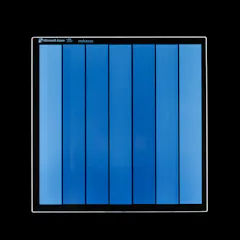
Researchers say a palm-sized piece of glass could store the equivalent of 2 million books for over 10,000 years.

Bunkers, bomb shelters, mines and mountains all play critical roles protecting against our latest existential threat: the terrifying prospect of data loss.
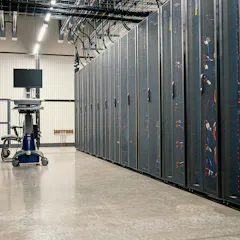
Stored data contributes to greenhouse gas emissions by needing power for servers and cooling systems.

Storing data in the cloud still comes with security risks. Researchers are developing new methods to address them.
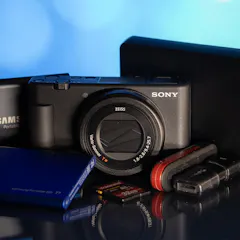
A media scholar and photographer walks you through the options for archiving all those photos you’re collecting on your phone.

Running out of disk space and it’s making you anxious?
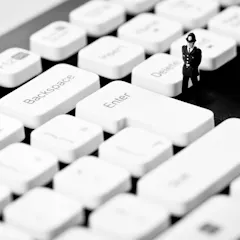
Just three big developers are being paid tens of millions of pounds to supply the majority of these UK systems.

The most effective solution is also the most radical.
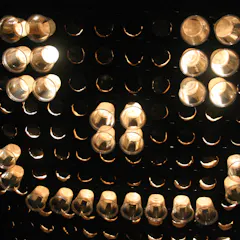
DNA has been storing vast amounts of biological information for billions of years. Researchers are working to harness DNA for archiving data. A new method uses light to simplify the process.

The growth in information production appears unstoppable.

Storing information using polymers could be more efficient than DNA data storage.
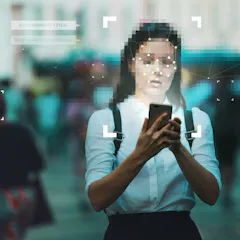
One bespoke contact tracing device is a bluetooth ‘pen’ device, which can be handed in if diagnosed without relying on smartphones.
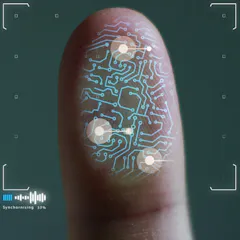
While the data from a fingerprint is very hard to retrieve, cybercriminals can get around biometric technology in various ways. And having a weak passcode is like giving them a hall pass.

A major cyber attack on a data lake could have immense consequences for any of us. And the damage could be felt anywhere from banking to the healthcare sector.

As billions more devices connect to the cloud, congestion will cause communication to become slower and less responsive.
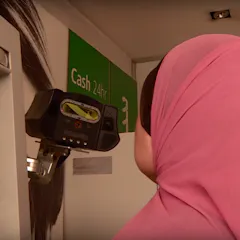
From eye-scanners to 3D printers, technology in humanitarian crises can be a positive force for disenfranchised people.

Technologies for accessing information need to be somehow future-proofed.
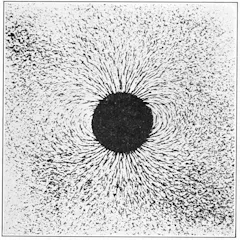
Work to develop a single-atom magnet that works at room temperature has just taken a big leap forward.
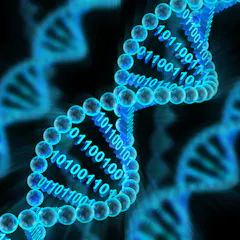
Researchers who hold the world record for storing and retrieving data in DNA explain how the building blocks of life can be used to hold digital information as well.
Top contributors
-

Fellow of the Faculty of Engineering and Information Technology, University of Technology Sydney
-
Professor, University of Manchester
-
Postdoctoral Associate in Physics, City College of New York
-
Associate Professor, School of Law, University of Canberra
-
Associate Professor, School of Engineering, RMIT University
-
Associate Professor, Melbourne Law School, The University of Melbourne
-
Principal Researcher in Computer Architecture, Microsoft Research; Affiliate Professor of Computer Science and Engineering, University of Washington
-
Lecturer in Software Engineering, Monash University
-
Associate Professor, School of Mathematical Sciences, Monash University
-
PhD candidate, Swinburne University of Technology
-
Associate Professor of Computer Science and Engineering, University of Washington
-
Teaching Assistant in Physics, City College of New York
-
Professor in Robotics, Queensland University of Technology
-
Senior lecturer in Fine Art, Nottingham Trent University
-
Lecturer, School of Electronics, Electrical Engineering and Computer Science, Queen's University Belfast