
Artificial data is possible – but comes with the risk of inbuilt bias..
Articles on Data ethics
Displaying 1 - 20 of 26 articles
Kiwis are using artificial intelligence in growing numbers, but trust is low. Could the push toward safer, more responsible AI offer NZ an economic opportunity?

Overseas experience suggests predictive tools can improve child protection, if used carefully. Should NZ reconsider its stance?

Some period trackers can import information from other apps and wearables, and data can be used by third parties, sometimes without app users’ consent.

Individualised notions of consent for data use do little to help societies seeking to address collective health crises and other community needs.
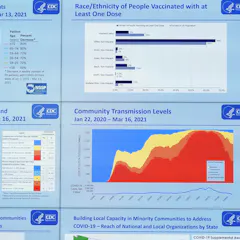
Governments can exclude certain groups of people in policies and services not only by the type of data they collect but also how they collect, store, analyze and use the data.
ChatGPT is fuelled by our intimate online histories. It’s trained on 300 billion words, yet users have no way of knowing which of their data it contains.

The terms of the Australian Privacy Principle 3.6 are quite clear. So why is there not a single published case of this law being enforced?

The Tim Hortons consumer app was found to have collected detailed user information, including location data. As a privacy violation, this challenges perception of Tim Hortons as a trusted brand.

A professor of digital society and an ethics researcher discuss COVID passes and what they mean for the UK.

Researchers are looking into the potential technological threats to data safety and privacy from the smart supermarkets of the future.
Have you ever been targeted with ads that are scarily specific to you, and wondered how the app or website could have known?

Many businesses struggle with data security, but the new Privacy Act means they will have to make protecting customers’ personal information a priority.
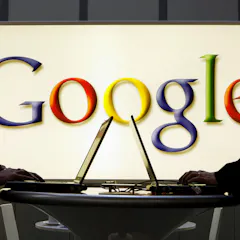
It’s the biggest monopolisation case since a 1998 lawsuit against Microsoft. But it may be several years before a settlement of any kind is reached.
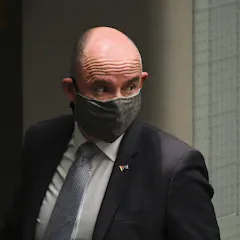
The new bill would open the gates for your data to freely exchange hands between any ‘accredited’ agency. The proposal is more arrogant than it is effective.

It’s not clear how individuals are being targeted. And while they’re mostly high-profile people, that doesn’t mean there’s no lesson for the average person to take away.

Technology is not neutral, as facial recognition algorithms and predictive policing have shown us. Algorithms discriminate by design, reflecting and reinforcing pre-existing biases.
In the past decade, the Australian government has commissioned data analytics projects worth more than A$200 million. We have little information about what they involved.
The watchdog has voiced concerns over the proposed US$2.1 billion merger, from which both users and Australian health services could lose out.

Most of us are probably having our data tracked in some form. And while there are regulatory safeguards in place to protect user privacy, it’s hard to say whether these are enough.
Top contributors
-

Associate Professor, Faculty of Law & Justice; Lead, UNSW Public Interest Law & Tech Initiative, UNSW
-
Associate Professor, School of Law, University of Canberra
-
Professor in Business Information Systems, University of Sydney
-
Professor in Cultural and Social Analysis, Western Sydney University
-
Full Professor, Criminology, L’Université d’Ottawa/University of Ottawa
-
Associate Professor, Information and Media Studies, Western University
-
Lecturer in Design Policy, Lancaster University
-
Assistant Professor of Governance, Utrecht University
-
Professor of Law and Co-Leader of The eQuality Project, L’Université d’Ottawa/University of Ottawa
-
Associate Professor of Public Affairs and Administration, Rutgers University - Newark
-
Senior Lecturer – Security, University of Sydney
-
Co-Director, Young and Resilient Research Centre/Professorial Research Fellow, Institute for Culture and Society, Western Sydney University
-
Adjunct professor, Carleton University
-
Professor of Digital Society, University of Sheffield
-
Research Associate, Frank Church Institute, Boise State University