

A common misconception is that deletion equals total erasure. This is largely wrong.
Articles on Data use
Displaying all articles

An economist explores the gender data bias behind credit scoring and borrowing money from the bank that excludes women worldwide, denying them the same economic rights as men.

The Canadian Data Rescue Project is supporting U.S. data rescue efforts, and setting up preventative measures for Canadian government data.

Individualised notions of consent for data use do little to help societies seeking to address collective health crises and other community needs.

Rental technology platforms force renters to pay for costly background checks, collect too much personal data and use opaque algorithms to ‘score’ applicants.

There are three key steps people can take to protect their data from big tech.
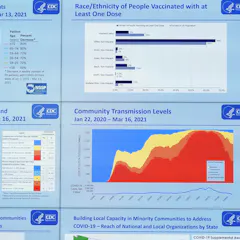
Governments can exclude certain groups of people in policies and services not only by the type of data they collect but also how they collect, store, analyze and use the data.

Spreadsheet-related errors can have serious consequences in the private and public sector. But what can we do to overcome them?

Transparency and accountability must be a priority to prevent discrimination.

An analysis of 12 popular apps’ privacy policies reveals a number of concerns, including confusing privacy messages and unnecessarily long data retention windows.

ChatGPT is fuelled by our intimate online histories. It’s trained on 300 billion words, yet users have no way of knowing which of their data it contains.

Serena Williams’s investment in a Nigerian digital company shows why the country’s technology sector is attractive.

A lack of data prevents governments and agri-food organizations from knowing what kinds of supports should be provided to reinvigorate Indigenous agricultural economies.

Researchers are looking into the potential technological threats to data safety and privacy from the smart supermarkets of the future.
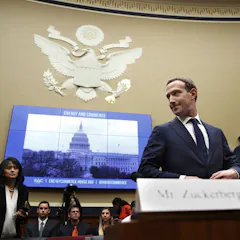
Pressure is mounting on Congress to take action on Facebook. Our panel of experts offers their top priorities: user control of data, banking-like oversight and resources to close the digital divide.

Profit-friendly data privacy laws in the U.S. are out of step with public sentiment and hinder uses the public supports, from reducing opioid overdose deaths to curbing the COVID-19 pandemic.
Top contributors
-

Assistant Professor, Department of Economics, University of Regina
-
Professor of Law, University of Washington
-
Senior Lecturer in Economics, Lancaster University Management School, Lancaster University
-
Professor in Business Information Systems, University of Sydney
-
Economist and Postgraduate Supervisor, University of Lancashire; Keele University
-
Associate Professor of Law, Legal Argumentation and Rhetoric, Texas A&M University
-
Professor, College of Agriculture and Bioresources, University of Saskatchewan
-
Associate Professor of Public Affairs and Administration, Rutgers University - Newark
-
Professor of Public Affairs and Administration, Rutgers University - Newark
-
Associate Professor, Faculty of Law & Justice; Lead, UNSW Public Interest Law & Tech Initiative, UNSW
-
Professor, Texas A&M University
-
Professor of Information Systems, Michigan State University
-
Assistant Professor of Governance, Utrecht University
-
Lecturer in Design Policy, Lancaster University
-
Assistant Professor of Public Health, Texas A&M University