

Commercial data centers have become critical infrastructure, supporting everything from financial transactions to government services. And critical infrastructure is often targeted in war.
Articles on Data centers
Displaying 21 - 40 of 50 articles
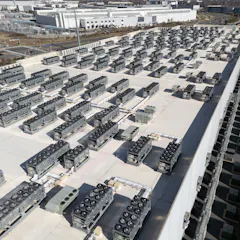
In Pennsylvania, new data centers could require enough electricity to power 11 million homes.

As AI data centers are added to Pennsylvania’s existing infrastructure, they bring the promise of economic growth − and a massive, 24/7 appetite for electricity.
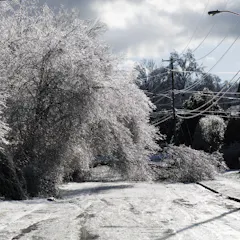
The government directed data centers to turn on backup generation in parts of the US. Expanding distributed generation could improve grid resilience.

Artificial intelligence systems have big environmental costs but are also finding ways to save energy and water, cut emissions and make businesses more efficient.
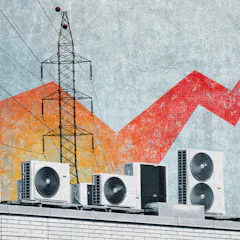
Energy projects are expensive and take a long time to build. Where to build them is often also a difficult, even controversial, question.
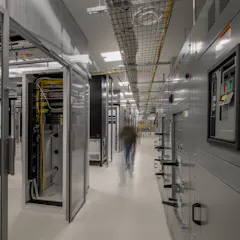
How many data centers will be built – and how much electricity they’ll need – is uncertain. Being prepared costs money, but so does being unprepared.

Google’s Project Suncatcher would need sophisticated collision avoidance capabilities to navigate a junk-filled landscape.
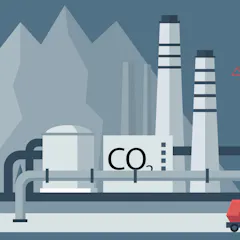
To reduce emissions put into the atmosphere, Google is using carbon capture and sequestration. But not all CCS projects are the same.
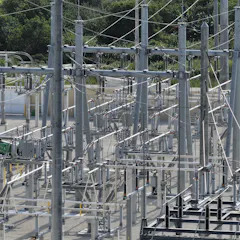
The equipment needed to keep the grid running is hard to make, and materials are limited. And supply-chain bottlenecks are taking years to clear.
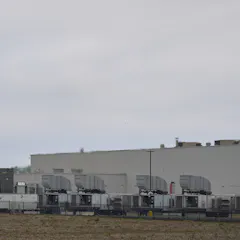
Analysis of the air quality data available for southwest Memphis finds that pollution has long been quite bad, but the turbines powering an xAI data center have not made it much worse.

AI’s burgeoning energy appetite is driving efforts to make more efficient computer chips. But chips are only part of the data center equation.

AI systems’ water usage can vary widely, depending on where and when the computer answering the query is running.
In 2024, one data center in Iowa consumed 1 billion gallons of water, enough to supply all the state’s residences with water for five days.
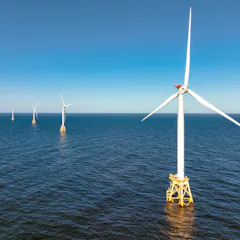
States take the lead on regulation of planning, site selection, leasing and other elements of offshore wind projects in the Great Lakes, though the federal government has a role as well.
Some technologies could rapidly cut emissions, while others do little to fight climate change. The House bill favors the latter while nixing support for the former.

If state regulators allow utilities to follow the standard approach of splitting the costs of new infrastructure among all consumers, the public will end up paying for data centers’ power.
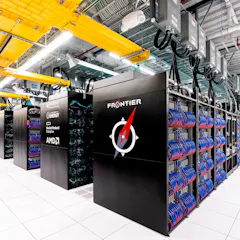
Today’s supercomputers are enormously powerful, but the work they do − running AI and tackling difficult science − is pushing them to their limits. Building bigger supercomputers won’t be easy.

When asked to suggest solutions for environmental challenges, chatbots reflected biases. This could have harmful effects on how we understand and communicate climate change.
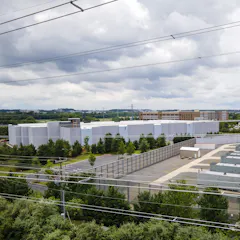
Utilities have options for addressing surging power demand from AI data centers, but there’s no silver bullet.
Top contributors
-

Adjunct Professor of Law, Penn State
-
Director of Energy Studies, University of Florida
-
Professor and Director of the Center for Water Policy, School of Freshwater Sciences, University of Wisconsin-Milwaukee
-
Professor of Management, University of North Carolina – Greensboro
-
Professor of Architectural Engineering, Penn State
-
Associate Professor of Economic Geography, University of South Carolina
-
Associate Professor of Computer Science, Boston University
-
Postdoctoral Fellow of Business, Georgia Institute of Technology
-
Professor of Mechanical Engineering, Georgia Institute of Technology
-
Head of Art and Design, University of Hertfordshire
-
Assistant Professor of Law, University of Dayton
-
Associate Professor in Musicology, University of Oslo
-
Professor of Strategy, Loughborough University
-
Postdoctoral Associate, Massachusetts Institute of Technology (MIT)
-
PhD Candidate, Università di Bologna