
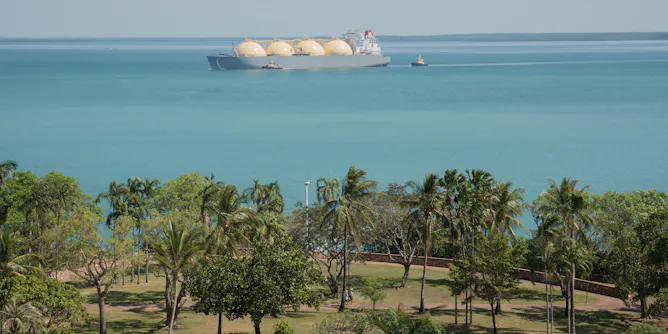
Giant gas companies are “hot venting” toxic gases known to be unsafe for humans at any concentration.
Articles on Darwin city
Displaying all articles
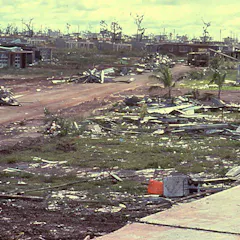
On Christmas Eve 1974, Tracy flattened Darwin, killing 66 people. The city is still at risk of cyclones, and not enough has been done to mitigate it.
The proposed Middle Arm industrial hub opens the door to serious environmental damage, and suffering for Indigenous and non-Indigenous people alike.
The project’s environmental credentials rely on highly speculative technologies, making Middle Arm a grand experiment with our climate.
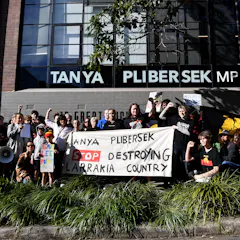
The Darwin woodland is home to endangered species and important for the Larrakia people. The development approval requires habitat offsets – yet the minister herself has publicly doubted offsets work.
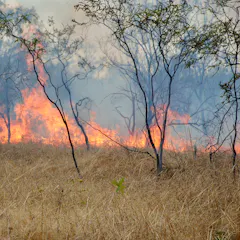
Savanna grasslands are burnt early in the dry season to reduce the chance of large fires later. But it’s making air pollution worse.

We asked young people aged five to 15 in Darwin about their sense of safety and what they worry about in their community. Here’s what they told us.

The rise of global cities, metropolises that dominate their states, is exposing Australia’s lack of metropolitan governments. It’s time to restart the evolution of our states after a century on hold.
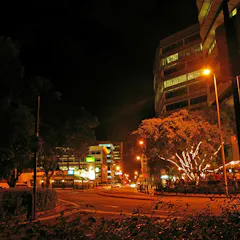
‘Smart cities’, featuring networks of automatic lights, video cameras and environmental sensors, have been hailed as an enhancement to urban life. But they are also tools of surveillance and control.
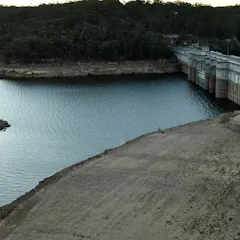
Australia’s capital cities have collectively lost 30% of their stored water over the last six years. But this loss is not evenly distributed across the country.
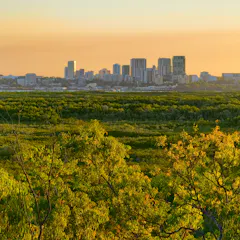
The government wants more people to live in Australia’s north. So we looked at three scenarios to increase the population and the results don’t always look good for the north.
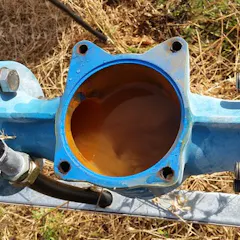
Many remote communities in Australia’s north rely on bore water. But a new microbiology analysis suggests that the chemistry of untreated water can allow disease-causing bacteria to grow unchecked.
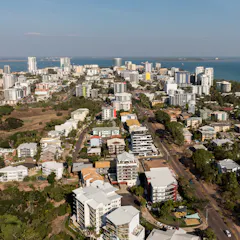
Because it happened within the Australian Plate rather than at a plate boundary, shockwaves from the quake travelled more efficiently to Darwin than to cities closer to the epicentre.
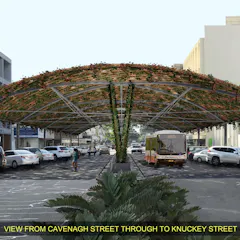
Darwin’s climate is getting even hotter and it’s one of the main reasons people leave the city. A lot more can be done, though, to make our tropical cities safe, cool and enjoyable.
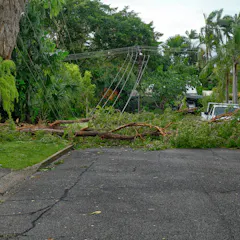
After Cyclone Tracy, you’d expect Darwin of all cities to be ready for the next one. But as the clean-up after Cyclone Marcus continues, it’s clear more must be done to increase the city’s resilience.
Top contributors
-

Professor of Health, Safety and Environment, School of Public Health and Social Work, Queensland University of Technology
-
Professor of Practice, School of Architecture and Built Environment, University of Newcastle
-
Associate Professor, Humanitarian, Emergency and Disaster Management Studies, Charles Darwin University
-
Senior Research Fellow, Northern Institute, Charles Darwin University
-
Senior Scientist in Disaster and Climate Risk at Earth Sciences NZ & Senior Research Fellow (adjunct), Humanitarian Emergency and Disaster Management, Charles Darwin University
-
Lecturer in Law, Swinburne University of Technology
-
Professor of Conservation Biology, Charles Darwin University
-
Larrakia Traditional Owner, Indigenous Knowledge
-
Senior Lecturer, Western Sydney University
-
Professor, Menzies Institute for Medical Research, University of Tasmania
-
Professor of Environment & Society, UNSW
-
Professor of Environmental Management, The University of Queensland
-
Senior Research Fellow (ARC DECRA), Emerging Technologies Research Lab, Faculty of Information Technology, Monash University
-
Research Fellow Emerging Technologies Research Lab, Monash University
-
Associate Professor in Environmental Science, Western Sydney University