
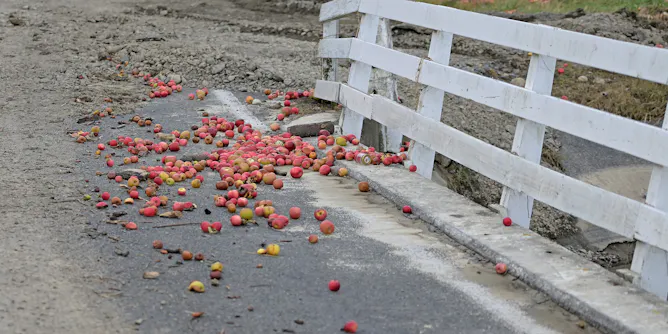
Horticulture underpins the local economy in areas devastated by Cyclone Gabrielle. Climate change may mean some parts of the region will become less suitable for crop production during this century.
Articles on Cyclone Gabrielle
Displaying 21 - 29 of 29 articles
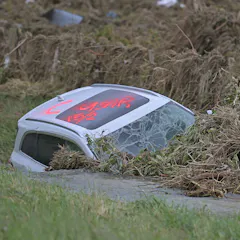
Building back better after disasters requires a lot of money, significant community involvement and a departure from the status quo.
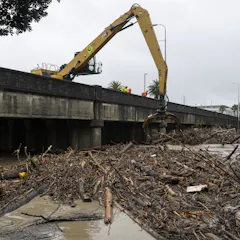
The devastation of Cyclone Gabrielle has left a significant scar on the land in Northland, the Coromandel and Hawkes Bay. But instead of replanting pine, we should return the land to native bush.
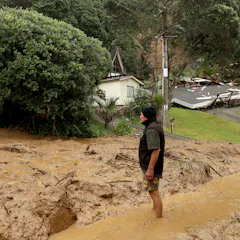
The beach community at Muriwai has experienced deadly landslide in the past, but houses were nevertheless allowed to be built on the debris of former slips.
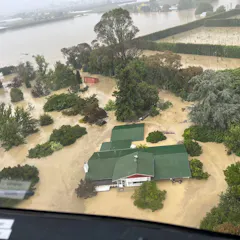
Australians are in New Zealand to help out in the aftermath of Cyclone Gabrielle. After multiple big floods in Australia, our neighbours have learned a lot about resilience in the face of disaster.
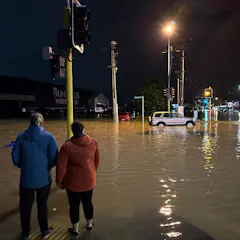
Flood and cyclone damage shows why turning Auckland and other urban parts of New Zealand into ‘sponge cities’ is the right idea. But overseas experience from China and beyond shows it won’t be cheap.
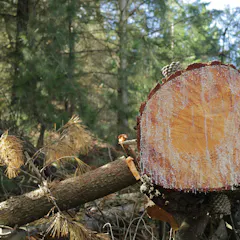
Radiata pine was originally a solution to land erosion – but this Number-8 wire fix is past its due date and the forestry industry will likely wear the cost of change.
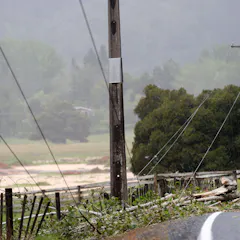
Underground power lines are safer, more resilient and less of an eyesore. The higher upfront cost will pay off in long-term benefits.
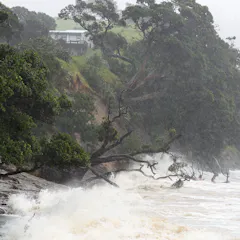
National electricity grids are vulnerable to extreme weather events and can leave entire regions without power. Microgrids can deliver better energy security in a warming world.
Top contributors
-

Senior Lecturer in Urban Planning, University of Auckland, Waipapa Taumata Rau
-
Professor of Applied Geology, University of Auckland, Waipapa Taumata Rau
-
Chair in the Economics of Disasters and Climate Change, Te Herenga Waka — Victoria University of Wellington
-
Professor of Construction Management, Auckland University of Technology
-
Associate Professor of Environmental Sciences, University of Nottingham
-
Professor of Agricultural Economics, Lincoln University, New Zealand
-
Deputy Dean of the Faculty of Design and Creative Technologies, Auckland University of Technology
-
Director of the Roy McKenzie Centre for the Study of Families and Children, Te Herenga Waka — Victoria University of Wellington
-
Professor and Chair in Sustainable Energy Systems, Te Herenga Waka — Victoria University of Wellington; Stellenbosch University
-
Executive Dean, Bond Business School, Bond University
-
Professor of Taxation and Commercial Law, Te Herenga Waka — Victoria University of Wellington
-
Emeritus professor, University of Canterbury
-
Professor of Marine Sciences, University of Auckland, Waipapa Taumata Rau
-
Associate professor, Te Kunenga ki Pūrehuroa – Massey University
-
Professor of Marine Science, University of Auckland, Waipapa Taumata Rau