

Teaching students skills such as creative thinking and problem solving will become part of the curriculum from 2017. But in order to assess these capabilities, teaching styles will have to change.
Articles on Curriculum
Displaying 101 - 120 of 168 articles
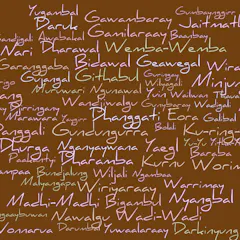
The government’s plan to prioritise the revival of Indigenous languages in New South Wales is a welcome first step. Truly achieving it will take several more.

Science that students learn in context - rather than science as isolated knowledge items - can deliver both scientific literacy and positive learner interest.

If researchers pose the right questions about transformation, this can lead to better answers, stronger policies and, ultimately, real change.

Research shows that many young Australians are not aware of appropriate boundaries in relationships. It’s important that children are informed by research rather than rhetoric.
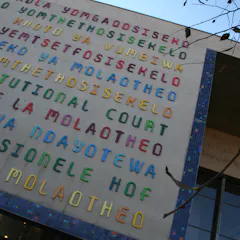
Universities pay too little attention to the knowledge and experiences that students bring to their institutions from different cultures and backgrounds.

Knowledge is power. If you own it, you can control those without it. Since so much knowledge about Africa doesn’t sit on the continent, it’s apparent that Africa lacks power in this regard.
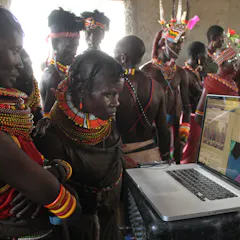
There is a need to isolate core African values and belief systems that define our identity and keep them in the education system.

Decolonising the curriculum is far more nuanced than replacing theorists and authors. Universities first need to define how they approach the development and dissemination of curricula.

The Scots thought their education system was world-beating, until the OECD started publishing rankings.
Having a set curriculum for academic courses is leading to poor learning outcomes in students, as students’ needs aren’t being catered to.
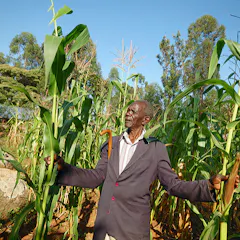
Decolonisation of the curriculum doesn’t have to mean the destruction of Western knowledge, but it’s decentring. Such knowledge should become one way of knowing rather than the only way.

Home-schooled children appear to do neither worse nor better than those who attend regular school, so why is there an increasing number of parents who are opting for their child to be educated at home?

Its critics complain that current Afrodiasporic literature is not in tune with everyday life on the continent. They see its versions of Africa as sanitised and Westernised.

There is a risk that because of fatigue, frustration and silencing the important moment created by South Africa’s student movements will pass by with no proper, long-term structural change.

Drawing can help us to think creatively and develop hand-eye coordination. But an insecurity around ‘not being able to draw’ is preventing many high-school students from using this skill.
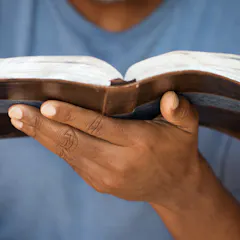
Curriculum transformation has to happen. But it has to go further than simply borrowing ideas and concepts.
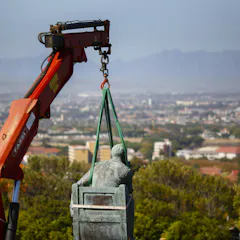
Calls for the decolonisation of countries, institutions, the mind and of knowledge are not new. In South Africa, these changes are crucial and long overdue. But they must be carefully thought through.

Closing the Office of Learning and Teaching removes Australia’s national commitment to innovation and improved performance in learning and teaching.

It’s no longer acceptable to upload video lectures to a website and call it a course. We need to start redesigning courses from scratch to find new ways to engage students.
Top contributors
-

Adjunct Professor, University of Technology Sydney
-
Senior Lecturer in Entrepreneurship, Consumer Studies and Technology Education, North-West University
-
Programme Leader, MA in Educational Assessment, UCL
-
Professor of Secondary Education, Faculty of Education, University of Alberta
-
Researcher in TESOL & Literacy, University of Notre Dame Australia
-
Associate Professor, Early Childhood Education, Queen's University, Ontario
-
Associate Professor, School of Education, Aarhus University
-
Campus and Secondary Principal at the International School of Geneva's La Grande Boissière, Research Associate at the University of Geneva's department of Education and Psychology, Université de Genève, Université de Genève
-
Emeritus Professor of Education, University of Derby
-
Professor, University of Cape Town
-
Emeritus professor, The University of Western Australia
-
Associate Professor in Sociology, Deakin University
-
Senior Lecturer in language education, University of Botswana
-
Course coordinator: Language in Humanities, University of Cape Town
-
Academic Development