

Going back to work at an office? An expert explains how the relatively cool temperature many offices are kept at may affect your body – and your health.
Articles on Curiosity
Displaying 21 - 40 of 53 articles

Van Leeuwenhoek, who discovered bacteria, is one of the most important figures in the history of medicine, laying the groundwork for today’s understanding of infectious disease.
Wi-Fi has become a fundamental part of modern digital life, but its foundation is the same as the technology that allowed your great-grandparents to listen to their favorite radio programs.
While the world is dealing with the biggest health emergency in more than a century, the way people have reacted to the crisis is familiar and predictable.

An electrical engineer explains how smoke detectors work, and how to reduce the chances of a false positive.
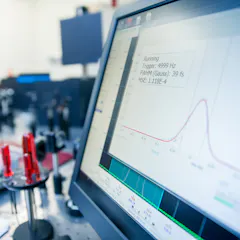
Whether you are predicting the outcome of an election or studying how effective a new drug is, there will always be some uncertainty. A margin of error is how statisticians measure that uncertainty.

You’re working out, feeling great – until your stomach starts to churn and you’re sidelined with a bout of nausea. Here’s what’s happening in your body and how to avoid this common effect of exercise.
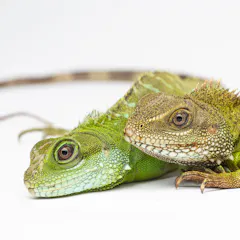
Parthenogenesis, a form of reproduction in which an egg develops into an embryo without being fertilized by sperm, might be more common than you realized.
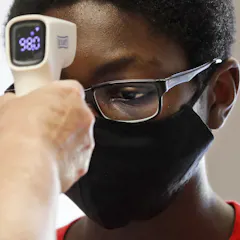
Sensors are everywhere, from your phone to your medicine cabinet. Here’s how they turn events in the physical world into words and numbers.

Archaeologists used to dig primarily at sites that were easy to find thanks to obvious visual clues. But technology – and listening to local people – plays a much bigger role now.
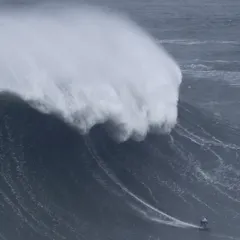
Some beaches in the world tend to consistently produce huge waves. Places like Nazaré Canyon in Portugal and Mavericks in California are famous for their waves because of the shape of the seafloor.
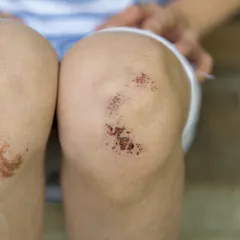
Healing is a complicated process. As people age, higher rates of disease and the fact that old cells lose the ability to divide slow this process down.
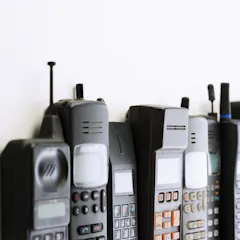
A professor of wireless communications explains the origins of cellular networks and how they evolved into today’s 5G networks.
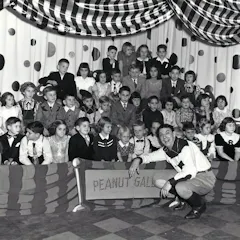
Remember the ‘peanut gallery’ from the ‘Howdy Doody’ show? That term, like many others we commonly use, has surprisingly controversial origins.
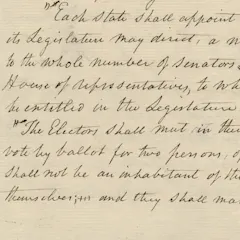
Three approaches were debated during the Constitutional Convention – election by Congress, selection by state legislatures and a popular election, though that was restricted to white landowning men.

A close look at how you decide what clothes to put on in the morning can help you understand how computers work.
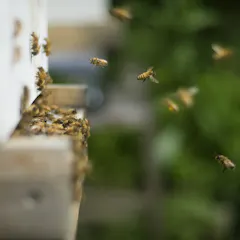
New research suggests individual bees are born with one of two learning styles – either curious or focused. Their genetic tendency has implications for how the hive works together.
What kind of curious are you? Scientists explore different types of curiosity and their home in the brain.
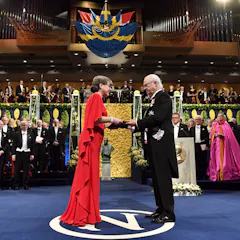
The winner of the 2018 Nobel Prize in physics says scientists shouldn’t feel pressured to do research that has economic or commercial ramifications. Science for the sake of science is more important.
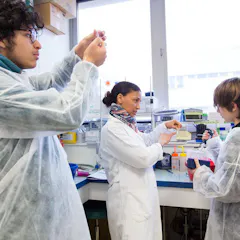
The 2018 edition of the EuroScience Open Festival is a great showcase for EU scientific collaboration.
Top contributors
-
 Kevin Orrman-Rossiter is a Friend of The Conversation.
Sterrenkenner, History & Philosophy of Science, The University of Melbourne
-
Professor, Department of Physics and Astronomy, University of Waterloo
-
Professor of Mathematics and Statistics, Smith College
-
Président, European Research Council
-
Professor of Pyrogeography and Fire Science, University of Tasmania
-
Scientist, Max Planck Institute for Solar System Research
-
Associate Professor in Archaeology and Space Studies, Flinders University
-
Associate Professor in Education & Technology, University of KwaZulu-Natal
-
PhD; Lawrence Berkeley Laboratory (retired) and Research Fellow, University of California, Davis
-
Senior Instrument Scientist, Australian Nuclear Science and Technology Organisation
-
Science Communicator and Media Producer, CQUniversity Australia
-
Professor in Earth Sciences, Nanyang Technological University, Singapore, and Emeritus Professor of Mineral Physics, University of Cambridge
-
Associate Professor of Philosophy, American University
-
Assistant Professor, University of Sussex
-
University of Waterloo