

A philosophy professor looks at the learning styles of different creatures to gain insight into curiosity among human beings.
Articles on Curiosity question
Displaying all articles

As many as two-thirds of couples do it.
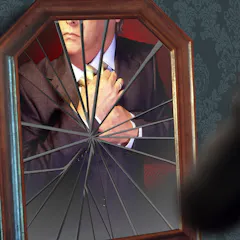
In both ancient Greece and the Roman Empire, reflected images were thought to hold mysterious powers. Damaging a mirror was believed to invite the wrath of the gods.

Going back to work at an office? An expert explains how the relatively cool temperature many offices are kept at may affect your body – and your health.

Neuroscientists tackling the age-old question of whether perceptions of color hold from one person to the next are coming up with some interesting answers.
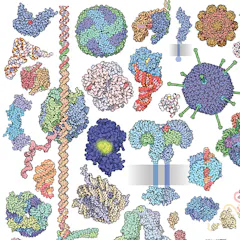
A biologist explains where proteins come from and what role the 20,000 or so proteins in your body play in keeping you alive and kicking.

An electrical engineer explains how smoke detectors work, and how to reduce the chances of a false positive.
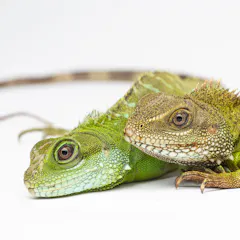
Parthenogenesis, a form of reproduction in which an egg develops into an embryo without being fertilized by sperm, might be more common than you realized.

Healing is a complicated process. As people age, higher rates of disease and the fact that old cells lose the ability to divide slow this process down.

Whether in the form of a discreet titter or a full-on roar, laughter comes with many benefits for physical and mental health.

A professor of wireless communications explains the origins of cellular networks and how they evolved into today’s 5G networks.

Hindu philosophy believes the soul to be immortal. Death is considered to be the end of only physical incarnation, as the soul continues its journey of multiple births until its final liberation.

Millions step into cathedrals and chapels on a regular basis. The history of these places of worship offers important insights into Christianity.
Top contributors
-

Associate Professor of Communication Sciences & Disorders, Oklahoma State University
-
Visiting Fellow in Sensation, Cognition & Action, National Institutes of Health
-
Assistant professor of electrical engineering, University of South Carolina
-
Ph.D. Student of Cognitive Science, University of California, Merced
-
Professor of Cognitive Psychology, Grinnell College
-
Distinguished Professor Emeritus of Sociology, University of South Carolina
-
Associate Professor of Philosophy, American University
-
Professor of Electrical Engineering, Arizona State University
-
Assistant Professor of Biological Sciences, University of Maryland, Baltimore County
-
Professor of Systems Science and Director, Clinical Science and Engineering Research Laboratory, Binghamton University, State University of New York
-
Associate Professor of Medicine, University of Pittsburgh
-
Assistant Professor of Biology, Clark University
-
Senior Investigator at the National Eye Institute, Section on Perception, Cognition, and Action, National Institutes of Health
-
Associate Professor of Religious Studies and Jewish Studies, University of Colorado Boulder