
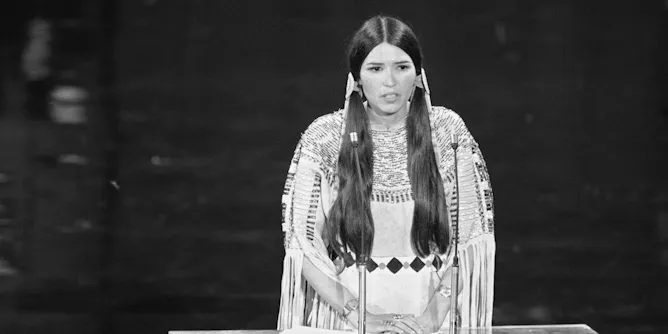
A new report disputes the heritage claims of Native American activist Sacheen Littlefeather. A scholar explains why scrutiny over alleged ethnic fraud is essential.
Articles on Cultural appropriation
Displaying 21 - 40 of 68 articles

Retailers run the risk of cultural appropriation when they commodify festivals from minority groups without acknowledging the religious context.
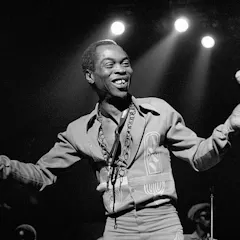
Nigeria’s Afrobeats stars love to identify with Fela’s activism and music - but their tributes are becoming opportunistic and empty.

Controversial South African band Die Antwoord illustrates the power relations that make cultural appropriation and blackface so damaging.

Jess Ho’s acerbic, sad, funny memoir of combines a compelling critique of the Melbourne food scene that became her family with memories of a traumatic childhood.

US sports teams aren’t the only ones who have used Native American imagery and are now changing their branding.

The creation of social media accounts based on fictional models raises pointed questions about race, representation and commodification.

It’s been in existence since the 1500s but the Kaaps language, synonymous with Cape Town, has never had a dictionary until now.
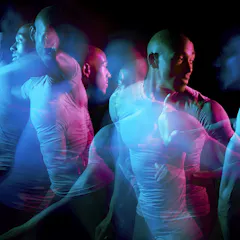
In choreography, the gray areas of copyright law make it difficult to determine what constitutes copyright infringement or plagiarism.
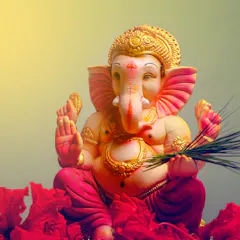
Hindu gods are not attractive images to be worn thoughtlessly.

From village healers to global brands, witches have long cast their spells over commercial transactions.

Few of those in the K-pop industry have donated or even spoken out in support of the Black Lives Matter movement.

The Hollywood actor’s controversial role in a perfume ad has drawn criticism for ‘cultural appropriation’. But it’s not as simple as that.

Opera companies around the world are grappling with an ever-widening gap between a repertoire frozen in time and an increasingly critical audience.
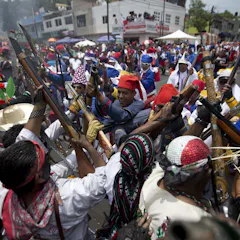
The holiday honors a 19th-century battle between the French and the Mexican armies that, strangely enough, may have influenced the outcome of the US Civil War.

Australian composers have long referenced Indigenous music and culture in their works. A new platform paper suggests a more collaborative way forward.

Some covers are recorded as a nod to the legacy of the original, only to end up becoming the definitive version of the song.
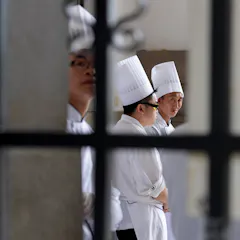
Who has the right to cook ‘ethnic’ food? And why do Western chefs tend to win all the top awards? The answer: it’s complicated.
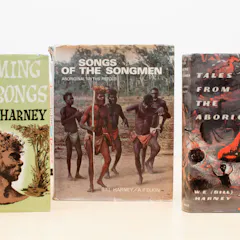
Non-Indigenous writers, if they wish to engage ethically with Indigenous culture, must learn to respect it as a form of property grounded in kinship and country.

Writing based on observation and empathy is one thing; but interviewing the people whose experiences you aim to depict - and showing them your work - is quite another.
Top contributors
-

Emeritus Distinguished Professor of Archaeology, Simon Fraser University
-
Associate Professor and Chair of Music, Colorado College
-
University of Cape Town
-
Professor of Critical and Cultural Theory and Head of the School of the Arts, University of Hull
-
Senior Lecturer, University of Tasmania
-
Associate Professor in Latin American Studies, University of Southampton
-
Professor of English, Flinders University
-
Senior Lecturer of Art History, Griffith University
-
Professor of Law, University of California, Irvine
-
Academic Associate, University of Exeter
-
Senior Lecturer in Creative Writing, University of New England
-
Lecturer, Cardiff University
-
Sessional teacher, RMIT University
-
Professor of Cultural Economy, City St George's, University of London
-
Teaching Assistant in English, Queen Mary University of London