
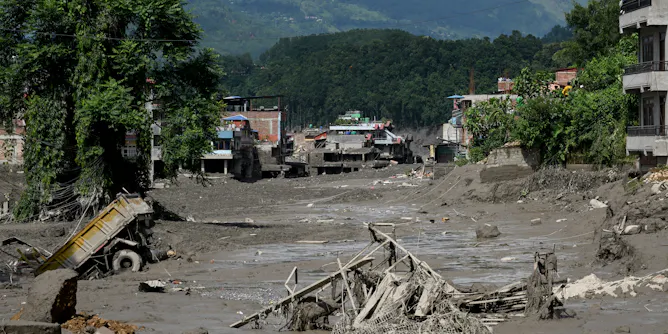
The glaciers of the Himalayas aren’t safe from climate change. The sudden collapse of a glacier looks to have triggered disaster in Nepal.
Articles on Cryosphere
Displaying all articles

They’re called rock glaciers, and they might not look like much, but they’ll continue to provide meltwater after the world’s iconic white glaciers are gone.
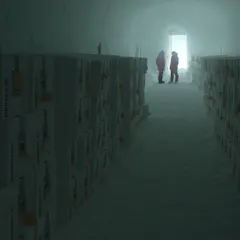
With an average temperature of -50°C, Antarctica’s first-ever 100% natural sanctuary protects endangered ice cores from global warming.
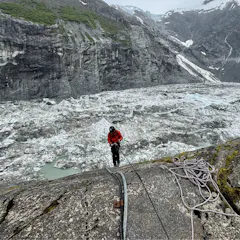
Suicide Basin, an ice-dammed lake on an arm of Mendenhall Glacier, has filled up with meltwater and sent destructive surges of water into Juneau for 3 straight summers.

When mountain permafrost thaws and glaciers melt, glacial lakes can become lethal flood risks for anyone downstream.
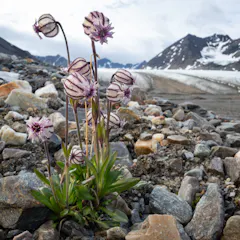
From the Arctic to the Himalayas, New Zealand and even Mexico, glaciers worldwide are retreating. But what happens when the ice is gone?
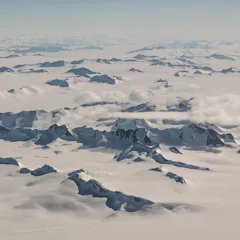
Scientists used satellites to map tens of thousands of glacial landforms in Antarctica’s highest mountains.
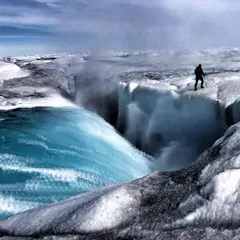
A field glaciologist explains the changes scientists are now seeing.
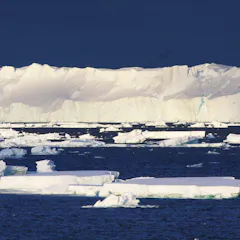
Antarctica’s ice shelves have helped insulate it from dangerous levels of ice loss. But this is changing.
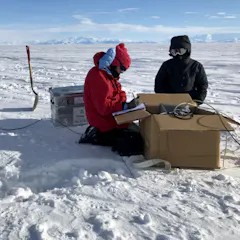
Liquid water below the ice determines how fast an ice stream flows. As the ice sheet gets thinner, more of that salty groundwater could rise.
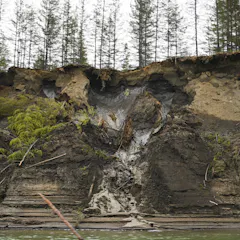
Ground is collapsing and massive lakes are draining in a matter of days. Thawing permafrost is having profound effects on the region and its infrastructure.

Glaciers in North America, Europe and the Andes, in particular, have significantly less ice than people realized.

Some of the climate changes will be irreversible for millennia. But some can be slowed and even stopped if countries quickly reduce their greenhouse gas emissions, including from burning fossil fuels.

The Laptev Sea is one of the Arctic’s biggest nurseries of new sea ice in winter, but Siberia’s record summer heat may have halted production.

Satellite research confirms its enormous ice sheet is melting faster than most scientists predicted.
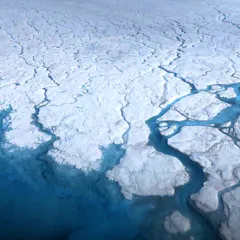
Climate change is causing oceans to become warmer and more acidic and to lose oxygen. Indonesian waters are not immune to these impacts.

More than 600 experts will spend the next year drifting in Arctic waters to gain a better understanding of how climate change is affecting the region and how it can be fought.
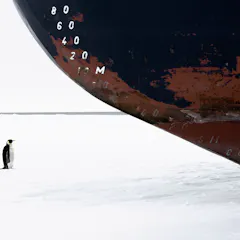
A new Intergovernmental Panel on Climate Change report makes clear human-induced climate change threatens the health and function of the ocean and cryosphere - the frozen regions of the Earth.

The UN body responsible for communicating the science of climate breakdown has released its long-awaited report on how we’re changing our ice and oceans. In a nutshell, the news isn’t good.
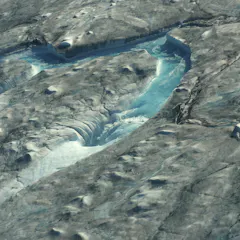
Studies show that the Arctic is heating up twice as fast as the rest of the planet.
Top contributors
-

Faculty Research Scientist, Institute of Arctic and Alpine Research, University of Colorado Boulder
-
Harold T. Stearns Professor of Earth Science, Wesleyan University
-
Research Fellow in Glacial Geomorphology, Monash University
-
Professor of Earth Sciences, Dartmouth College
-
Assistant Professor Environmental Studies, University of Colorado Boulder
-
Assistant Professor in Plant Biology & Geography, University of Illinois Urbana-Champaign
-
Professor of Earth Sciences, Rutgers University
-
Assistant Professor of Geophysics and Hydrologic Science and Engineering, Colorado School of Mines
-
Professor of Geography and the Environment, School of Geosciences, University of Aberdeen
-
Periset Iklim & Laut. Kepala Pusat Riset Laut Dalam BRIN., Badan Riset dan Inovasi Nasional (BRIN)
-
Postdoctoral Research Scientist in Geophysics, Scripps Institution of Oceanography, University of California, San Diego
-
Professor of Glaciology and Earth Observation, University of Bristol
-
Atmospheric scientist (PhD)
-
Professor of Earth Observation, University of Leeds
-
Reader, Manchester Metropolitan University