
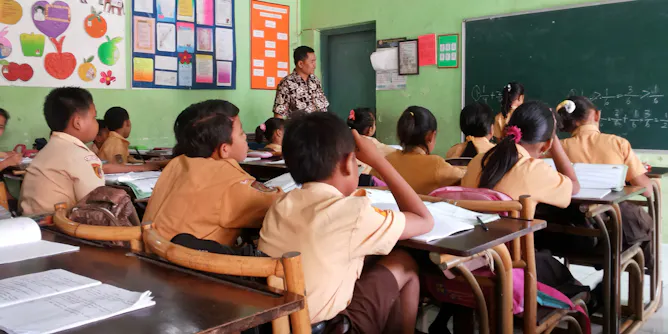
When teaching critical thinking, teachers still fall back on old habits ingrained in Indonesian education. This includes a culture of rote learning and “teaching to test”.
Articles on Critical thinking
Displaying 41 - 60 of 112 articles

We ought to want student essays to reflect understanding, judgment and caring, something beyond ChatGPT.

Answers are all the rage in the information age. However, to become wise we will need to learn to formulate better questions.

Though entrepreneurship of any kind is not easy, it can instil tenacity in the face of adversity. There are lessons here for trainee teachers.

What’s true and what’s not? An expert in media literacy explains how to evaluate information.

You can still tell the truth without ruining everyone’s Easter. Here are some tips.

As we observe with the war in Ukraine, humanities skills are crucial for understanding 21st-century problems.
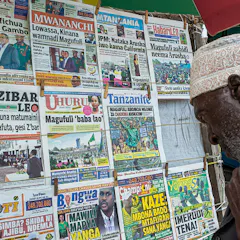
Today’s journalism students are less likely to find full-time jobs as professional journalists. The craft has become ‘post-industrial’, entrepreneurial and atypical.

Critical thinking means seeking out new information – especially facts that might run contrary to what you believe – and being willing to change your mind. And it’s a teachable skill.

Higher education in the US has been faulted for not requiring students to read and write enough. But is that criticism justified? New research raises doubts.
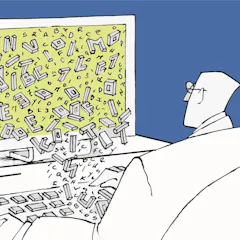
School teaches us to read a text carefully in order to understand it. But on the web, ignoring information is a survival skill.
From failing to consider the costs of not locking down, to underestimating the role of dumb luck in a pandemic, here are some critical thinking mistakes not to repeat in 2021.
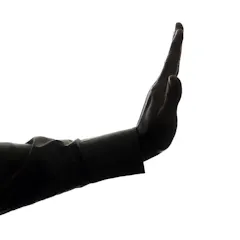
People tend to interpret things through a lens of their pre-existing beliefs. But they are not immune to changing their view, if you treat them with respect and understanding.

Tolerating inquiry is essential even if there are such things as questions no one should ask.
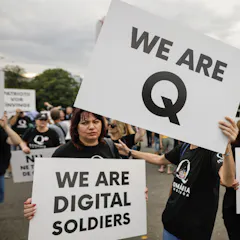
Combating conspiracy theories with correct information is not enough.

Before pilot Charles Taylor and company mysteriously vanished in the Bermuda Triangle in 1945, Taylor had to be rescued from the Pacific Ocean twice.
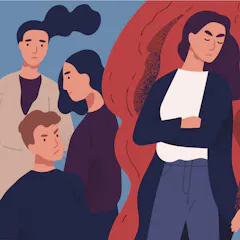
Gullibility, cynicism, pride, closed mindedness, negligence and wishful thinking. If you can use any of these to describe your reasoning, it’s likely you’re committing a sin of thought.

An academic should be able to use “I” in an essay which offers their point of view. In this way, they take responsibility for their argument.

Critical thinking is being taught successfully in schools and universities around the world. Studies show it improves students’ thinking ability and even their standardised test scores.
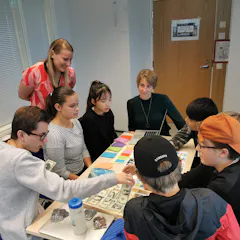
My year of buying almost nothing saved me thousands of dollars – but also taught me valuable lessons as a teacher, including about the benefits of failure.
Top contributors
-

Senior Lecturer in Philosophy and Education; Curriculum Director, UQ Critical Thinking Project, The University of Queensland
-
Associate professor, Cape Peninsula University of Technology
-
Senior lecturer, North-West University
-
Professor in Philosophy, Director of the University of Queensland Critical Thinking Project, The University of Queensland
-
Chancellor's Professor, Psychology, Carleton University
-
Professor Emerita of Linguistics, American University
-
Senior Lecturer Mathematics Education, Deakin University
-
Emeritus Professor of Education, University of Derby
-
Professor of Psychology, Biological Sciences and Environmental Studies, USC Dornsife College of Letters, Arts and Sciences
-
Senior Lecturer in Bioethics, The EthicsLab, Department of Medicine, Faculty of Health Sciences, University of Cape Town
-
Professor, Faculty of Education and Arts, Australian Catholic University
-
Professor of Education, University of British Columbia
-
Senior Lecturer, Australian National Centre for the Public Awareness of Science, Australian National University
-
Doctoral Trainee in Digital Civics, Newcastle University
-
Assistant Director of the Adult Literacy Research Center, Georgia State University