
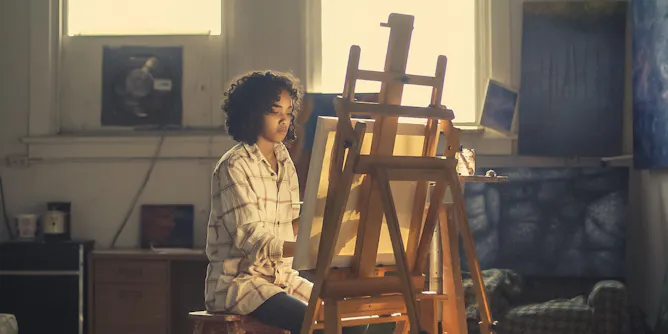
LinkedIn called creativity ‘the most important skill in the world’ – it should be central to Labor’s jobs summit.
Articles on Creative industries
Displaying 21 - 40 of 71 articles
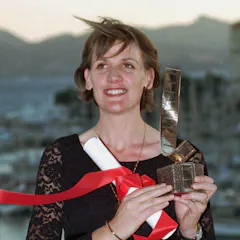
Shirley Barrett burst onto the international scene when her debut film, Love Serenade won the Caméra d’Or at Cannes Film Festival.
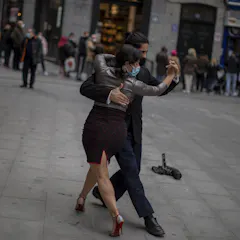
Governments, universities and creative companies that have experienced growth in the pandemic should play a role in long-term collaborative strategies to support artists and small arts companies.

Lots of creatives will struggle to qualify for the next round of government job support.

Fewer books will be available to South Africans, and the books remaining under copyright will be more expensive, if the country gives in to US pressure to extend its copyright term.

A survey of creative businesses in Wales reveals concern over labour force, red tape and access to European markets and funding sources.

From 2000 to 2013, less than a third of gendered pronouns within articles (for example, ‘he’ and ‘she’) referred to women.

A project to protect producers from food fraud by verifying and promoting the provenance of the region’s beef exports to China turned out to be a source of creative work in the region as well.

Since 2017, only 13% of full-length works by Australia’s major dance companies have been choreographed by women.

The federal government should set the country on an innovation path that takes account of where some of the strongest job growth is occurring.

A new project documents who uses urban industrial lands slated for redevelopment. It reveals a vibrant but largely hidden sector at the interface between creative industries and small manufacturing.

The notion of the creative sector driving fulfilling work as cities shed old industries has worn thin. But those creatives might be delivering value of a different kind, offering a more human future.

A comparison of 36 Australian cities finds that, unlike Europe, the data on their creativity and culture are not closely linked to their capacity to generate economic value and social well-being.

The digital pin-ups’ business models actually inhibit serendipity and, indeed, innovation by absorbing entire markets into the sealed-off space of their platforms.

The corporate world has taken the lead in promoting various creative/smart city visions, which struggle to be inclusive, let alone entrust citizens with control over their lives.
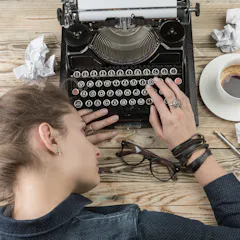
Writers like Frank Moorhouse and Ben Eltham have proposed new long-term fellowships to support writing. But a better way may be more smaller grants, offering opportunities for travel.

The defining characteristics of our species will make us and our labour relevant in a new era.
When municipal or state governments join forces with smaller creative communities to shape urban regeneration the results can be far-reaching.
Cities seeking to attract creative industries have relied heavily on the cluster concept. New research suggests a technology-driven transformation of how the sector works calls for a new approach.
The Productivity Commission’s draft report on Australia’s intellectual property system is good. Shame it is likely to be still-born.
Top contributors
-

Professor of Cultural Economy, Adelaide University
-
Distinguished Professor of Media and Communication, Queensland University of Technology
-
Professor and Associate Dean, Research & Innovation, RMIT University
-
Professor & Dean, School of Media and Communication, RMIT University
-
Emeritus Professor of Innovation, University of Technology Sydney
-
Research Associate, Jetty Project, Newcastle University
-
Senior Lecturer in Planning, The University of Queensland
-
Professor, Faculty of Design and Society, University of Technology Sydney
-
Senior Lecturer in Communications and Media, Monash University
-
Associate Professor, University of Canberra, Stockholm Environment Institute
-
Jack E. Brown Professor of Law, Arizona State University
-
Lecturer in Management, SPRU, University of Sussex Business School, University of Sussex
-
Professor and Director of Urban Planning & Design, Monash University
-
Australian Laureate Fellow, University of Sydney
-
Professor of Art History and Museum Studies, School of Fine Art, History of Art and Cultural Studies, University of Leeds