
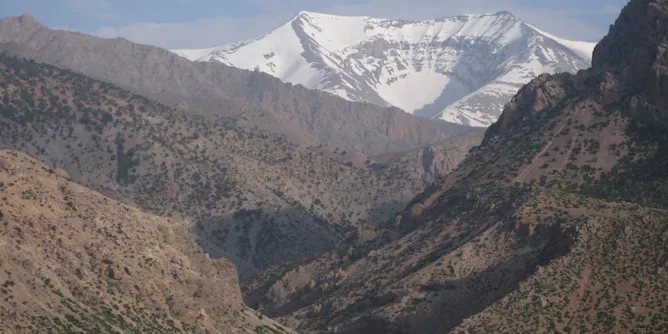
Africa has some of the world’s most important geological landscapes, yet they remain under-represented in digital geoheritage research.
Articles on Craters
Displaying 1 - 20 of 27 articles
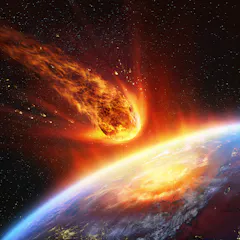
The oldest known impact structure on Earth has been confirmed in outback Australia.
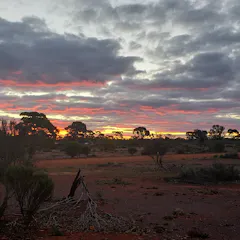
Here’s what happens when a rock from space smashes into a goldfield.
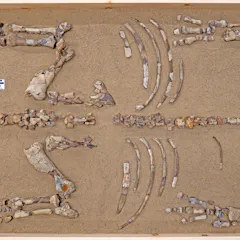
Remains of an ancient Arctic rhino indicate that land mammals traversed the North Atlantic via land bridges, and did so much more recently than previously thought.
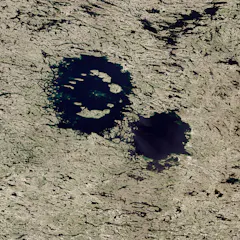
Cubic zirconia, a popular diamond substitute, only occurs naturally under extreme conditions. Finding cubic zirconia in craters reveals parts of the Earth’s history.
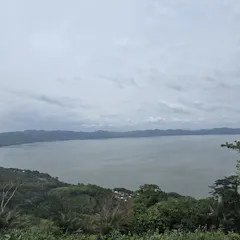
The activities of illegal miners are a threat to the sustainability of the crater.
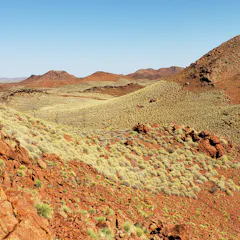
Scientists thought this crater in Australia was the world’s oldest – but an independent analysis shows they might be off by 800 million years.
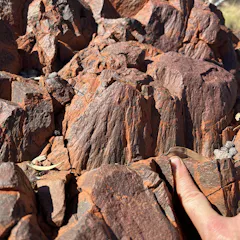
The crater dates back 3.5 billion years, making it the oldest known by more than a billion years.
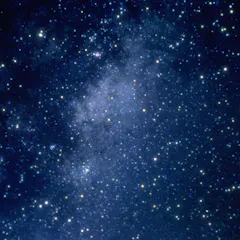
Measuring the ages of planets and stars is tricky. An observational astrophysicist describes the subtle clues that provide good estimates for how old different space objects are.
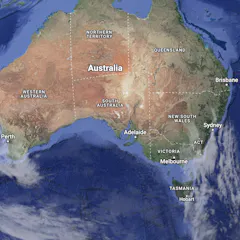
Research on the Deniliquin structure points to an asteroid impact that would have been more than double the scale of the one that killed the dinosaurs.
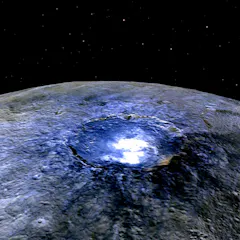
If we could go sightseeing across our cosmic neighbourhood, these would be some of the best highlights.
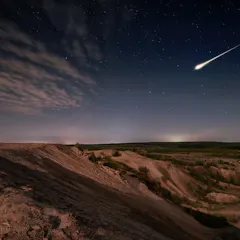
Studying impact craters can broaden our understanding of the Earth’s evolution and life, as well as its possible future.
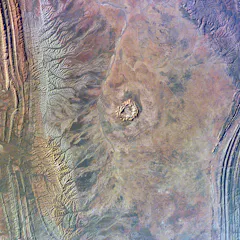
Meteor impacts are an inevitable part of being a rocky planet in space. The craters they leave behind are a window into the tumultuous history of Earth.

Tiny glass droplets found on the Moon show Earth and its satellite have been hit by ‘waves’ of asteroid impacts in the past.

Across the solar system, asteroids and comets crash into moons and planets every day. The rocket collision will provide researchers with important data on how these collisions work.
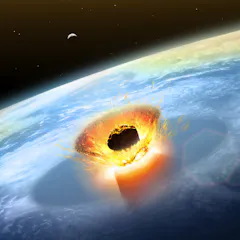
Impact craters are relatively shallow, so these bowl-shaped “dents” in Earth’s rocky crust can be easily buried or erased by erosion.
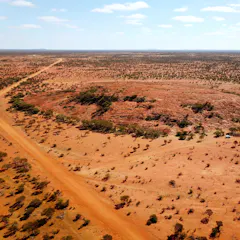
The Yarrabubba asteroid landed 2.2 billion years ago. Around the same time, the icy Earth went through a big thaw.
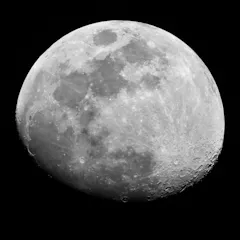
The Apollo missions to the Moon helped our understanding of the cosmic origin of craters on our lunar neighbour, and here on Earth.
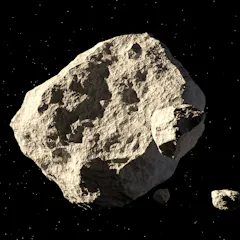
Asteroids have played a key role in our history and will continue to do so in the future.
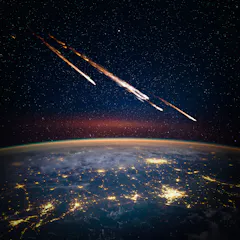
Meteorites might look like boring bits of rock – but each one has a fascinating story.
Top contributors
-

Senior Lecturer, School of Earth and Planetary Sciences, Curtin University
-
Professor of Geochronology, Curtin University
-
ARC Future Fellow, School of Earth and Planetary Sciences, Curtin University
-
Adjunct professor, UNSW
-
Senior Beamline Scientist - Powder Diffraction, Australian Nuclear Science and Technology Organisation
-
Visting Research Associate, School of Earth and Planetary Sciences, Curtin University
-
Director of Science & Engagement, The Geological Society of London, and Honorary Lecturer, Imperial College London
-
Lecturer in Earth Sciences, The Open University
-
Senior Lecturer in Environmental Geosciences, Brunel University of London
-
Associate Professor, School of Earth and Planetary Sciences, Curtin University
-
Senior lecturer, University of KwaZulu-Natal
-
Professor of Astronomy & Astrophysics, University of California, San Diego
-
Reader in Astrophysics, Keele University
-
Professor of Structural Geology and Metamorphic Petrology, University of the Witwatersrand
-
Sessional Lecturer and Planetary Scientist, University of Toronto