

There’s no one-size-fits-all approach for long COVID treatment, but exercise focusing on breathing and pacing yourself throughout the day often helps.
Articles on COVID-19 symptoms
Displaying all articles

Rapid tests can be an incredibly useful tool for early detection of COVID-19. Unfortunately, they sometimes leave people with more questions than answers.

When COVID-19 and the flu co-infect, it’s ‘flurona.’ But such cases are rare, and there are effective ways to protect yourself from both viruses.

Whether you’ve tested positive on a PCR or a rapid antigen test, here are a GP’s tips of how to manage your condition.

If your COVID symptoms worsen suddenly, hospital is the best place for you to be monitored, treated and to recover well.

Even if you’re vaccinated, you still need to come forward for COVID testing, even if you have the mildest symptoms.

Many people are reporting persistent symptoms like headaches and shortness of breath after two months or more since being infected.
Tried to avoid coronavirus news in recent months? Here’s what you’ve missed while you’ve been away.
CC BY-NC-ND8.19 MB (download)
For the people who do show symptoms of COVID-19, what are they and why do they differ?
Symptoms like loss of smell and taste are powerful predictors of COVID-19 infections.

Despite World Health Organisation warnings that heavy alcohol consumption increases the risk of severe complications of COVID-19, alcohol was sold as an essential item during New Zealand’s lockdown.

The time at home from the coronavirus crisis could be an opportunity to let our natural sleep rhythms take over.
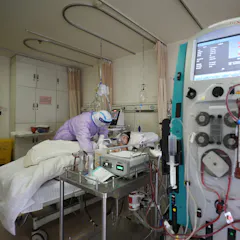
In the most severe cases, COVID-19 patients need oxygen pumped directly into their airways, or even be hooked up to a machine that does the job of their heart and lungs.

Researchers are currently looking into these reports to confirm whether loss of smell is an early indication of COVID-19.

How do you know what you’re reading and hearing about COVID-19 is based on fact not myth? Here are the basics, and we’ve created an at-a-glance infographic to make it easier to digest.
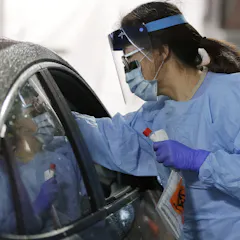
How do you know whether you might have COVID-19? A professor of medicine and immunology explains.
Top contributors
-

Conjoint Professor, School of Medicine and Public Health, University of Newcastle
-
Associate Professor of Medicine, Infectious Diseases Physician, Australian National University
-
Associate Professor of Medicine, University of Virginia
-
Professor of Rhinology and Olfactology, University of East Anglia
-
Epidemiologist | Research Associate, Australian National University
-
Associate Director of Global Health Research and Innovation Professor of Medicine, Johns Hopkins University
-
Associate Professor of Molecular Medicine, UMass Chan Medical School
-
Professor of Psychology, Iowa State University
-
Professor of Infectious Diseases and Global Health, University of Sydney
-
David King is a Friend of The Conversation.
Senior Lecturer in General Practice, The University of Queensland
-
Professor of Medicine, Harvard University
-
Infectious disease specialist, University of the Witwatersrand
-
Professor of public health policy, Te Kunenga ki Pūrehuroa – Massey University
-
Assistant Professor of Medicine, UMass Chan Medical School
-
Professor of Medicine, University of Virginia