
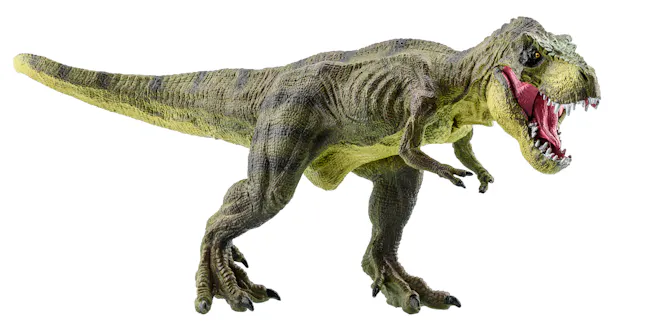
If humans had the same arm proportions as a T. rex, a 6-foot-tall person would have arms about 11 inches long.
Articles on Convergent evolution
Displaying all articles

Fever isn’t necessarily a bad thing − it’s actually a useful response to infections.
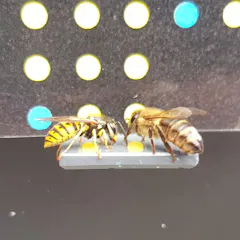
Being susceptible to visual illusions is part and parcel of life not just for humans, but many other species – including bees.
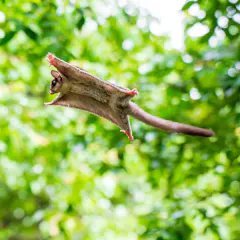
Mammals have evolved flight more often than birds. By studying the genes of the sugar glider, biologists have found a ‘molecular toolkit’ for flight membranes that’s been in us all along.

Art classes and STEM toys are nice, but there are simple and free ways parents can encourage their child’s creativity – or keep it from getting squashed.
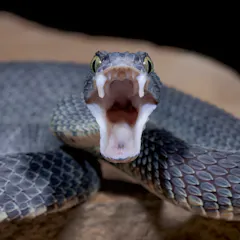
Some snakes have tough, blunt fangs for cracking crabs. Others have sharp needles for getting a grip on mice.
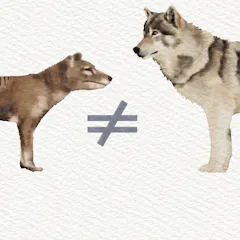
The Tasmanian tiger’s superficial appearance was so similar to a wolf’s that European colonisers assumed it was a threat and hunted it to extinction.

For some sand-dwelling plants, stickiness is a defense tactic that keeps predators at bay.
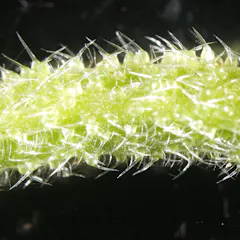
A new study of how stinging tree venom causes intense agony may help uncover new ways to manage pain.
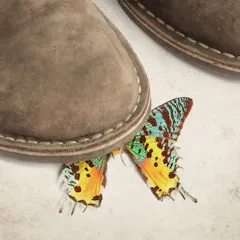
More and more evidence shows evolution isn’t as random as often thought.

Crickets are nothing if not noisy, but populations on two Hawaiian islands have embraced silence by rapidly losing sound-producing wing structures to avoid infestation by deadly fly larvae. In Current…
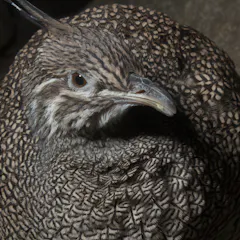
Ratites – a group of flightless birds including the emu, ostrich and extinct moa – were long believed to have evolved from a single flightless ancestor, but research published today in Molecular Biology…
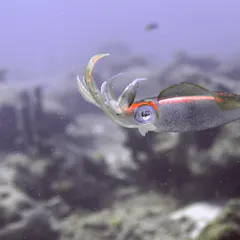
Eyes and wings are among the most stunning innovations evolution has created. Remarkably these features have evolved multiple times in different lineages of animals. For instance, the avian ancestors of…
Top contributors
-

Professor, School of Biological Sciences, Monash University
-
Professor in Evolution and Behaviour, The University of Melbourne
-
Lecturer in Evolutionary Biology and Zoology, Queensland University of Technology
-
Provost & Vice-President Academic, Laurentian University
-
Professor of Ecology and Evolutionary Biology, University of Toronto
-
NERC Research Fellow in Evolutionary Biology, University of St Andrews
-
Professor of Educational Psychology, University of Connecticut
-
Postdoctoral Research Officer, The University of Queensland
-
Senior lecturer, School of Biological Sciences, University of Bristol, University of Bristol
-
Adjunct Research Associate, Monash University
-
Senior Lecturer, Department of Anatomy and Developmental Biology, Monash University
-
Australian Research Council Future Fellow, The University of Queensland
-
Associate Professor, Department of Physiology, Monash University
-
Exhibitions
-
Lecturer in Genetics & Evolutionary Biology, La Trobe University