
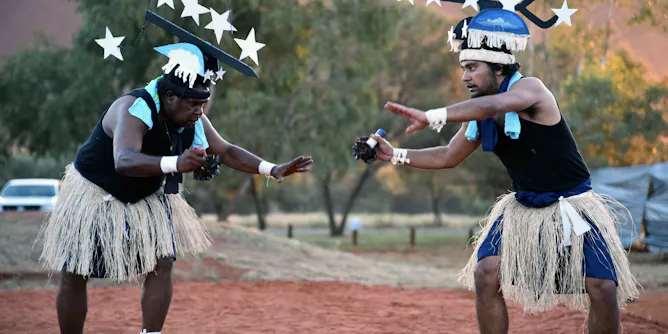
At the same time as it’s become clear that Indigenous people won’t accept a limited change, the right in Australian politics has become more determined to oppose any amendment.
Articles on Constitutional recognition
Displaying 41 - 60 of 83 articles
Indigenous Australians have issued a statement calling for constitutional reform that is substantive and meaningful.
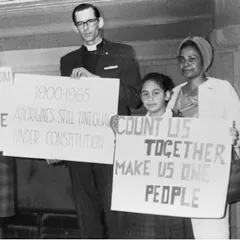
The 1967 referendum was the culmination of a long struggle for both Aboriginal rights and respect, for social esteem as well as equality before the law.

At Uluru, Indigenous representatives from across Australia will aim to reach consensus on what constitutional recognition means to them.

The 1967 referendum fell far short in giving people what they thought they were voting for, and in giving Aboriginal people what they wanted from it.
Guaranteed representation reduces the distance between policymakers and the people for whom policy is made.
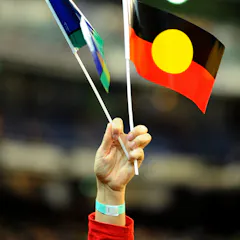
No treaty between Indigenous and non-Indigenous Australians has ever been recognised, but developments at the state level suggest this may soon change.
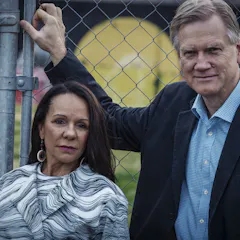
The ABC has missed a rare opportunity to deeply engage with the diversity of views among Indigenous Australians about whether and how they should be ‘recognised’ in the Constitution.
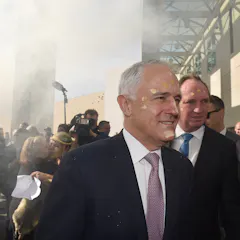
For many, relations between Indigenous Australians and the government are best described as being in a state of crisis.

Next week, Australians will look back at one the most significant moments in the struggle for Indigenous rights.
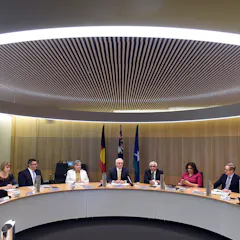
The longer the process of recognising Indigenous Australians in the Constitution goes on, the more debate is likely to split and fracture.
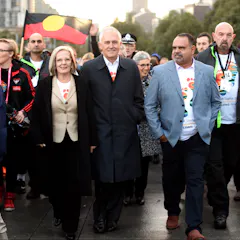
If we are to have a mature and sensible debate on Indigenous recognition, we must be more willing to embrace difficult issues and diverse perspectives.

Public policy no longer requires the imprimatur of the Aboriginal people; Aboriginal participation in the decisions taken about their lives is negligible.
As election day edges closer, the Labor Party finds itself without much of a tailwind. At Labor’s official campaign launch on Sunday, Bill Shorten will need to bring together the party’s story.
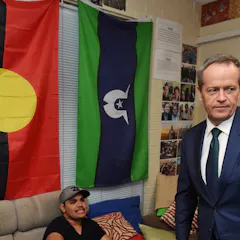
Would debate about a treaty with the First Australians endanger the success of the proposed referendum for their constitutional recognition – as Malcolm Turnbull claims? Very likely. But it can’t be avoided…

Serious policy focus on Indigenous affairs has been notably absent during the early weeks of the long election campaign.

The process of constitutional recognition was initially to be completed by 2013, but is now being directed towards a referendum in May 2017 to mark the 50th anniversary of the 1967 referendum.

Despite significant shortcomings in the negotiation, content and honouring of treaties, they continue to define the nature of the relationship between most Native Americans and the United States.
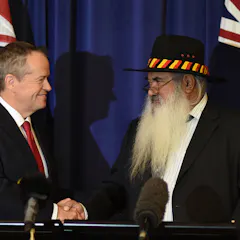
Pat Dodson, the father of reconciliation, is set to become a Labor senator for Western Australia following Joe Bullock’s surprise announcement that he is quitting.
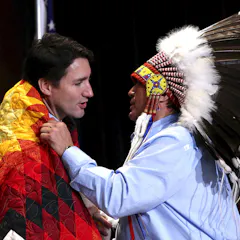
Canadians are watching their new government tackle unprecedented reform in Indigenous affairs.
Top contributors
-

Professorial Fellow, University of Canberra
-
Associate Professor, Faculty of Law & Justice, UNSW
-
Associate Professor, UNSW
-
Pro Vice-Chancellor Indigenous UNSW and Professor of Law, UNSW ; University of Pennsylvania
-
Adjunct Professor, Stout Research Centre, Victoria University of Wellington and Auckland University of Technology, Professor of Political Science, Charles Sturt University
-
Lecturer, Griffith Law School, Griffith University
-
Professor in Human Rights and International Law, University of Newcastle
-
Professor of Public Policy & Law, Centre for Governance & Public Policy, Griffith University
-
Lecturer - Law, CQUniversity Australia
-
Professor of Archaeology and Biological Anthropology, School of Social Science, The University of Queensland
-
Professor of Law, UNSW Law School, UNSW
-
Chancellor, University of Canberra
-
Professor, Law Faculty, Monash University
-
Associate Professor, Melbourne Law School, The University of Melbourne
-
Senior Lecturer in Law, Charles Darwin University