
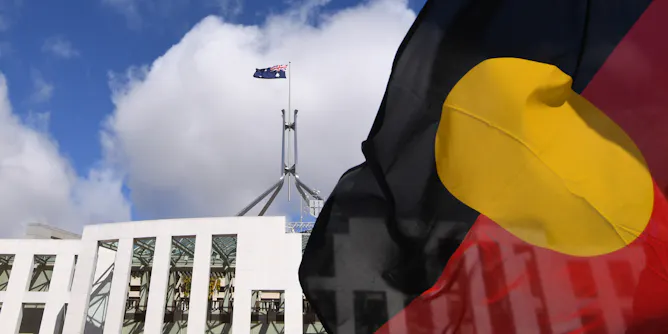
As the first Indigenous federal cabinet minister, Ken Wyatt is widely respected in first peoples communities, but by the same token, the expectations on him are very high.
Articles on Constitutional recognition
Displaying 21 - 40 of 83 articles
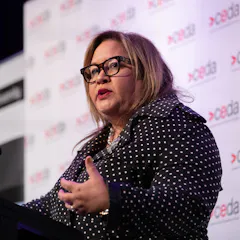
Megan Davis on a First Nations Voice in the Constitution
The Conversation, CC BY31.4 MB (download)
Megan Davis says the idea of including an Indigenous Voice in the Constitution is being rejected on an understanding that "simply isn't true" but believes Australia has the "capacity to correct this".

Michelle Grattan speaks with University of Canberra Vice-Chancellor Deep Saini about the government’s plans to put forward a referendum to recognise Indigenous Australians in the Constitution.
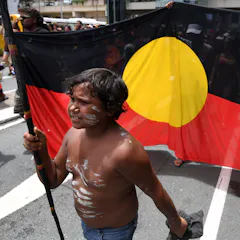
It would be another miracle if the Morrison government managed to have a referendum passed to give Australia’s Indigenous people constitutional recognition.
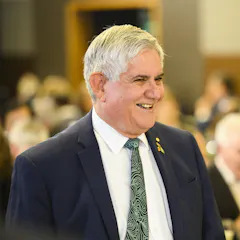
Ken Wyatt on constitutional recognition for Indigenous Australians
The Conversation, CC BY27 MB (download)
Ken Wyatt says he is "optimistic about achieving [constitutional recognition] because...Australians will generally accept an opportunity to include Aboriginal people" and that he will work with "naysayers".
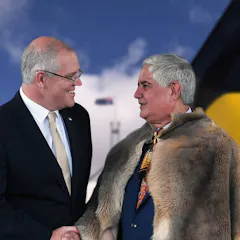
Ken Wyatt, the Minister for Indigenous Australians, announced plans to hold a referendum to enshrine constitutional recognition of Australia’s Indigenous peoples during this parliamentary term.
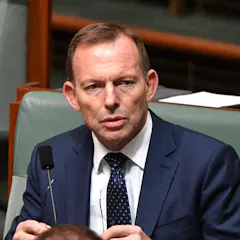
The proposals Abbott has pushed as envoy - more police in Indigenous communities and learning in English - demonstrates his ignorance and unsuitability for the job.
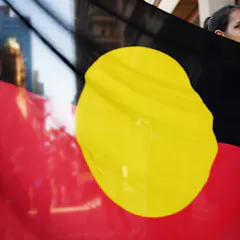
The final report on constitutional recognition is disappointing in many respects, but Labor’s pledge to establish a First Nations voice will give many in the community hope.
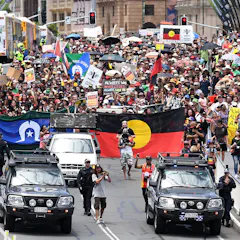
Reconciliation between the Settler and First Nations populations is a self-evident prerequisite for Australia cutting the ties of colonial dependency with Britain to stand on our own.
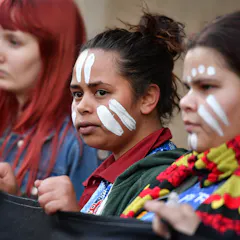
To finally succeed, the idea of an Indigenous voice to parliament must be argued as one that is fundamentally democratic.
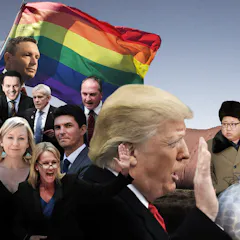
2017 has felt like a chaotic year in Australian politics, and one in which policy progress has been swamped by other distractions. We can only hope that 2018 is calmer and more productive.
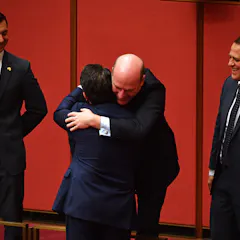
Despite its dubious ancestry, the popular vote on same-sex marriage has done its job, delivering an overall majority and majorities in all states and territories.

The rejection of the Referendum Council’s Report has derailed Indigenous constitutional recognition. Treaties at the state and territory level offer a clear path forward for meaningful reform.
Nicholas Klomp and Michelle Grattan discuss the week in politics.
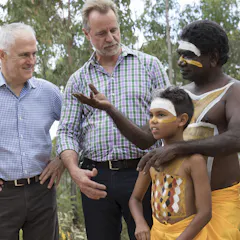
The government has rejected the Referendum Council’s call for a national Indigenous representative assembly to be put into the Constitution.
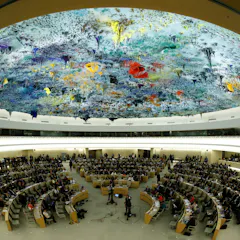
Australia’s Human Rights Council election provides an ideal opportunity for it to show leadership and commitment on issues such as refugee flows and the death penalty.
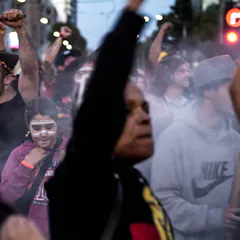
Despite the promise of Black Lives Matter, it has not been taken up as a central political movement by Indigenous Australians.
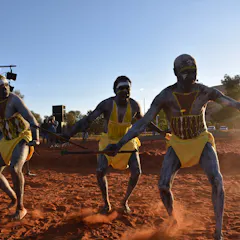
Bodies established around the world to hear ‘black’ voices have an enduring problem: they advise, but are rarely – if ever – heard.
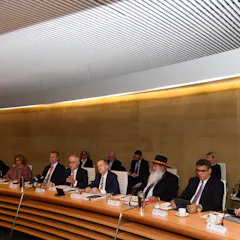
Implicit in Malcolm Turnbull’s and Bill Shorten’s arguments that an Indigenous ‘voice to parliament’ would be a big change is the notion that it may be too difficult.
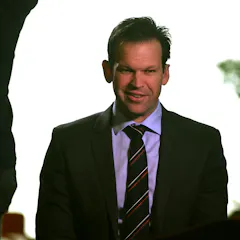
Politics podcast: Matt Canavan on Adani
Matt Canavan tells The Conversation this mine is only one part of a plan for 'opening up the Galilee Basin' to provide investment opportunities, exports, and employment.
Top contributors
-

Professorial Fellow, University of Canberra
-
Associate Professor, Faculty of Law & Justice, UNSW
-
Associate Professor, UNSW
-
Pro Vice-Chancellor Indigenous UNSW and Professor of Law, UNSW ; University of Pennsylvania
-
Adjunct Professor, Stout Research Centre, Victoria University of Wellington and Auckland University of Technology, Professor of Political Science, Charles Sturt University
-
Lecturer, Griffith Law School, Griffith University
-
Professor in Human Rights and International Law, University of Newcastle
-
Professor of Public Policy & Law, Centre for Governance & Public Policy, Griffith University
-
Lecturer - Law, CQUniversity Australia
-
Professor of Archaeology and Biological Anthropology, School of Social Science, The University of Queensland
-
Professor of Law, UNSW Law School, UNSW
-
Chancellor, University of Canberra
-
Professor, Law Faculty, Monash University
-
Associate Professor, Melbourne Law School, The University of Melbourne
-
Senior Lecturer in Law, Charles Darwin University