
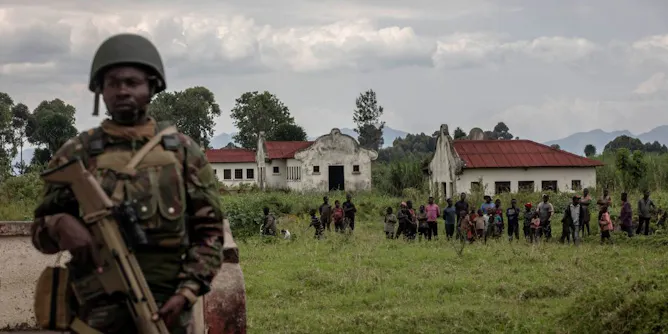
Central to the DRC’s politics is a broken relationship between the seat of government in Kinshasa and underrepresented groups in the eastern region.
Articles on Conflict
Displaying 141 - 160 of 367 articles

President Emmerson Mnangagwa has not faced official investigation or prosecution over his role in Operation Gukurahundi – 40 years on.
Citizen expectations of governments are not being met by most elected leaders.
The political elite have held on to power through power-sharing arrangements rather than the ballot. How will that change?
The interplay between diversity and urban planning in Sudan has created vibrant cityscapes, but also led to segregation and division.
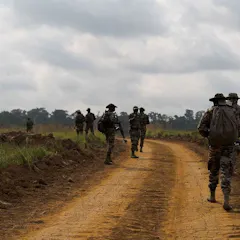
The Cameroonian government’s pursuit of military victory is likely to prolong the war.
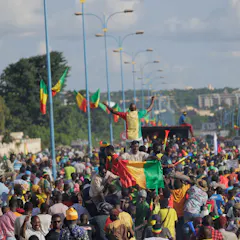
Constructive dialogue is an essential condition for a peaceful political transition in Mali.
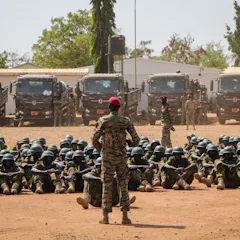
The causes of violence in the DRC are complex. Narrowing them down to the single lens of ethnicity can be misleading.
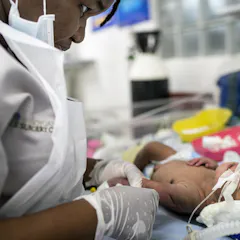
The last decade has seen no measurable change in global preterm birth rates in any region of the world.
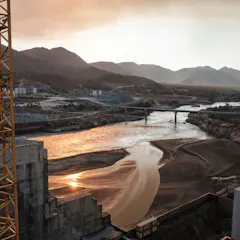
Hundreds of rivers are shared between two or more countries – this could be a source of cooperation or conflict.
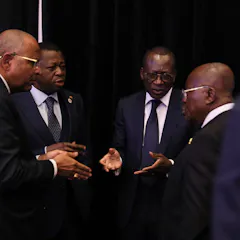
Africa has been relatively peaceful in terms of inter-state violent conflicts.

Researchers have identified ways to have more productive conversations – even when you’re talking to someone who holds an opposite view.
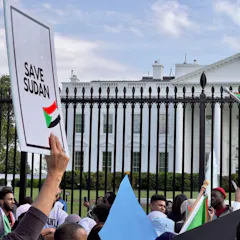
An agreement to end conflict is only one small step in an often long process.
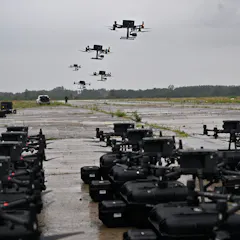
As the drone market continues to expand, a set of rules or standards that can help determine how they are used in warfare is needed, writes a former US diplomat.

The Sudan army’s superiority is in its air force and arsenal of ground forces while the rival paramilitary force relies on nimble mobile units.
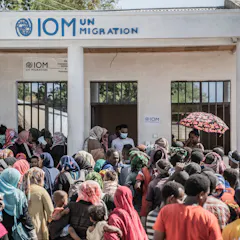
The number of refugees leaving Sudan is particularly high because Sudan was itself host to a million refugees.

Ghana’s regions have no autonomy, yet creating new ones is contentious as it threatens the interests of chiefs and political parties.

As ‘The Jerry Springer Show’ climbed the ratings ladder, the censorship bleep, which masked the slew of insults lobbed by warring guests, became a star of the show.

Science fiction does more than entertain – it can also be used to better understand the political forces that shape the societies in which we live.
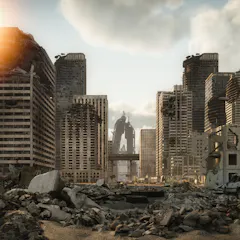
Urban spaces are a repository of people’s beliefs, memories and collective conscience.
Top contributors
-

Associate Professor of Urban & Environmental Design, University of Khartoum
-
Professor of History and Political Science, University of Michigan
-
Researcher in Environmental Change, Vrije Universiteit Amsterdam
-
Associate Professor, Liverpool John Moores University
-
Lecturer and Senior Research Fellow at the South African Research Chair in International Law (SARCIL), University of Johannesburg
-
Professor Emeritus in Global Health & Humanitarian Affairs, University of Manchester
-
Associate Professor, Colgate University
-
Associate Professor of Security and International Relations, Royal Danish Defence College
-
Lecturer in Middle East Studies, Deakin University
-
Research Fellow, Institut Barcelona Estudis Internacionals
-
Professor of Operations Research, Brock University
-
Lecturer, Macquarie Law School, Macquarie University
-
Professor, Institute of African Studies, University of Leipzig
-
Researcher, IPIS
-
Assistant Professor of International Relations, American University