
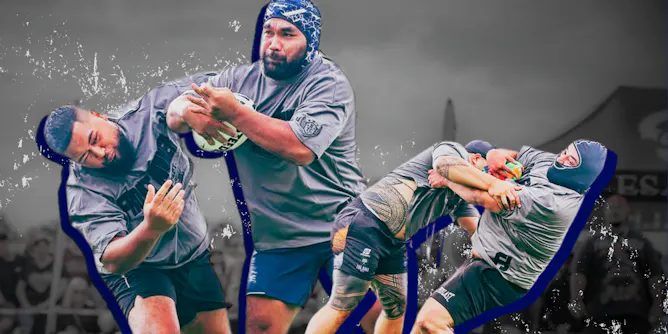
A new sport features two men running at each other at full pace before colliding. How is this appealing, considering the concussion risks?
Articles on Concussion
Displaying 21 - 40 of 104 articles
New research has backed the call to delay tackling in junior sports before the age of 12 due to the risk of sports-related concussions.

Incidents like this underscore the importance of advancing concussion detection, management and prevention strategies in high-impact sports like hockey.

Neck strengthening doesn’t require expensive equipment or extensive time commitments, but it can help reduce concussion risks.
Ten years after the death of Phillip Hughes, cricket’s governing bodies are still wrestling with ways to make the sport safer for all.
An Australian Senate committee’s landmark report on concussions listed 13 recommendations. A year on, how have things progressed?

The drama comes at an important time in the debate raging over the harms posed by concussion sports.
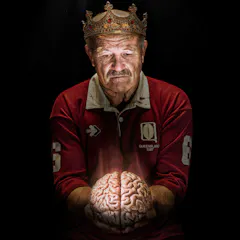
A new portrait of NRL star Wally Lewis brings home the consequences of brain trauma in ways traditional science communication struggles to achieve.
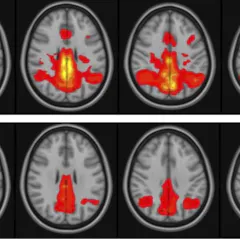
Concussion is considered a ‘mild’ injury, but effects can last a lifetime, especially with multiple impacts. Understanding their long-term effects can help predict who might develop neurodegeneration.
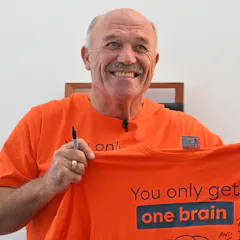
The link between head injuries and degenerative brain disease CTE has been widely accepted. But there may still be some grey area.
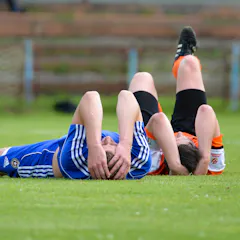
A new study found the benefits of amateur sport outweigh the risks of a single blow to the head – but repeated concussions are likely to do more damage.
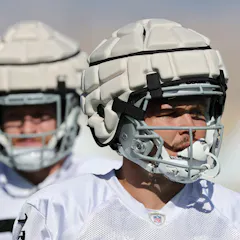
For the first time, players will be permitted to wear Guardian Caps over their helmets during regular season games.
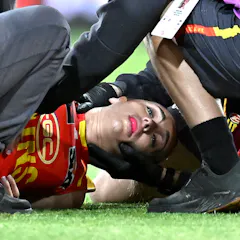
New research has revealed key injury pattern differences between men and women footballers, with concussion rates especially concerning.

Zurich’s decision to no longer insure some professional athletes for concussion could have far-reaching ramifications for players and their sports.
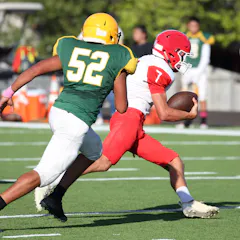
Young athletes may be uncertain if they are experiencing a concussion or might not think the injury is serious or bad enough to warrant telling someone.
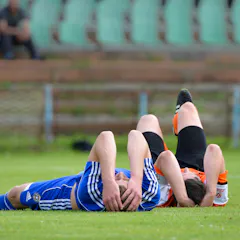
Many elite athletes are encouraged to have baseline concussion tests, so should children playing junior sports do the same?

Several high-profile athletes with concussion histories have been forced to retire on medical advice. But what’s the process that guides them to that difficult decision?

For decades, some sports have fostered a win-at-all-costs culture, with concussion often an afterthought. But there are signs that attitude is changing.
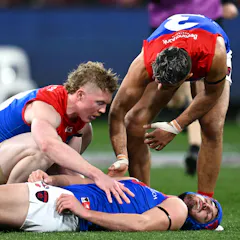
The AFL may appoint independent doctors at games to assess players for potential head injuries – can this help the concussion issue?

The dangers of high-impact sport aren’t contentious. Medical professionals agree that sport-induced brain trauma leads to degenerative brain disease – so why are we still allowing children to play?
Top contributors
-

Professor, Adjunct Research Fellow, School of Health Science, Swinburne University of Technology
-
Assistant Professor, Faculty of Law, Bond University
-
Research Fellow, UQ School of Human Movement and Nutrition Sciences, The University of Queensland
-
The University of Queensland
-
Head Of Department in Department of Sport & Event Management, Bournemouth University
-
Senior Clinical Psychologist, The Cairnmillar Institute
-
Lecturer in Sport Management Australian College of Physical Education (ACPE) and Research Assistant, Western Sydney University
-
Professor of Masculinities, Sexualities and Sport, University of Winchester
-
Senior Lecturer, School of Business, Western Sydney University
-
Emeritus Professor, National Centre for Youth Substance Use Research, The University of Queensland
-
Course Coordinator & Lecturer, Physiotherapy, Australian Catholic University
-
Professor, Faculty of Kinesiology & Health Studies, University of Regina
-
Lecturer in Exercise Science, Adelaide University
-
Lecturer in Exercise Science and Physiology, Griffith University
-
Senior lecturer in Sport, Exercise and Nutrition Sciences, University of Lancashire