
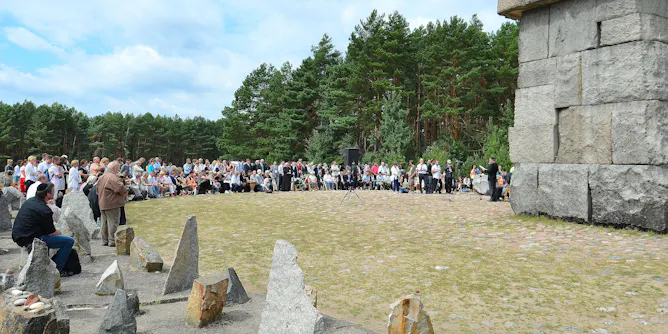
Topics such as sexual assault have been difficult for survivors and historians to write about, even decades after the war.
Articles on Concentration camps
Displaying 1 - 20 of 33 articles

The Ravensbrück archive reveals how being a survivor of the camps did not always entail innocence.

The biggest Lee Miller show since 2007, this new exhibition tells her complex story through 250 modern and vintage prints, including previously unseen images.

Minnesota Gov. Tim Walz is among the politicians who have recently compared the immigration agency ICE to the Gestapo. Such analogies risk oversimplifying history.
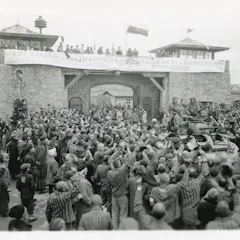
A historian of the Mauthausen concentration camp says US troops and the Spanish antifascists they freed were united in a common fight against authoritarianism.

Although concentration camp survivors followed different trajectories and displayed different levels of resilience, four main survivor profiles emerge.
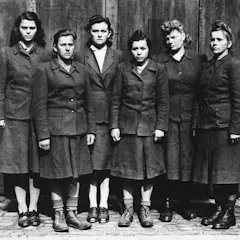
Women guards are often portrayed as masculinised sadists, but the more prosaic – and shocking – truth is they were often just normal women who acclimatised to the brutality of the Nazi regime.
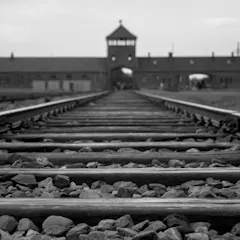
On the trail of Convoy 31000 – the only transport to Auschwitz-Birkenau that was made up entirely of women deported from France for political activities.

The violence of the 1938 pogrom against Jews in Nazi Germany known as Kristallnacht was a turning point in Hitler’s ‘Final Solution.’
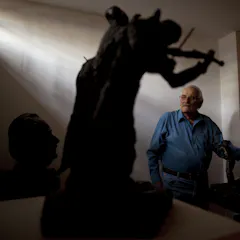
Yom HaShoah, Israel’s Holocaust Remembrance Day, pointedly commemorates Jewish resistance to the Nazis.
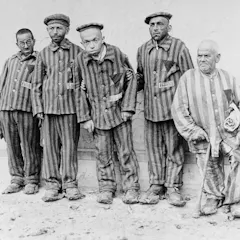
In 2023, International Holocaust Remembrance Day marks 90 years since the Nazis assumed power. Disabled people were the first Holocaust victims; Nazi programs discriminated against and murdered them.
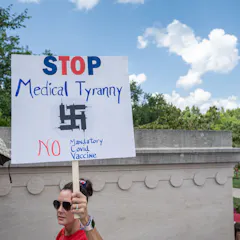
Many Americans know a simple version of Holocaust history, in which their country played the savior. The reality isn’t so comfortable, a historian writes.
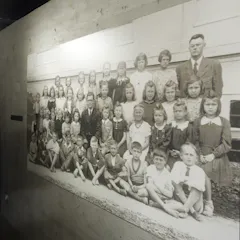
An international campaign to preserve the memory of Lidice – and then rebuild it – helped keep the village alive.

Dark tourism can help shine a commemorative light on the pandemic that has gripped society.
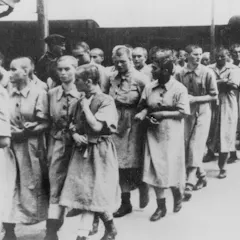
While male and female prisoners at Auschwitz faced the same ultimate fate – torture, forced labor and near-certain death – women sometimes reacted differently to Nazi captivity.

An oral history based biography of a survivor of colonial genocide in Namibia indicates instances of humanity during an entirely inhumane era.
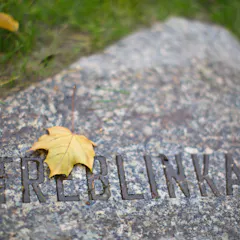
As the last survivors die out, it is more important than ever to uncover physical evidence of Nazi atrocities.
The metaphors used to defend the 21st century’s largest system of concentration camps are chillingly similar to Nazi Holocaust-era justifications.
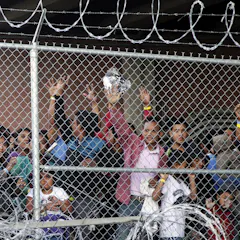
Concentration camps are by no means only synonymous with Nazi terror or totalitarianism. In fact, concentration camps have deep roots in the culture and politics of Anglo-American liberal democracies.
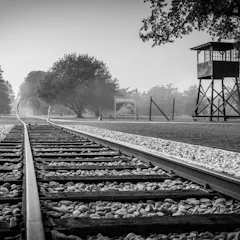
Social status and location affected Dutch Jews’ chances of survival.
Top contributors
-

Associate Professor, History, MacEwan University
-
Assistant Professor of Jewish Studies, College of Charleston
-
PhD candidate in Public Policy, University of Oxford
-
Professor Emerita of Women's Studies, San Diego State University
-
Assistant Vice-Principal and Director of the Moffat Centre for Travel and Tourism Business Development, Glasgow Caledonian University
-
Professor in International History, Flinders University
-
Lecturer in History of Medicine/Life Science, The University of Melbourne
-
Associate Professor of History and Politics, Thompson Rivers University
-
Executive Director, Institute for Dark Tourism Research, University of Lancashire
-
Professor of Modern and Contemporary History, Keele University
-
Postdoctoral Research Fellow, UniSA Creative, Adelaide University
-
Professor of History, Texas A&M University
-
Senior Research Associate, University of Bristol
-
Professor of Sociology, Rowan University
-
Lecturer in German history, University of Leeds