
The greatest tool of artists is their imagination but throw in a computer and things never imagined become possible.
Articles on Computers
Displaying 121 - 140 of 173 articles
The brain is the most complex organ and system know to humans. It helps to create a computer model of one to find out how things work, and why things go wrong.
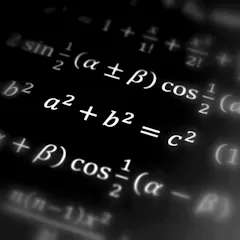
Computers are increasingly used to prove mathematical theorems. So does that mean human mathematicians will become obselete?

Human experience must remain at the heart of technological advances.

Computer modelling can help predict where a species will best survive, especially those affected by climate change.
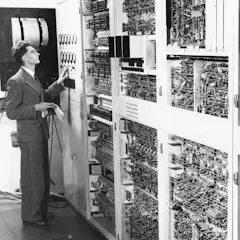
The first in our series looking at the changes that have been made in computing and other areas in the 60 years since the first computer in an Australian university was switched on.
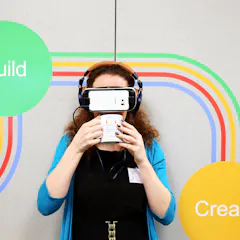
As more companies move towards intelligent, natural voice controlled devices, is the writing on the wall for the keyboard and mouse?
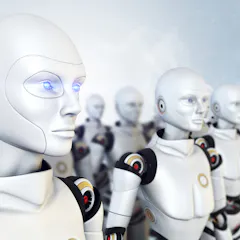
Computers are taking over our jobs, but this doesn’t have to be a bad thing.
Scientists of all kinds turn to computer models to investigate questions they can’t get at any other way. Here’s how models work and why we can trust them.
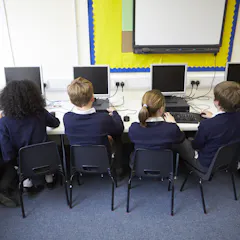
The Government changed the curriculum in 2014 so that all school children would be taught coding, but two years on this is far from reality.

Many of us are becoming addicted to social media, and it’s having a negative impact on our lives. Here are some tips to help you take back control.

Addicted to the internet? Perhaps not …

Many “modern” inventions actually have precedents dating back over 1000 years.
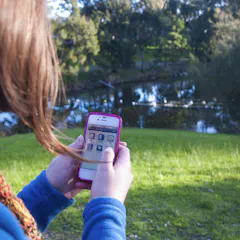
A third of families living below poverty level access the Internet only through their phones. And young people from these families get access to few learning opportunities.

Computerised High-Frequency Trading (HFC) has been blamed for recent volatility in the share market, does this represent the new normal?
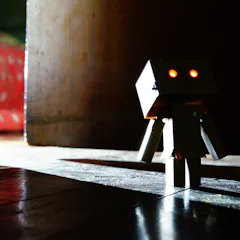
As machines get ever more complex as we strive to make them complete more complex tasks, it’s time to ask again: will they ever be able to think? But what is thinking anyway?
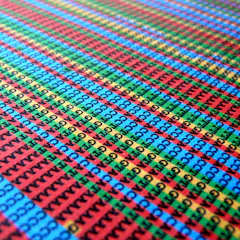
Modern biological research relies on big data analytics. Vast reservoirs of memory and powerful computing ability mean machines find patterns and make meta-analyses and even predictions for scientists.

How often do you get angry or frustrated with a machine or some piece of technology? Well what if a machine could sense our emotion and then change its behaviour to suit?
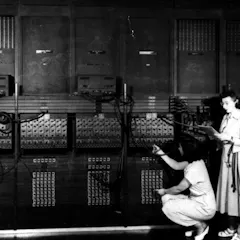
Virtually every researcher relies on computers to collect or analyze data. But when computers are opaque black boxes that manipulate data, it’s impossible to replicate studies – a core value for science.
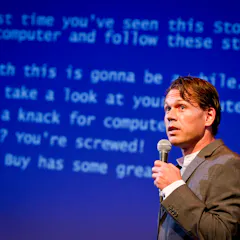
What is it about modern digital technology that inspires suspicion rather than trust?
Top contributors
-

Professor & Director, Hub for Apple Platform Innovation (HAPI), School of Computing Technologies, RMIT University
-
PhD; Lawrence Berkeley Laboratory (retired) and Research Fellow, University of California, Davis
-
Laureate Professor of Mathematics, University of Newcastle
-
Professor, ESCP Business School
-
Associate research scientist Cambridge Judge Business School and lecturer GEM, GEM
-
Lecturer in Computer Science, Queen Mary University of London
-
Professor, Harvard University
-
Lecturer in Digital Media and Cultures, The University of Queensland
-
Directeur de la Recherche et des Formations Doctorales, Directeur adjoint, Télécom SudParis – Institut Mines-Télécom
-
Professor Emeritus, Swinburne University of Technology
-
Pro Vice-Chancellor, research portfolio, The University of Melbourne
-
Senior Lecturer in Digital Media, Swansea University
-
Lecturer in Software Engineering, Monash University
-
Professor of AI, Research Group Leader, UNSW
-
Adjunct Professor of Mathematics, Prince George's Community College