
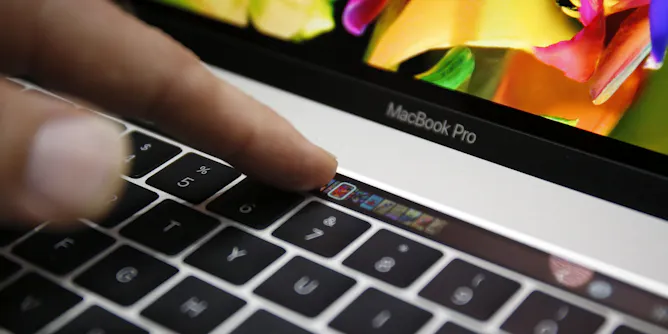
Apple’s new MacBook Pro series does away with the old top row of functions keys on the key pad (who used them anyway?). It’s replaced them with a new interactive Touch Bar.
Articles on Computers
Displaying 101 - 120 of 173 articles
Updated guidelines for how much screen time children can have puts most of the onus on the parents to decide.

Could reservoir computing be a future alternative to silicon chips?

This year marks the 30th birthday of .au domains. We’ve come a long way but there’s big change ahead.

We’ve all called up IT for help and been asked to turn our machines off and on again. Here’s why.
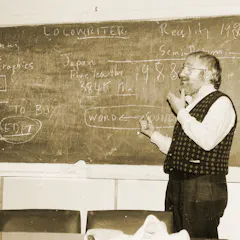
Seymour Papert’s vision has helped computers become widespread in education today, and gave birth to the movement to teach children to program.
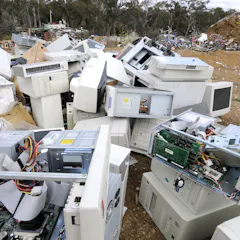
Australia is among the world’s top ten users of electronic and electrical products. But our systems for recycling the resulting ‘e-waste’ fall a long way short of other rich nations.
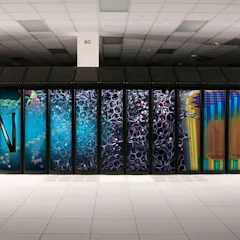
Developing new technologies requires time-consuming, expensive and even dangerous experiments. But now we can carry out many experiments entirely on computers using modelling.
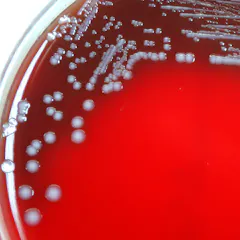
New research shows how adding memory to bacterial circuits could help us harness their computing power.
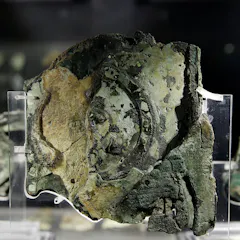
A bronze artefact rescued from a Greek shipwreck could hold the secrets of the universe.
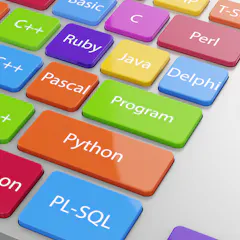
When we ditched high-school Latin we lost a great intellectual training. Here’s how to get it back without resorting to a dead language.

Too many girls are missing out on learning IT and computer programming skills that could serve them well in the future economy.
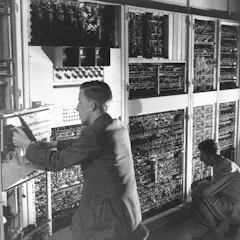
It might not sound like the best music in the world, but Australia was the first by a matter of months at playing a tune on a computer.

A clever proces similar to Google’s image search is helping to preserve some of the world’s 7,000 languages that are at risk of disappearing.
Computing has been getting much smarter since the idea of artificial intelligent was first thought of 60 years ago. But are computers intelligent?

It took a computer to discover the potential threat of a drug-resistant strain of swine flu that was about to spread from New South Wales. So how close did we come to a global pandemic?

The switch from analogue to digital television transmission transformed the way audiences consume content.

A new field of research aims to deepen, and even quantify, our understanding of artistic style. We use mathematical techniques to help discover novel insights, even in well-studied paintings.
The architect’s pen and paper were replaced by the mouse and monitor thanks to developments in computing. Now computers are helping create designs never thought possible before.

Millions of people die or suffer from infectious diseases each year. Computer modelling can now help simulate the impact of any spreading disease.
Top contributors
-

Professor & Director, Hub for Apple Platform Innovation (HAPI), School of Computing Technologies, RMIT University
-
PhD; Lawrence Berkeley Laboratory (retired) and Research Fellow, University of California, Davis
-
Laureate Professor of Mathematics, University of Newcastle
-
Professor, ESCP Business School
-
Associate research scientist Cambridge Judge Business School and lecturer GEM, GEM
-
Lecturer in Computer Science, Queen Mary University of London
-
Professor, Harvard University
-
Lecturer in Digital Media and Cultures, The University of Queensland
-
Directeur de la Recherche et des Formations Doctorales, Directeur adjoint, Télécom SudParis – Institut Mines-Télécom
-
Professor Emeritus, Swinburne University of Technology
-
Pro Vice-Chancellor, research portfolio, The University of Melbourne
-
Senior Lecturer in Digital Media, Swansea University
-
Lecturer in Software Engineering, Monash University
-
Professor of AI, Research Group Leader, UNSW
-
Adjunct Professor of Mathematics, Prince George's Community College