
In the age of AI, people might wonder if there’s anything computers can’t do. The answer is yes. In fact, there are numerous problems that are beyond the reach of even the most powerful computers.
Articles on Computer algorithm
Displaying 1 - 20 of 23 articles
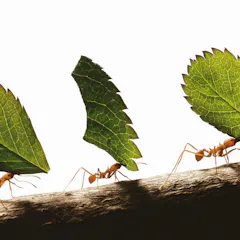
Over hundreds of million years of evolution, ants have come up with some pretty smart solutions to problems of agriculture, navigation and architecture. People could learn a thing or two.
A machine learning expert predicts a new balance between human and machine intelligence is on the horizon. For that to be good news, researchers need to figure out how to design algorithms that are fair.
When artificial intelligence systems try to behave like humans and make mistakes, they show their limits – but also their startling advances.

Because a host of artists and programmers can leave their stamp on a final product, disagreements and claims of theft have ensued.
Expecting algorithms to perform perfectly might be asking too much of ourselves.
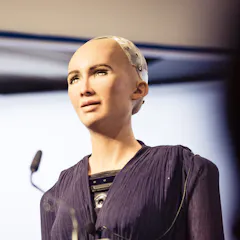
A legal loophole could grant computer systems many legal rights people have – threatening human rights and dignity and setting up some real legal and moral problems.
As Google turns 20, a look at how the company has grown – and what the next two decades might bring for the company.

It could seem attractive to try to teach computers to detect harassment, threats and abusive language. But it’s much more difficult than it might appear.

New research has uncovered a previously unknown weakness in smart city systems: devices that trust each other. That could lead to some pretty terrible traffic, among other problems.

A branch of AI research promises to deliver computers that evolve their own software but the tech industry has yet to catch on.
We have far more to worry about from outdated science that embodies dubious prejudices than we do from deep learning networks.
We prefer to go with our guts.
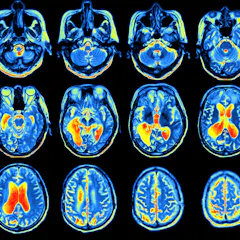
Computers today are fast and powerful but they still can’t think like a human when it comes to some tasks we find easy. That’s why tech companies are turning to neuroscience for help.
A European Union law will require human-understandable explanations for algorithms’ decisions. A team of researchers has found a way to provide that, even for complex calculations.

Despite its promises, people analytics has serious ethical implications and can adversely affect organisations and how people are treated at work.
Unrestricted access to information is vital to a vibrant democracy.But if this information is inaccurate, biased or falsified, the fundamental freedom of informed choice is denied.
Changes in news media distribution and the impartiality of news sources provide good reason to be concerned. However, digital inequality is not the way to understand or measure it.

Algorithms can discriminate, even when their designers don’t intend that to happen. But they also can make detecting bias easier.
Math isn’t prejudiced, goes the argument. But these arithmetic programs can learn bias from the data fed into them by human beings, leading to unfair treatment and discrimination.
Top contributors
-

Emeritus Professor, University of Nottingham, (currently Vice-Chancellor at MILA University, Malaysia), University of Nottingham
-
Assistant Professor of Computer Science, University of California, Irvine
-
Associate Professor of Computer Science and Electrical and Computer Engineering, Carnegie Mellon University
-
Lecturer in Mathematics, Deakin University
-
Professor of Information and Library Science, University of North Carolina at Chapel Hill
-
Principal Research Fellow, RMIT University
-
Research Fellow in Behavioural Economics, International Institute for Management Development (IMD)
-
Associate Professor of Computer and Information Science, University of Oregon
-
Professor of Neuroscience and Mathematics, The University of Queensland
-
PhD Student in Mathematics, University of Illinois Chicago
-
Associate Professor of Computer Engineering and Computer Science, University of Louisville
-
Professor, School of Philosophy, Australian National University
-
Professor of Electrical Engineering and Computer Science, University of Michigan
-
Emeritus Professor of Management Science, University of Bath
-
Professor in Business Information Systems, University of Sydney