

Woolworths promoted itself as a place where “goods are so cheap and shopping easy and pleasant” when it opened 100 years ago. Australia’s biggest grocer has moved away from its humble beginnings.
Articles on Competition
Displaying 61 - 80 of 227 articles

Each of these tricks is old, but each has been supercharged by the use of information technology.

Given the unique demands and pressures of competing in elite sport environments, it is imperative that we pay attention to elite youth athletes’ mental health needs.

Pressure for greater transparency by food producers and retailers about costs is increasing as rising grocery prices hit the hip pocket.

A small set of changes to competition law were just passed as the second part of Bill C-56, the Affordable Housing and Groceries Act.

Horses naturally synchronise their running in groups – but ‘racing’ and ‘winning’ are human concepts.

From restrictions on EU exports to China and Chinese exports to the EU to freezing key investments, there are many ways in which China could retaliate against the EU’s anti-dumping investigation.

Enforcement agencies like the Competition Bureau have a duty to pursue cases they consider to be well-founded and in the public interest. But it’s unrealistic to expect they will win every time.

Why is the $50 million going to the government and not to those who overpaid for bread? The answer is complicated.

As Canada embarks on its post-pandemic economic recovery, policymakers must ensure economic resilience and inclusiveness while preventing existing monopoly issues from worsening.

Put bluntly, Australian businesses as a whole appear to have become slow to adopt world best practice. But if we want to lift productivity, we need to act on a wider suite of solutions.

Do competitive, market-like interactions encourage immoral behaviour? A study of 18,000 people in 45 experiments shows there’s no simple answer.
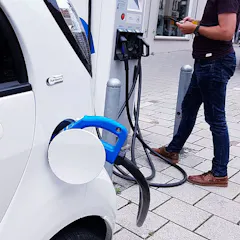
Faced with a Germany-led coalition seeking to ban internal-combustion-engine car sales from 2035, the EU needs to stay firm on its core economic principles.

The Canadian government is planning to implement ‘right to repair’ for electronic devices. This has the potential to give consumers more options, and challenges corporations’ hold over knowledge.

The new conditions that have been heaped onto Rogers as a result of the Rogers-Shaw merger could end up benefiting Canadian consumers and the economy at large.

NBA player Mac McClung may have just ‘saved’ the annual dunk contest, but scoring methods could still be improved, a dunking expert says.

Preparing a bid for such funding can cost project hopefuls up to £30,000.

To improve firm performance and promote fiscal economic growth, corporations should strengthen and implement an innovation strategy.

Prices are up to five times higher than the raw costs of production for many of the goods and services we all need.

Start high, drop fast and avoid the free-riders: How to design subsidies that can boost clean energy in the US and elsewhere.
Top contributors
-

Professor of Economics, Monash University
-
Competition Lawyer; Senior Fellow, The University of Melbourne
-
Senior Research Associate in Media and Communications, University of Sydney
-
Professor, Melbourne Law School, The University of Melbourne
-
Director of the Conrad School of Entrepreneurship and Business, University of Waterloo
-
Professor of Economics, Centre for Competition, Regulation & Economic Development, UJ, and at SOAS University of London; advisor Shamba Centre for Food & Climate, University of Johannesburg
-
Associate Professor & Vice-Dean Research, Civil Law Section, Faculty of Law, L’Université d’Ottawa/University of Ottawa
-
Professor of Finance, RMIT University
-
Professorial Fellow, University of Canberra
-
Professor, School of Economics, The University of Queensland
-
Senior Researcher, Centre for Competition, Regulation and Economic Development, University of Johannesburg
-
Visiting Professor at the Business School, University of the Witwatersrand
-
Vice Chancellor's Fellow at Victoria University and Adjunct Professor of Economics, Victoria University
-
Professor, Queensland University of Technology
-
ARC DECRA Fellow, Queensland University of Technology