
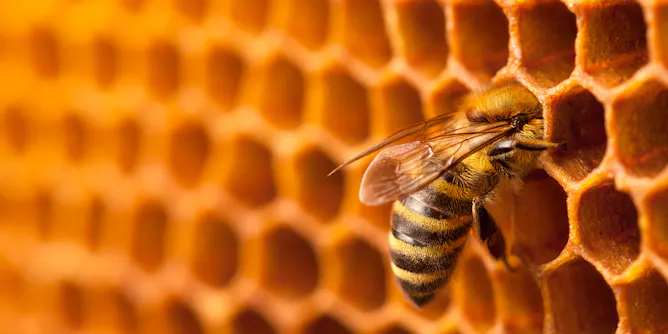
The report results could help explain honeybee colony deaths.
Articles on Colony Collapse Disorder
Displaying all articles
Bees innocuously buzzing ‘round the birdbath may be a barometer for burgeoning bee invasions.

As climatic conditions change, plants’ odours are altered, with direct consequences for pollination, especially by bees.
Digital innovations have the potential to empower farmers and revolutionise agriculture, but many could also lock them in to unsustainable methods.
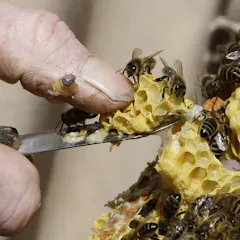
Australian bees have so far avoided the ‘colony collapse’ devastating hives around the world, but there’s growing pressure for a ban on certain insecticides blamed for bee deaths.
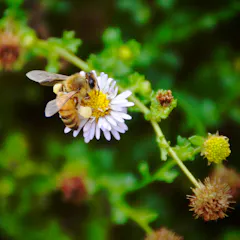
It’s a decade since US beekeepers first noticed that their bees were mysteriously dying. Now we know much more about Colony Collapse Disorder, raising hopes that we can turn bees’ fortunes around.
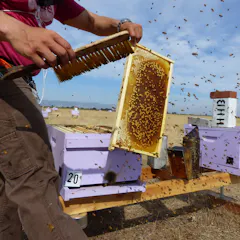
Honey bees, which pollinate many valuable crops, are threatened by parasites, pesticides and development. But selective breeding, more benign pesticides and better nutrition could help turn the tide.

Bees and humans share a long history. But now bee populations are in a worrying decline. So can beekeeping teach us how to live in harmony with the world’s most famous pollinator?
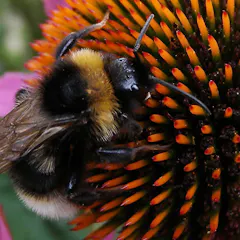
The EU banned the use of neonicotinoid pesticides for two years in April, after a sustained campaign by beekeepers, green groups and environmental organisations across Europe. These groups are convinced…
Top contributors
-

Assistant Extension Apiculturist, University of California, Davis
-
Professor, School of Natural Sciences, Macquarie University
-
Centre Manager & Industry Liaison Officer ARC ITTC Centre for Fruit Fly Biosecurity Innovation, Macquarie University
-
Lecturer in Sociology, University of Manchester
-
Doctorant, Université de Toulouse
-
Associate Professor, Queensland University of Technology
-
Postdoctoral research fellow, Hawkesbury Institute for the Environment, Western Sydney University
-
PhD Student, University of New England
-
Coline Jaworski is a Friend of The Conversation.
Chercheuse Postdoctorale en écologie évolutive / Postdoctoral Fellow in evolutionary ecology, Aix-Marseille Université (AMU)
-
Quantitative ecologist, Inrae
-
Associate Professor in Entomology, University of Sydney
-
Chercheur en agroécologie, Inrae
-
Ecologist, bee researcher and stingless bee keeper, The University of Queensland
-
Professor of Biology (Evolution, Behaviour and Environment), University of Sussex
-
Maître de conférences en écologie, Institut méditerranéen de biodiversité et d’écologie marine et continentale, Aix-Marseille Université (AMU)