

Recent research highlights the hidden effects of a fluctuating market.
Articles on coffee production
Displaying all articles

The head of the Lavazza coffee empire has warned that coffee prices may rise more than 20% - why is this happening?

Today, the flat white is enjoyed by people the world over. But there’s good reason to think there’s a very local history behind this special brew.

Australian-grown coffees have very high scores, similar to other international varieties from Brazil, Columbia or Ethiopia.

Some coffee lovers can’t do without their hit of caffeine. But if you prefer decaf, here’s the intriguing science of how it’s made, why it costs more – and how much caffeine makes it to your cup.

The optimal trade-off between restoring habitat and crop production hinges on pollinators. A new study shows giving pollinators more natural habitat on the farm leads to big increases in production.
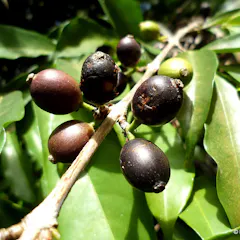
Stenophylla’s black cherries have brightened prospects for a coffee supply that can withstand rising disease, pests and droughts.

The process that brought you your morning latte could have produced half a kilogram of CO₂.

Low-paid workers at both ends of the supply chain – the small farmers who grow most of the crop and the casual staff who serve you at the cafe – weren’t well off even before the pandemic hit.

Coffee production is booming, yet wholesale prices have been falling and global demand is stagnant. What’s happening to one of the world’s favorite beverages?

There are over 100 species of wild coffee, but only a few supply the world’s morning caffeine kick. Sadly, climate change and disease could be about to change that.

Colombia’s coffee industry is at risk due to unpredictable seasons, floods, landslides, droughts and pests. Farmers say they want to learn to adapt to these environmental changes but don’t know how.

Your cup of coffee might cost the world more than you think, but a little knowledge goes a long way if you want to make an eco-friendly choice.

In wartime, food and drink may be a weapon or embodiment of the enemy, but also ‘a token of hope, a soothing relief’. In East Timor, coffee has played a vital role.

In the 1980’s Uganda was one of the largest coffee exporters in the world, far ahead of Vietnam which hardly exported any. Now the tables have turned raising interesting comparative questions.
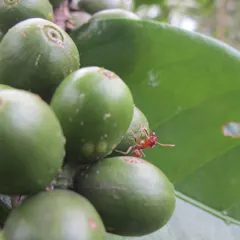
Azteca ants are self-appointed protectors of coffee plants on Mexican plantations. But they have a lot to contend with from other insects.
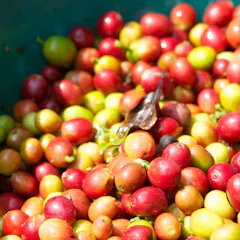
High demand for coffee has pushed growers toward sun or ‘reduced-shade’ plantations that require more water and pesticides while reducing biodiversity.
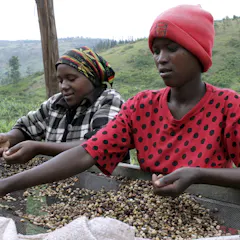
Unless climate change can be mitigated, or farmers can find ways to adapt, the future for coffee production looks bleak.
Top contributors
-

Research associate at African Centre for Cities, University of Cape Town
-
Professor in German Studies, The University of Melbourne
-
Graduate Research Assistant and PhD student, Department of Sociology, University of Kansas
-
Research Associate in Ecology & Evolutionary Biology, University of Arizona
-
International Institute of Tropical Agriculture Research Fellow, University of the Witwatersrand
-
Adjunct Lecturer, Environment and Agriculture, Curtin University
-
Assistant Professor of Communication, Purdue University
-
Assistant Professor of Public Health, Indiana University
-
Professor of Earth System Science, UCL
-
Adjunct Fellow, Southern Cross University
-
Professor, Southern Cross University
-
Senior Research Fellow, Southern Cross University
-
Senior Research Leader, Plant Resources, Royal Botanic Gardens, Kew
-
Postdoctoral research fellow, The University of Melbourne
-
PhD Candidate at CPOM, UCL