
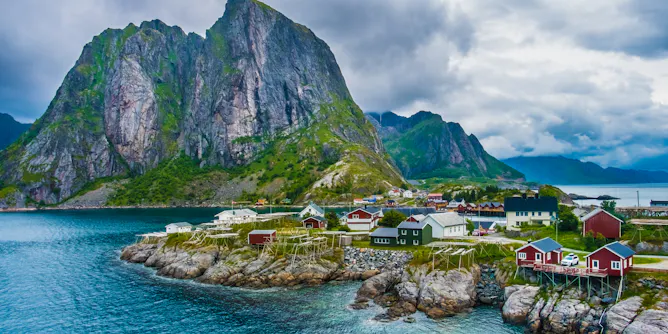
These mobile power systems could be a lifeline for remote, island and disaster-prone places.
Articles on Coastal communities
Displaying all articles
Overfishing and poor enforcement are just two reasons marine ecosystems are struggling to recover.

These underwater disasters can trigger coral bleaching and massive fish kills.
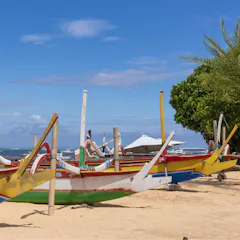
Bali’s traditional elephant-fish canoes embody generations of craftsmanship, spiritual belief and maritime knowledge. But only a handful remain.

Universities must develop an intentional, place-based approach to research and teaching that’s organized around a region’s unique and specific problems.
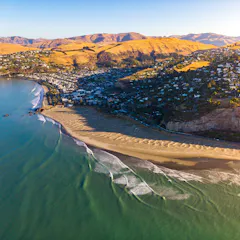
Calculating the dual effect of rising seas and sinking land gives coastal communities a more accurate projection of the impacts of sea-level rise.

Small towns and villages have become places of both abundant investment wealth and social poverty.

Coastal fishing communities in west Africa face increased poverty as fish stocks decline.
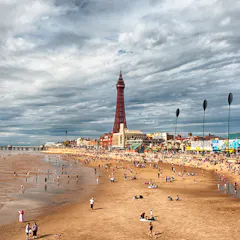
Research shows that coastal communities such as Blackpool have worse health and economic outcomes than their inland neighbours in the UK.
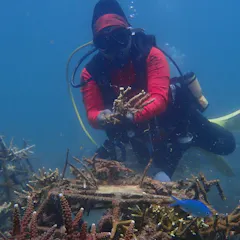
Tourists flock to see coral reefs in Gili Matra, near Bali, which are at growing risk from warming seas. Locals are working to restore coral, while coming up with new income sources – like fish floss.
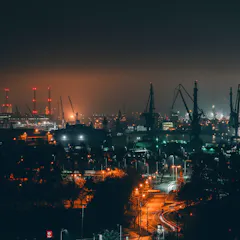
The Baltic port city of Gdańsk, in Poland, showcases how cities might return their waterfronts to residents and restore the industrial landscape.
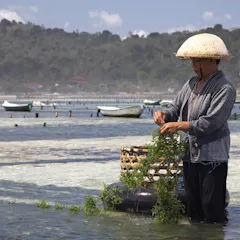
Our recent report identified how to make aquaculture – including shrimp and seaweed farming – more sustainable for Indonesians and for the environment.

Moving entire communities threatened by rising seas isn’t as far-fetched as it sounds.
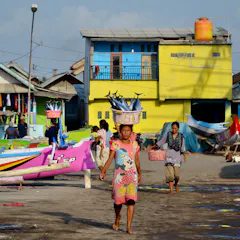
The true cost of marine conservation often falls on vulnerable coastal communities. Can a ‘beneficiary pays’ approach protect both endangered species and the communities dependent on them?
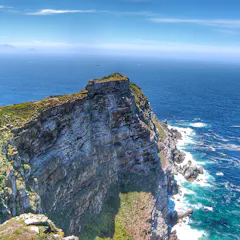
The social, ecological and governance objectives of marine protected areas need to be understood to enhance benefits to both people and the environment.
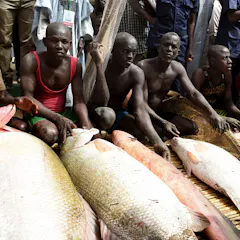
Nigeria must address illegal fishing, which depletes the country’s fish stocks, undermines livelihoods and pushes people into poverty.
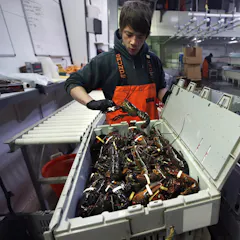
With restaurants closed and prices dropping, fishers are finding new ways to keep their business above water.

Empatheatre’s latest production is more than a play about three characters who live near the sea. It’s a model for collective consultation on how to save the ocean.

Identifying and overcoming barriers to equitable participation in social and economic life can improve the well-being of coastal communities.
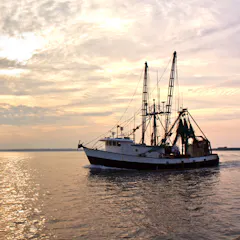
West Coast fisheries policy leaves the door open to speculative investors who see opportunity and can snap up fishing licences and quotas.
Top contributors
-

Lecturer in Sustainable Futures, University of St Andrews
-
Associate Professor, Research Institute for the Environment and Livelihoods, College of Engineering, IT and Environment, Charles Darwin University
-
Conservation Strategist, Oceanographic Research Institute (South African Association for Marine Biological Research)
-
Postdoctoral Research Associate in Urban Studies and Planning, University of Sheffield
-
Fox Research Fellow, Yale University
-
Professor of Health Inequalities, Lancaster University
-
Research Associate in NIHR Health Determinant Research Collaboration, Lancaster University
-
PhD Candidate, Research Institute for the Environment and Livelihoods, Charles Darwin University
-
Adjunct Associate Professor, University of Guelph
-
Honorary Research Fellow, Centre for Advanced Spatial Analysis, UCL
-
Assistant Professor, Marine Affairs, Dalhousie University
-
Senior Lecturer (Associate Professor), University of Strathclyde
-
Associate, Sustainability Science, Harvard Kennedy School, Harvard University
-
Adjunct associate, Universitas Indonesia
-
Postdoctoral researcher, University of St Andrews