

Tiny seafloor creatures play a vital role in coastal ecosystems. New research suggests microplastics may now be interfering with that balance.
Articles on Coastal ecosystems
Displaying 1 - 20 of 28 articles
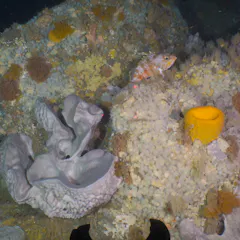
We still know very little about the ecology of mesophotic ecosystems, but they support long-lived protected species that form an essential part of the food web.
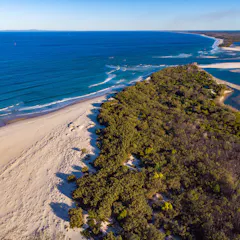
Stories of how the data was collected were fascinating. Some people camped on islands for weeks. Some scaled cliffs or jumped from helicopters onto remote islands.
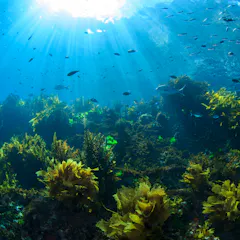
Seagrass meadows, mangroves and kelp forests are carbon sinks. Restoring or protecting them addresses both biodiversity loss and the climate crisis.
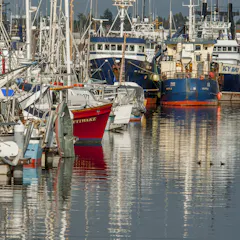
NOAA’s work has kept fisheries from collapsing, helped coastal ecosystems survive extreme heat and battled invasive species, among many other tasks essential to coastal economies.

How much microplastic does a city produce? To find out, we looked at Brisbane’s Moreton Bay, where microplastics build up without being washed away
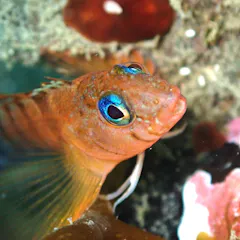
The common triplefin is helping marine scientists understand the negative effects of ‘skyglow’ on coastal fish, which are already more exposed to microplastics, chemicals and noise pollution.

South of Cape Cod, fiddler crabs and marsh grass have long had a mutually beneficial relationship. It’s a different story in the North, where the harms can ricochet through ecosystems.
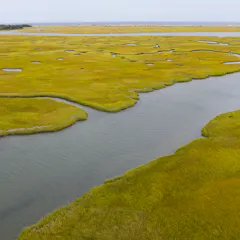
Mangroves and salt marshes pump out methane – but soak up carbon dioxide. Overall, the world’s coasts are a net greenhouse sink – and we must preserve them

We cannot afford to ignore kelp – these vibrant underwater forests have sustained people and ecosystems for centuries, and continue to do so today.
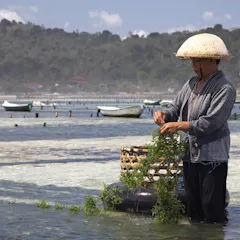
Our recent report identified how to make aquaculture – including shrimp and seaweed farming – more sustainable for Indonesians and for the environment.
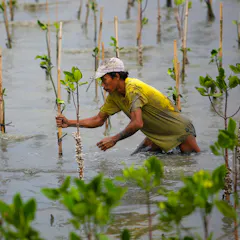
‘Blue carbon’ habitats can store a lot of carbon – but not reliably enough to offset emissions.
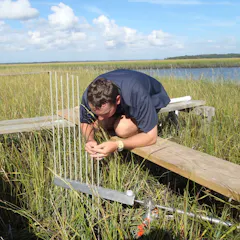
Tidal marshes can build up their soil to keep pace with sea-level rises – up to a point. It turns out the point when the marsh is drowned matches the average rise when global warming exceeds 1.5°C.
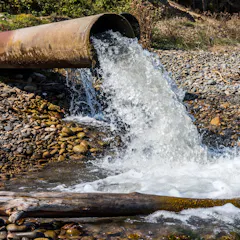
Water and sewerage companies should not be responsible for reporting pollution.
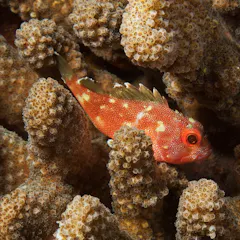
During a 2015 heat wave, scientists watched as a coral reef died before their eyes. By the end of the century, almost all the world’s corals will be gone if climate change continues at this pace.
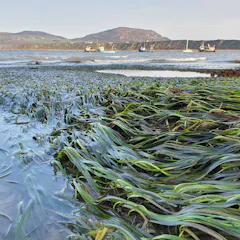
Seagrass meadows are a powerful ally in the effort to slow climate change and reverse wildlife losses.
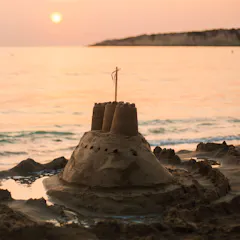
Sea levels could be two metres higher by 2100. How will our relationship to the drowned coast change?
Noise pollution can cause long-term stress and harm to wildlife.
Precautions must be taken to realise the full advantage of the benefits associated with trees.

Empatheatre’s latest production is more than a play about three characters who live near the sea. It’s a model for collective consultation on how to save the ocean.
Top contributors
-

Professor of Marine Science, University of Auckland, Waipapa Taumata Rau
-
Senior Principal Research Scientist, CSIRO
-
Professor of Environmental Microbiology, University of Brighton
-
Senior Principal Research Scientist, CSIRO
-
CSIRO Research Group Leader Ecosystem Modelling and Risk Assessment, CSIRO
-
Director of CORDIO in East Africa and Adjunct Fellow, Pwani University
-
Professor, The University of Queensland
-
Science Program Manager, Climate Science Alliance, University of California, San Diego
-
Administration Manager, Monash University
-
Senior researcher, Durban University of Technology
-
Professor, Marine Evolutionary Ecology, Monash University
-
Marine Biologist, South African National Parks (SANParks); Honorary Research Associate, South African Institute for Aquatic Biodiversity (SAIAB), South African Institute for Aquatic Biodiversity
-
Professor and Chair of the Department of Marine Sciences, University of Miami
-
Adjunct associate, Universitas Indonesia
-
Research Group Leader, CSIRO