

The latest report on climate science comes on the heels of heatwaves, wildfires, flooding and storms. It will help policy-makers act on plans to curb emissions or adapt to climate change.
Articles on Clouds
Displaying 21 - 40 of 52 articles

Solar geoengineering could theoretically cool the Earth to slow global warming, and it has been controversial. Still, countries should research its risks and benefits.

Soot from aeroplane exhausts can linger in the atmosphere, seeding ice clouds which trap heat.

Is it time to take drastic steps to modify Earth’s climate to avoid catastrophic warming? A panel of experts says the idea deserves study.
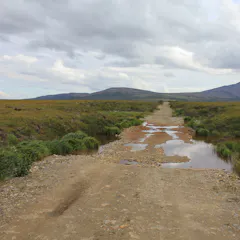
New research shows that permafrost contains huge amounts of particles that make it easier for cloud moisture to freeze. Thawing permafrost is releasing these ice-nucleating particles.

Clouds can act as both blanket and parasol – warming our atmosphere at the same time as cooling it. But which effect will dominate?
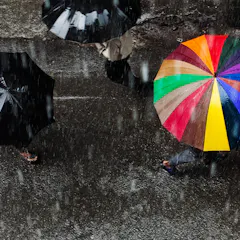
Some rainstorms drench you in a second, while others drop rain in a nice peaceful drizzle. A meteorologist explains how rainstorms can be so different.
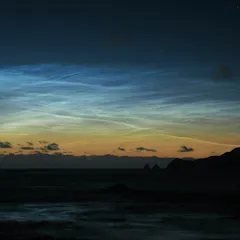
Carbon emissions are chilling the atmosphere 90km above Antarctica, at the edge of space

It’s a lot more than you might think.

Climate models have been overestimating how much sunlight hits the Southern Ocean. This is because the clouds there are different from clouds anywhere else. Bacterial DNA helped us understand why.

You might have already felt what it would be like inside a cloud made of condensed water vapor.

The salt in the sea has built up over billions of years – but it wouldn’t have got there without freshwater rivers and streams.
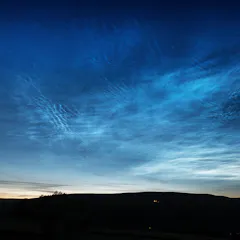
‘Night-shining’ clouds normally found above the poles have now been seen as far south as Los Angeles.
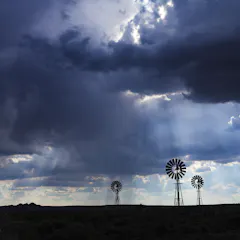
Why is thunder so loud? It’s because the amount of electrical energy that flows from the cloud to the ground is so enormous.
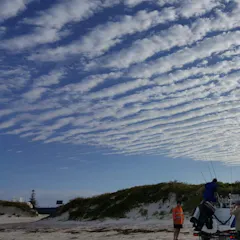
Clouds formed by rising warm air currents are called ‘convection clouds’. Because of all the rising air coming up, these clouds can be bumpy on top, sometimes looking like cotton wool or cauliflower.
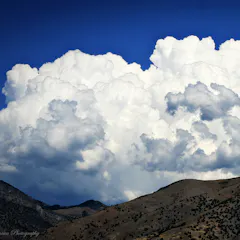
Even a small cloud can weigh as much as four tonnes – but gravity, chemistry and temperature keep them floating in the sky.
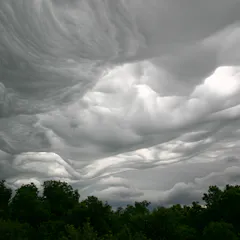
Clouds can reveal a great deal about the world we live in. Here’s what happens when scientists find a whole new type.
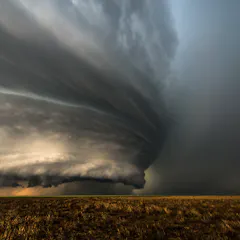
The skies can tell us when there might be trouble ahead.
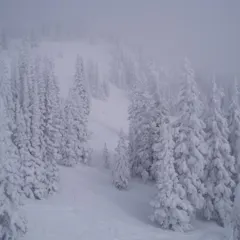
Governments and private companies have been seeding clouds to create snow for decades, without proof that it actually works. A recent study peered into clouds in search of answers.

To answer this question from Fiona, age 6, we need to know some things about clouds and light.
Top contributors
-

Principal Research Scientist in Extreme Weather, The University of Melbourne
-
Research Scientist, Colorado State University
-
Professor of Atmospheric Sciences, Climate Change Research Centre, UNSW
-
Climate Scientist, Australian Bureau of Meteorology
-
Professor of Physics, University of the Witwatersrand
-
Hydrologist, Flood Forecaster, Australian Bureau of Meteorology
-
Associate Professor of Physics, The University of Melbourne
-
Project Scientist, University Corporation for Atmospheric Research
-
NERC Independent Research Fellow, Atmospheric Oceanic and Planetary Physics, University of Oxford
-
Senior Research Associate in Space and Planetary Physics, Lancaster University
-
Research Fellow in Atmospheric Science, University of Leeds
-
Associate Professor of Spanish, University of South Florida
-
Professor of Physics, University of Maryland, Baltimore County
-
Climate Scientist, Australian Bureau of Meteorology
-
Professor of Atmospheric Science, University of Leeds