
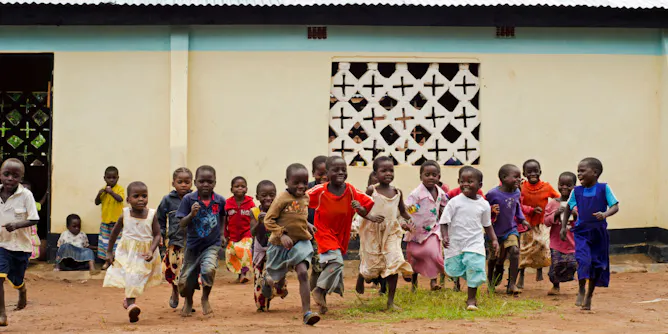
Only 4% of funds earmarked for adaptation to climate change have been targeted for healthcare, childcare and long-term care facilities for the elderly,
Articles on Climatecare2024
Displaying all articles
Simple either/or ways of seeing women overlook the power dynamics and structural factors that give rise to the stereotypes.
The gap must be bridged between new climate programmes and care work that underpins everyday environments.
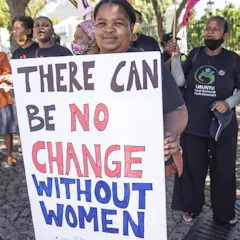
Evidence suggests that a low-carbon transition could worsen gender inequalities if not properly addressed in climate policy.
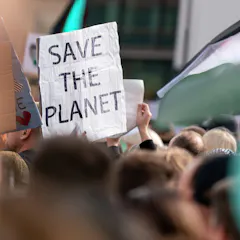
Caring economies are those in which money and markets serve rather than undermine the wellbeing of people and planet.
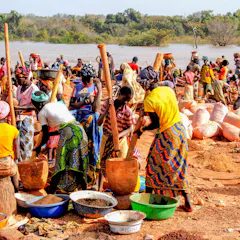
A just transition goes beyond ‘greening’ energy systems. It must also focus on the unrecognised labour – mostly of women – that makes green energy industries possible.
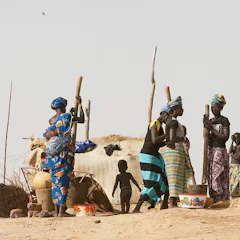
Climate change affects women’s health, livelihoods and security disproportionately because of gender inequality and patriarchal structures.
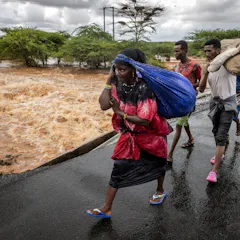
Without comprehensive public and global support for care provision and the integration of care in the climate agenda, unmet care needs will only grow and inequalities will widen.

New approaches to economic policy are needed to address the roots of people’s disenchantment and avert ecological catastrophe.
Top contributors
-

Assistant Professor in Political Economy at the Economics Department, University of Tuscia
-
Department of Economics, Engineering, Society and Business Organization, University of Tuscia
-
Assistant Professor in Political Ecologies of Sustainability, Utrecht University
-
Professor Emeritus, Rutgers University
-
Professor Emerita of Economics, American University
-
Professor of Sociology, University of Essex
-
Associate Professor and visiting Researcher at the Southern Centre for Inequality Studies, University of the Witwatersrand
-
Pro Vice-Chancellor, Climate, Sustainability and Inequality and Director, Southern Centre for Inequality Studies, University of the Witwatersrand
-
Associate Researcher in Climate Change and Inequality, University of the Witwatersrand
-
Researcher in Climate and Inequality, University of the Witwatersrand
-
Practice to Research Associate, UNSW Institute for Global Development , UNSW
-
Professor, Swedish University of Agricultural Sciences
-
Researcher, Institute of Development Studies (IDS)
-
Professor of Gender and Development , London School of Economics and Political Science
-
Professor of Gender and Development, Institute of Development Studies