

Childcare responsibilities, housing access and regional cultural norms influence where Nigerian women work.
Articles on Care work
Displaying 1 - 20 of 23 articles

Across the EU, nearly 10% of long-term care workers are foreign-born.

Simple either/or ways of seeing women overlook the power dynamics and structural factors that give rise to the stereotypes.

The gap must be bridged between new climate programmes and care work that underpins everyday environments.

Caring economies are those in which money and markets serve rather than undermine the wellbeing of people and planet.

Immigration, Refugees and Citizenship Canada must expedite all pending permanent residence applications for migrant care workers to ensure timely family reunification for these essential workers.

Most caregiving work is done by women. However, many contend with trying to balance their caregiving responsibilities with their own well-being and aspirations.

Karina Gould’s parental leave is similar to that of many Canadians. Yet there are key differences, and they offer lessons on how parental leave could be redesigned to help more Canadian parents.

COVID was a ‘gendered pandemic’, with women carrying very different burdens to men. A three-year New Zealand research project aimed to overcome the urge to forget, and provide lessons for the future.

Alva Gotby’s book encourages women to refuse the labour of care – and even suggests abolishing the nuclear family.

Alternative working arrangements like gig platforms might help immigrant workers find temporary work, but many care professionals are still unable to find permanent jobs in their industry.

Among the top economists surveyed was the man who designed Australia’s higher education loans scheme – who described funding for vocational education as a “mess”.

It’s time to complete the picture and recognize public expenditures on supports for family caregivers as social investments in the well-being of individuals, families and communities

New research shows that though we are good at making healthy choices for those we care for, we are often subsequently less good at taking care of ourselves.

Women often feel stuck caring for others. We must consider how we can learn from them and from care scholars about what needs to change.
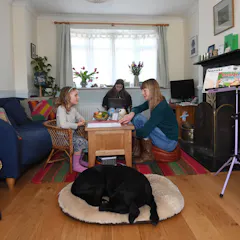
On average, mothers did two hours of childcare for every one hour done by fathers during lockdown. Will that change once children are all back in school?

We need a new childcare system that encourages women to work, not punishes them for it

Teaching robots to care for us in old age will be child’s play.

Working as a professional carer is a stressful and high-pressure job. Making sure carers have the right training and support is crucial.

Once artificial intelligence takes over task-based and calculative jobs, the invisible care work that underpins our offices, marketplaces and institutions could finally become more visible and valued.
Top contributors
-

Research Fellow, University of Surrey
-
Director, Centre for Sustainable Communities, University of Canberra
-
Director of the Salford Institute for Dementia, University of Salford
-
Professor and Co-Director, Research on Aging, Policies and Practice, University of Alberta
-
PhD Researcher in Dementia Care, King's College London
-
Professor and Canada Research Chair in Gender, Work, and Care, Brock University
-
Doctoral Candidate, Aging, Health and Well-being, University of Waterloo
-
Senior Lecturer, Te Huataki Waiora School of Health, University of Waikato
-
Postdoctoral fellow in Sociology, Brock University
-
Research Manager, Research on Aging Policies and Practice, University of Alberta
-
Visiting Fellow, Crawford School of Public Policy, Australian National University
-
Professor of Economics, University of Bristol
-
Post-doctoral Fellow, Sociology, University of British Columbia
-
Canada Excellence Research Chair in Migration and Integration, Toronto Metropolitan University
-
Assistant Professor, Department of Sociology, University of Akron