
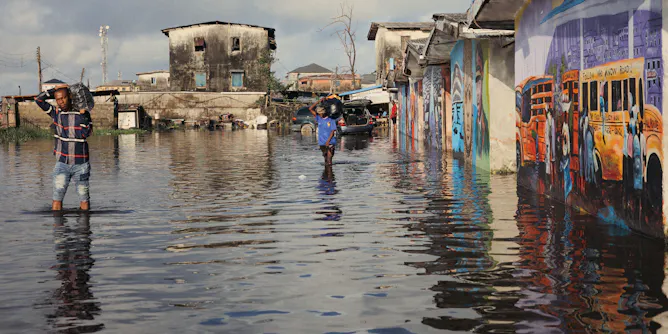
Crises that add up on top of each other have to be addressed in an integrated way.
Articles on Climate-related disasters
Displaying all articles

Health systems are made up of people who are often members of the same disaster-stricken communities they serve. They respond to climate-related events, but are affected by them too.
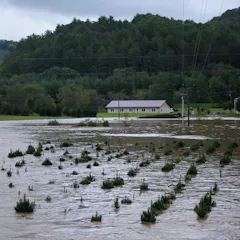
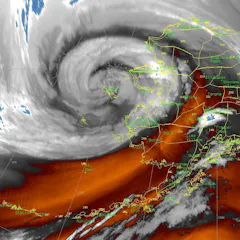
If your area experiences a 1,000-year rainfall event, don’t assume that you’re off the hook for the next 999 years.

An expert on Puerto Rico’s recovery from Hurricane Maria explains why it’s hard for the US to deliver disaster aid in places like Hawaii and Puerto Rico.
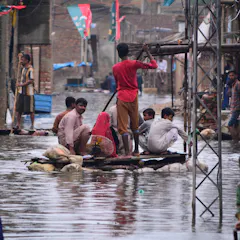
That’s the big question at the upcoming UN Climate Change Conference, known as COP27, and it’s controversial.
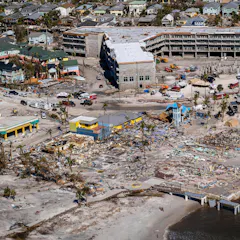
A recovery expert explains what these estimates include and what could be done to make disasters less costly.
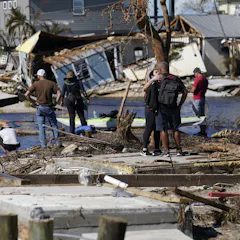
Many government agencies help people whose lives are thrown off course, but not everyone is eligible or able to access that aid.
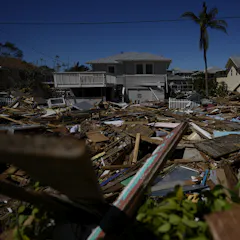
Research on Hurricane Harvey found that flood insurance and strong social networks were key factors in determining how quickly people recovered, regardless of socioeconomic status.
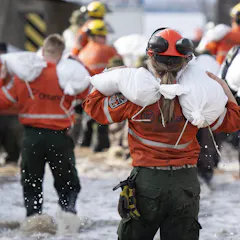
Most of the flooded communities are Indigenous and rely on subsistence hunting that residents would normally be doing right now. Recovering from the damage will make that harder.
Reducing greenhouse gases is expensive, but it’s a great investment compared to the damage we can expect to the Canadian economy if the climate warms 5 C by 2100.
Top contributors
-

Research Fellow in Climate Policy, The Fletcher School, Tufts University
-
PhD Candidate - Finance, Queen's University, Ontario
-
Alaska Climate Specialist, University of Alaska Fairbanks
-
Professor of Public Policy, University of Southern California
-
Assistant Professor of Sociology, University of Wisconsin-Madison
-
Director, Hazard Reduction and Recovery Center; Associate Professor of Urban Planning, Texas A&M University
-
BMO Professor of Finance, Queen's University, Ontario
-
Associate Professor of Landscape Architecture and Urban Planning, Texas A&M University
-
Assistant Professor of Sociology, Rice University
-
Director, North Carolina State Climate Office, North Carolina State University
-
Professor of Atmospheric Science and Colorado State Climatologist, Colorado State University
-
Assistant Professor, Health Sciences, Simon Fraser University
-
MD Candidate, University of British Columbia
-
Professor Emeritus, Faculty of Health Sciences, Simon Fraser University
-
Deputy Director, CPAN; Research Fellow, IDS, Institute of Development Studies