
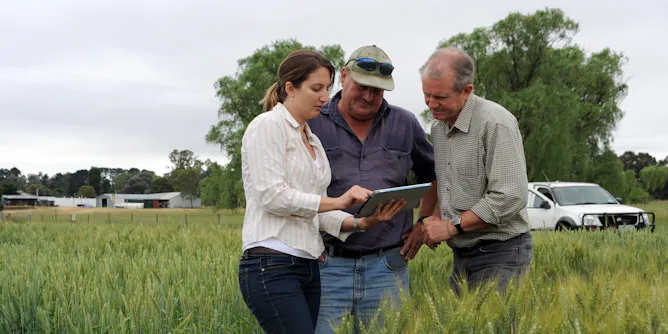
We developed My Climate View to help Australian farmers and producers better understand the risks and opportunities they face over the next 50 years. Road-testing with farmers was vital.
Articles on Climate projections
Displaying all articles

Global climate models don’t let us zoom in on the fine details. A new set of high-resolution climate models for Australia is solving this problem.
There’s a 98% chance of a record hot year by 2028, and a 66% chance of exceeding the 1.5°C threshold for at least that year, according to the latest World Meteorological Organization update.
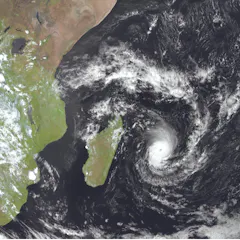
The record-breaking Cyclone Freddy was a wake-up call to prepare for the storms of the future.
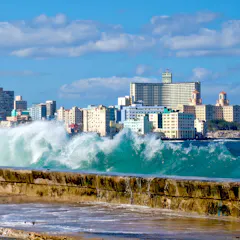
Sea-level rise isn’t the only climate-related problem for our coasts – extreme waves that cause flooding and erosion are also changing, but exactly how is hard to predict.
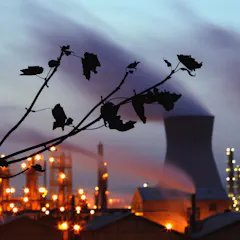
Most claiming to be compatible with the climate agreement show a strong continuing reliance on natural gas and coal.
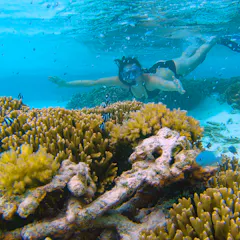
We need new experiments to model Earth’s climate if global warming is stabilised at 1.5°C. A new paper explains why.
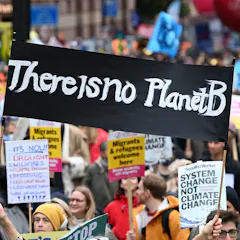
A new climate projection found Glasgow pledges leave the world off-track for limiting warming to 1.5°C. What needs to happen in the final days of frantic COP26 negotiations to close the ambition gap?
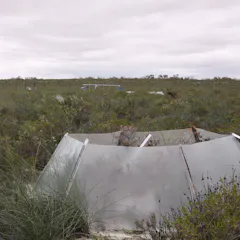
A real-life experiment to mimic future conditions for soils affected by climate change suggests that some of the biggest impacts could be to ecosystems buried out of sight beneath our feet.
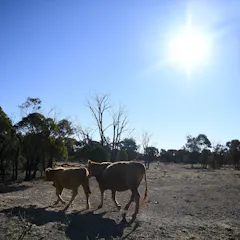
A decade ago, only a third of farmers accepted the science of climate change. But surveys show attitudes have shifted in recent years as the farming community begins to confront what the future holds.
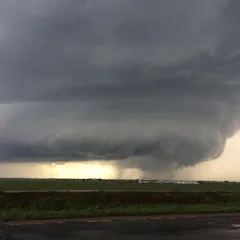
The amount of atmospheric energy available to thunderstorms will increase in response to climate change, putting the tropics and subtropics at risk of being lashed with more intense storms.
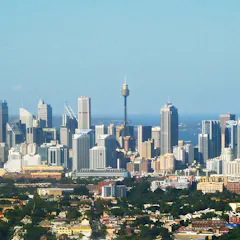
Future extreme heat is worse and coming sooner than you might think. Unless we mitigate and adapt we face increasing death rates.
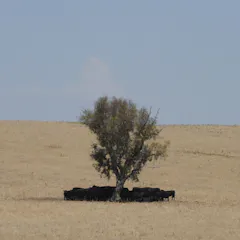
Global warming of 2°C, the higher of the two Paris targets, would see current record-breaking temperatures become the norm in the future, potentially bringing heatwaves to both land and sea.
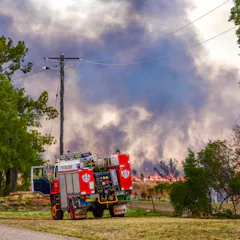
Heat records have tumbled across New South Wales as the state suffered through the weekend’s heatwave. A new analysis shows that climate change made this kind of event much less of a rarity.
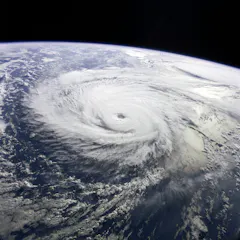
Far from being “politicised science”, as a Trump advisor has claimed, NASA’s satellite monitoring has been a crucial help in understanding the planet we live on.
Marine sediments provide evidence of climate variability in South Africa going back 270,000 years. These changes correspond with changes in the archaeological record of the country.
Top contributors
-

ARC Future Fellow and Associate Professor in Climate Science, ARC Centre of Excellence for 21st Century Weather, The University of Melbourne
-
Principal Research Scientist, CSIRO
-
Professor, Environmental Futures & Securing Antarctica's Environmental Future, School of Earth, Atmospheric and Life Sciences, University of Wollongong
-
Professor of Climate Science, University of Reading
-
Deputy Director, Engagement and Impact, The ARC Centre of Excellence for the Weather of the 21st Century, Australian National University
-
Matthew Flinders Professor in Water Economics, Flinders University
-
Lecturer, School of Agriculture, Food and Ecosystem Sciences, The University of Melbourne
-
Honorary Associate Professor in Environmental Health, Australian National University
-
Associate Professor in Atmospheric Chemistry, University of Wollongong
-
Research Assistant, UNSW
-
Research Director, Inrae
-
Postdoctoral Fellow, Uni Research
-
Professor emeritus, The University of Melbourne
-
Associate professor, The University of Melbourne
-
Honorary Research Fellow, The University of Melbourne