

Climate modelling in the 1980s offered the first glimpses of what might lie beyond a nuclear war.
Articles on Climate modelling
Displaying 21 - 40 of 82 articles

The 2021 Pacific Northwest heatwave outstripped even the most severe climate prections. A new study simulated 45,000 years of weather at Seattle Tacoma airport to try and figure out why.

Turbulence strong enough to pose an injury risk could be set to double or triple in frequency in the future.
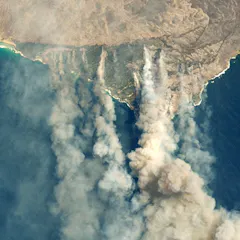
Where there’s fire, there’s smoke – could plumes from the Black Summer of fire have cooled regions of the Pacific and triggered a La Niña? New research suggests it’s possible.

The ocean absorbs a quarter of the CO₂ emitted by humans, thanks in particular to phytoplankton, including diazotrophs. Knowing how to model them is crucial to understanding the ocean’s role in climate.

From more accurate climate modelling to the prospect of truly creative computers, the brain’s use of noise has a lot to teach us.

A recent paper suggested damaging climate tipping points could be closer than first thought.
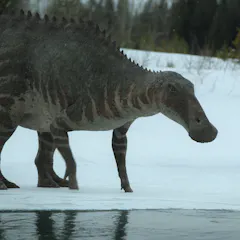
Yes, dinosaurs really did survive in snow – we simulated the Cretaceous climate to prove it.
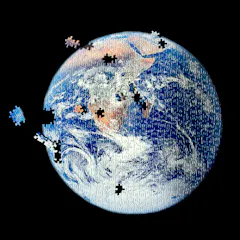
Climate models from the 1970s and 80s stand up incredibly well when compared with actual warming trends.

More than half of the world’s best growing land could become less suited for coffee.

We simulated the desert planet to find out.

We need new experiments to model Earth’s climate if global warming is stabilised at 1.5°C. A new paper explains why.
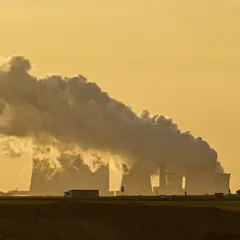
One of the most famous stats in the climate debate is the 97% of scientists who endorse the consensus on human-induced global heating. Ahead of the Glasgow summit, that figure has climbed even higher.

Is Dune scientifically plausible? We ran a climate model to find out.
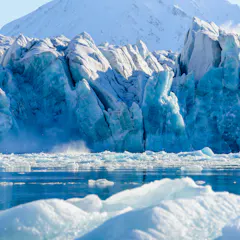
A new modelling approach improves projections of Antarctica’s future ice loss. It shows a low-emissions scenario would avoid the collapse of West Antarctica’s ice sheet and limit sea-level rise.
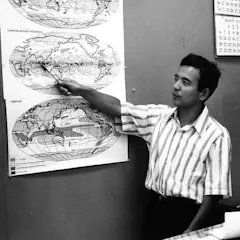
A 1967 study by Nobel-winner Syukuro Manabe changed climate science forever

Syukuro Manabe and Klaus Hasselmann have won the Nobel prize in physics for their climate modelling research.
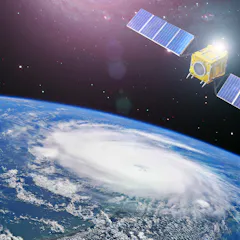
The amount of climate data available to us is growing exponentially, and is far too much to sort through ourselves. But machines can do this for us.

An article in the eminent US magazine Science has triggered debate over whether scientists should use climate models. Here’s what you should know about climate models ahead of today’s IPCC report.
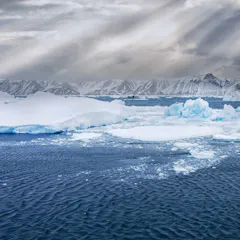
The Southern (Antarctic) Ocean is our planet’s primary storage of heat and carbon, and it’s home to extraordinary life forms, from tiny algae and spineless creatures to penguins, seals and whales.
Top contributors
-

ARC Future Fellow and Associate Professor in Climate Science, ARC Centre of Excellence for 21st Century Weather, The University of Melbourne
-
Senior Research Associate in Meteorology, University of Bristol
-
Deputy Director, Engagement and Impact, The ARC Centre of Excellence for the Weather of the 21st Century, Australian National University
-
Research Associate in Paleoclimate Modelling, University of Bristol
-
Associate Professor, Oceans Ice and Climate, University of Tasmania
-
Senior Research Fellow, Melbourne School of Psychological Sciences, The University of Melbourne
-
Research Lead Future Electrical Machines Manufacturing Hub, University of Sheffield
-
Professor of Climate Change Impacts, Newcastle University
-
Professorial Research Fellow, Victoria University
-
ARC DECRA Fellow, UNSW
-
Emeritus Reader in Policy Modelling, Cambridge Judge Business School
-
Associate professor, The University of Melbourne
-
Chief Scientist, Australian Antarctic Division and Professor of Climate Science, Australian National University
-
Lecturer, School of Agriculture, Food and Ecosystem Sciences, The University of Melbourne
-
Researcher, Oceans and Atmosphere, CSIRO