
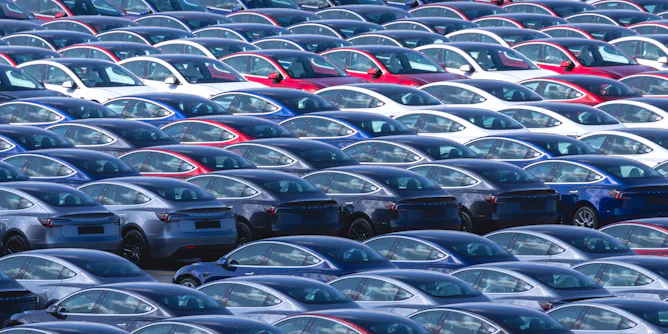
A ‘bidirectional charging’ EV trial is under way that, in years to come, could help solve the UK’s energy conundrum.
Articles on Clean energy
Displaying 21 - 40 of 234 articles

Early warnings about the Cheaper Home Batteries Program have come true. But there are ways to fix it.
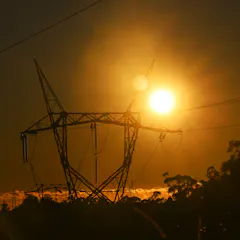
Australia’s renewable boom has created a new bottleneck: grid access. As new transmission line costs blow out amid protests, we need to optimise the build.
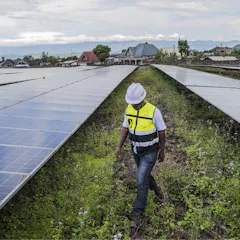
Politics is just one challenge. The cost of borrowing to build wind and solar farms is another, especially in fast-growing developing countries. There are solutions.
Welcome to the age of competitive decarbonisation.
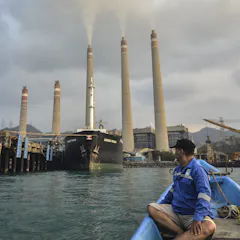
Nearly a third of all countries worldwide have pledged to phase out their unabated coal-burning power. But China and India are still adding coal plants – for now.

Nearly two-thirds of Australian towns have no public EV charger within 5 km – and that’s just the start of the gap.

Snowy 2.0 will bring something genuinely new to Australia’s electricity system: large and long lasting energy storage

As China secures its role in clean tech exports, the US is doubling down on fossil fuels – and pushing allies to buy US gas.
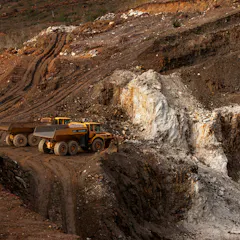
Global energy giants are turning their focus to critical minerals. With such deep-pocketed players, Australia must invest heavily if it wants to stay in the race.
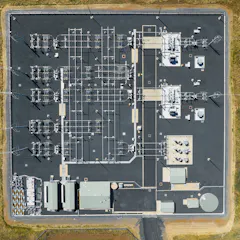
Australia could be a global champion for sustainable data centre growth.

Even as clean energy progress slows in the US and EU, developing nations such as Bhutan, Nepal, Sri Lanka and the Maldives are surging ahead.
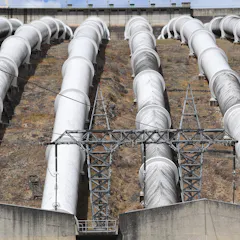
As the cost of Snowy 2.0 rises yet again, defenders claim the scheme can store energy cheaper than batteries. But this doesn’t stack up.

An equitable net-zero transition requires promoting regional competitiveness while ensuring no place is left behind.

It doesn’t sound big. But this humble new set of rules will make it possible for many Australian households to export a lot more solar – and help the power grid .
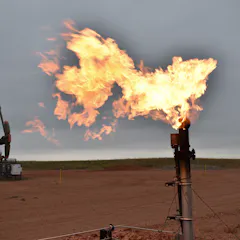
Even fossil fuel companies have found that clean energy can reduce costs.
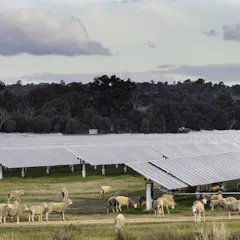
Getting to net zero relies on the bush. Rapid change can create tensions – but media framing and vested interests have inflamed the situation.
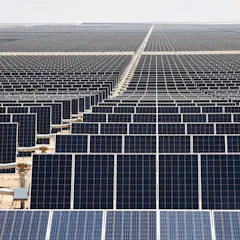
Weaning ourselves off fossil fuels is glacially slow – isn’t it? This pessimistic narrative doesn’t stack up against evidence of very rapid change in the real world.
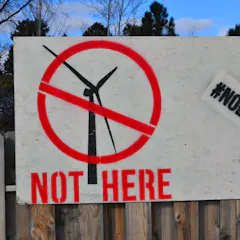
Opposition is often rooted in a worldview in crisis.
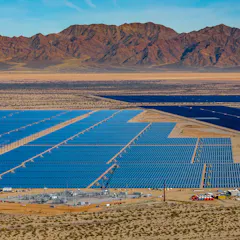
We need to reduce the costs of getting to net zero. Better emissions-reduction incentives and faster approvals processes for renewable energy would be a good start.
Top contributors
-

Research Associate, Institute for Climate Risk and Response, UNSW
-
Senior Fellow in Energy and Climate Change, Grattan Institute
-
Professor, School of Economics, The University of Queensland
-
Professor, Australian and Aboriginal History, Faculty of Arts, Design and Architecture, Convenor: Indigenous Land & Justice Research Group, UNSW
-
Professor of Engineering, Australian National University
-
Professor and Director, Victoria Energy Policy Centre, Victoria University
-
Professor of Civil and Environmental Engineering, Rice University
-
Professor of Mechanical Engineering, UMass Amherst
-
Research Principal, Institute for Sustainable Futures, University of Technology Sydney
-
Climateworks Centre CEO, Monash University
-
Senior research fellow, Australian National University
-
Professor, Crawford School of Public Policy and Director, Centre for Climate and Energy Policy, Australian National University
-
Senior Industry Fellow, Environment and Planning, RMIT University
-
Research Fellow, Australian National University
-
Professor of Law, Deakin University