
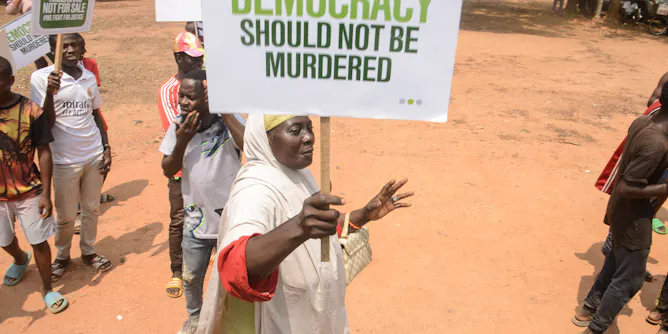
Good governance is the missing link in Nigeria’s democratic experience since 1999.
Articles on Civil society
Displaying 21 - 40 of 83 articles
The push for national trials reflects a disappointment with the slow pace and high costs of international justice.
The Kenyan state has historically viewed forests in terms of production and economic development – not biodiversity and conservation.
Energy firms are likely to lie about their corporate social responsibility to the environment. Their deception can be turned around for good if they are held accountable.
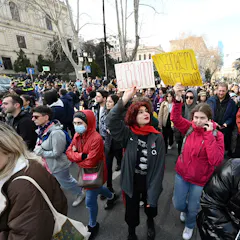
Foreign agent laws claimed as a tool to fight back against foreign interference can also be used to silence critics and repress law-abiding NGOs, independent media and individuals.

Discrimination against anyone based on their sexual orientation or gender identity is not an African value.
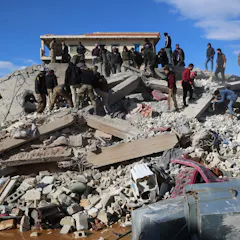
A scholar who visited Syria after the earthquake observes that as the war has dragged on, a humanitarian organization she’s researched for 10 years has branched out.

Neil Agget’s passionate trade unionism proved fateful. It made him a target of a brutally repressive apartheid police state.

The spy watchdog needs to make its findings on complaints against the country’s intelligence agencies public as a matter of principle.
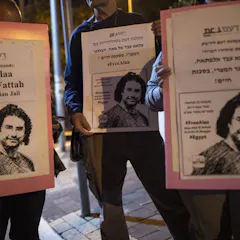
Many people accept the Egyptian government’s restrictions on freedoms, for a variety of conflicting reasons.

A scholar of humanitarianism sums up what she saw on the ground during a five-week research trip to Poznań, Lublin, Warsaw, Krakow and several smaller cities along the Poland-Ukraine border.
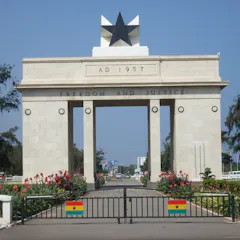
Ghana’s civil society has contributed to taming the power of a strong state.
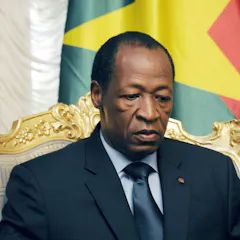
The guilty verdict on Blaise Compaoré should be celebrated as a landmark victory for democracy and peoples’ movements in Africa.
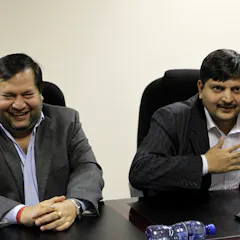
The scale of the Guptas’ rapaciousness meant that, within just a few years, the institutions they leeched were in a state of collapse.
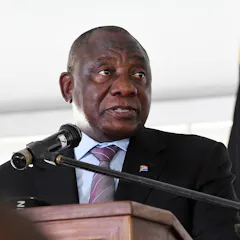
The willingness of the executive to pre-empt criticism by amending COVID regulations has arguably strengthened its position.
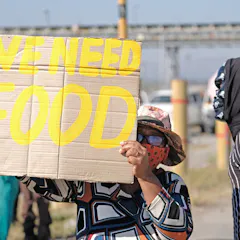
These organisations are ideally placed to contribute their fine-grained local knowledge. They intimately understand the specific needs of the most vulnerable in their communities.

South Africa’s public sector works somewhat better than those of most other middle-income countries. Yet, unlike them, it has not managed to achieve gains in the midst of messiness.
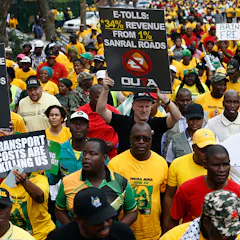
In this moment of crisis, South Africa urgently needs decisive action. But all too often South Africans of all political stripes seem trapped in stale discourses.
A UN working group on cybersecurity is making incremental progress in highlighting the importance of including and protecting civilians.

How can democratic nations help fledgling democracies and others struggling against the tide of autocrats?
Top contributors
-

Professor of International Human Rights Law, Centre for Human Rights, and acting SARChI Chair in International Constitutional Law, University of Pretoria
-
Associate Professor in Urban Geography, University of Sydney
-
Professor of the Practice of International Development, Johns Hopkins University
-
Professor of Sociology, Northern Illinois University
-
Adjunct professor, La Trobe University
-
Reader in Law, Univeristy of Manchester, University of Manchester
-
Visiting Professor of Sustainability Science, Technical University of Denmark
-
Public Service Accountability Monitor: Advocacy Impact Programme Head, Rhodes University
-
Lecturer in International Development, The Open University
-
Max Weber Post-Doctoral Fellow, European University Institute
-
Senior Research Fellow, Social Policy Research Centre, UNSW
-
ANZSOG Adjunct Research Fellow, Curtin University
-
Associate professor, O'Neill School of Public & Environmental Affairs, Indiana University
-
Emeritus Professor of Sociology, University of Nevada, Las Vegas
-
Research Associate in Higher Education Participation, Cardiff University