

For experiential learning to remain vital, it must engage communities to improve social outcomes.
Articles on Civic education
Displaying all articles

Two revolutions, two republics and the enduring power of national myths and civic festivities come to the fore in July as France and the US both celebrate national holidays.

Young people spend a large part of their daily lives in school: learning, debating, forming friendships and imagining their futures.

Investing in professional support systems for politicians and public servants is long overdue.

For ancient Athenians, democratic speech was both a right and a responsibility.
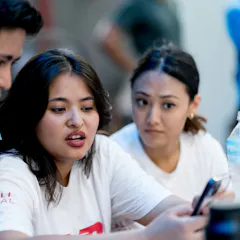
AI has generated enormous challenges in post-secondary education. It also offers potential for citizenship education, if handled properly.

Students more informed about politics scorn party membership and campaigning, which are often associated with corruption and violence.
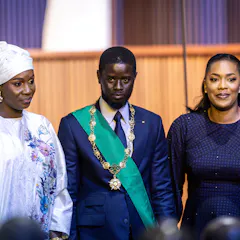
Senegal elections are offering citizens a peaceful, legal way to influence their leadership and government.

No campaigners said the Voice wasn’t the right solution, that they had better alternatives. In the 12 months since the referendum failed, no one’s offered any real solutions.
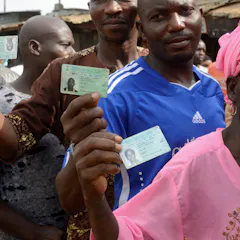
Logistical challenges facing the 2023 elections remain huge given the number of political parties, the security environment and the number of contestants at various levels.

After 1994 efforts were made to embed democracy. The focus was on policy and institution-building. What was missing was ensuring all South Africans were on board.

To build a political culture that supports democracy in South Africa, civic education needs to move beyond voter education.
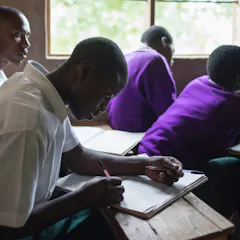
In Uganda, young people’s knowledge of national political institutions, and on how they would claim and advocate for their rights as citizens, was remarkably low.
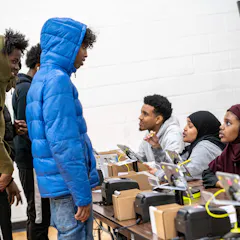
Young voters are important to the continuity of democracy because voting at a young age leads to continued voting throughout life. This year more than most, they’ll have a hard time getting started.

The idea that a small payment could motivate more people to vote resurfaces regularly, but this ignores evidence that monetary incentives to induce pro-social behaviour can be counterproductive.
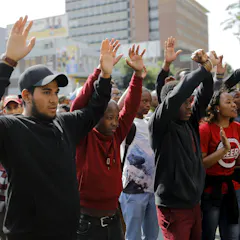
South Africa’s universities are detached from society because of a waning public and civic sector that once fueled the anti-apartheid struggle. Here’s what can be done.

Cyberbullying has become destructive and feels unstoppable. Here is a five-step technique for dealing with it.

Results from the latest report into civics and citizenship education show by the time students hit year ten, the majority of them have little knowledge about Australian civics and democracy.
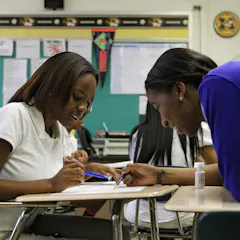
Only about 40-45 percent of 18-to-29-year-olds turned out to vote in the 2012 election. Civic education can improve youth turnout. But civic education itself remains neglected in US schools.

Ninety-seven percent of high school seniors have studied civics in school. While they can recall facts, they are unable to apply that knowledge to current politics. Why is that?
Top contributors
-

Deputy Director at CIRCLE, Tufts University
-
Tisch College Associate Dean for Academic Affairs and Lincoln Filene Professor, Tufts University; Institute for Humane Studies
-
Vice-Chancellor and President, Australian Catholic University
-
Director of Program Management at IE Digital Learning and Adjunct Professor of Humanities, IE University
-
Senior Advisor ( Research and Communications), Australian Catholic University
-
Associate Professor, Educational Technology, Université Laval
-
Senior Research Fellow, Centre for the Advancement of Scholarship, University of Pretoria., University of Pretoria
-
Professor of Public Affairs, Tshwane University of Technology
-
Professor of Political Institutions, Governance and Public Policy, University of Ibadan
-
Director Community Service-Learning, University of Alberta
-
Director, Center for Information and Research on Civic Learning and Engagement in the Jonathan M. Tisch College of Civic Life, Tufts University
-
Chief Research Specialist in Democracy and Citizenship at the Human Science Research Council and a Research Fellow Centre for African Studies, University of the Free State
-
Senior Lecturer in Public Administration, University of Glasgow
-
125th Anniversary Chair and Professor of Politics and Public Policy at the University of Birmingham, University of Sheffield
-
Professor Enterprise, Engagement, and Impact, University of Birmingham