
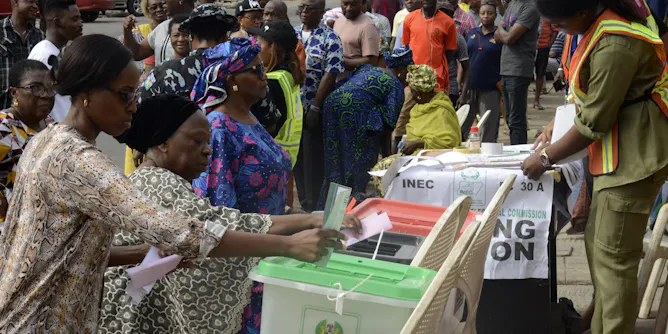
Nigeria’s new electoral act doesn’t tackle some of the real problems of electoral governance.
Articles on Voter apathy
Displaying all articles
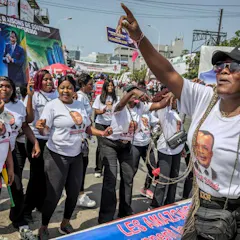
The challenges of the election remain voter apathy, fractured opposition and a shrinking civic space.

It’s not that youth don’t care enough to vote. It’s that they are turning away from conventional, formal participation in favour of alternative ways of sharing and expressing their views.

Côte d’Ivoire’s 27 December legislative elections will be a test of the country’s democratic resilience.

Elections in Nigeria are marked by violence. The 2027 polls risk repeating the deadly cycle.

Students more informed about politics scorn party membership and campaigning, which are often associated with corruption and violence.
Neither heroic behaviour nor exceptional courage is required to engage in these accessible building blocks of a sustainable democracy.
If political parties respect voters and focus on policy rather than polls and partisan hackery, Canadians might have something substantive to choose from when the next federal election is called.
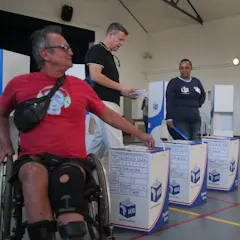
Racial identities continue to shape voter behaviour in post-apartheid South Africa.
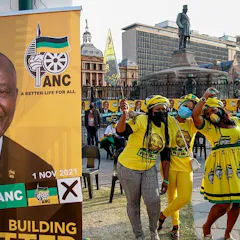
Dissatisfied ANC voters were much more likely to switch their votes if they held positive views of an opposition party. However, the problem for the opposition is that few people held these views.

Greater awareness of the importance of voting is needed to improve the voter turnout in Nigeria’s elections.
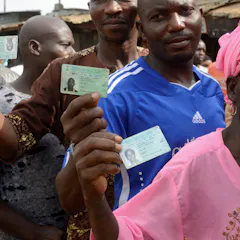
Logistical challenges facing the 2023 elections remain huge given the number of political parties, the security environment and the number of contestants at various levels.

The U.S. midterms revealed a generational shift away from youth voter apathy. The apathetic, in fact, seem to be those trying to accurately measure public opinion using outdated methods.

Problems with party politics abound, largely driven by the fusion of executive and legislative powers that enforces party discipline. Here’s how to get the public more involved.

Unable to change the country’s vulnerability to shifts in the global and regional economy, the new prime minister Matekane has few economic levers to pull.

At a time when democratic norms appear to be in decline around the world, deliberative democracy is one potential remedy worth pursuing.
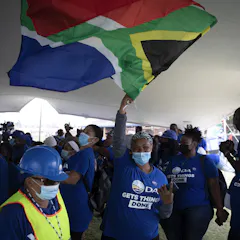
The 2021 local government elections signals widespread disillusionment with representative democracy that only a sea change in service delivery can fix.

Every vote counts in one way or another, even if you live in a safe seat – here’s why.
Top contributors
-

Professor of Political Institutions, Governance and Public Policy, University of Ibadan
-
Former Senior Lecturer in Comparative Politics
-
Associate Professor in Political Science, Stellenbosch University
-
Professor in Government and Public Policy, University of Strathclyde, and Adjunct Professor in the Nelson Mandela School of Public Governance, University of Cape Town, University of Strathclyde
-
Professor of Politics, Queen Mary University of London
-
Postdoctoral Fellow, University of Canberra
-
PhD Candidate, Political Science, Dalhousie University
-
Senior Lecturer, Department of Political Science, University of Nigeria
-
Professor, Sociology, University of the Western Cape, Nelson Mandela University
-
Senior lecturer, University of Edinburgh
-
Associate professor and Founding Fellow, MacEachen Institute for Public Policy and Governance, Dalhousie University
-
Professor, Department of Child and Youth Studies, Brock University
-
Associate Professor, University of Utah
-
Professor Emeritus in Clinical and Health Psychology, University of British Columbia
-
Associate Professor, Institute of Political Science, Leiden University