

Enticing young people to read will require a concerted effort by parents, carers, teachers and public intellectuals to promote reading for enjoyment.
Articles on Children's literacy
Displaying 1 - 20 of 28 articles

Munsch wrote back to me after I wrote him a letter at age 11. His longstanding connections with readers highlight how the relationships nurtured through story shape identity in enduring ways.

Fostering children’s love of literacy is an accessible and practical way for families to be involved in the process of their early literacy development.

Reading aloud to kids helps their vocabulary and comprehension. These are skills we continue to build all through our lives.
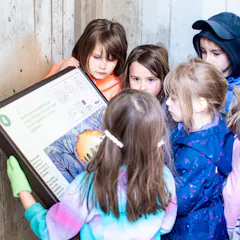
Who belongs at university? Fostering connections between a downtown campus and families facing social, cultural and economic barriers can begin early with literacy and community-building programs.

A school psychologist shares tips on when to seek assessment for suspected learning issues and how to help elementary school students with reading.
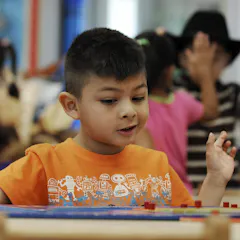
Kindergarteners’ literacy and active play are both grounded in the science of learning.
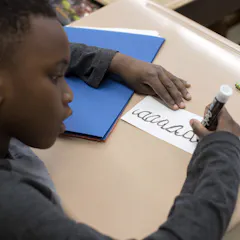
Developmentally progressive instruction allows children to learn handwriting. An open-educational resource by literacy and writing experts supports instruction for kindergarten to Grade 3 children.

Engaging in purposeful, meaningful and strategic conversations with children can directly support children’s language comprehension, an important component of reading.

Parents in a study about the accessibility of French immersion programs discussed inadequate support for learning to read and feeling pressured to pay for expensive tutors.
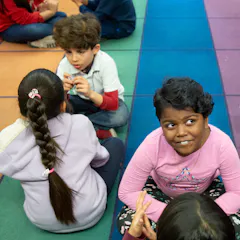
A key way to support mental health and well-being is to support strong reading instruction especially early in children’s education.
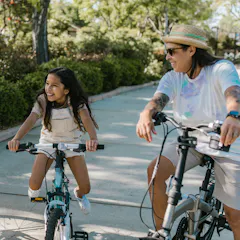
Any activity that you and your child enjoy can be educational, sometimes with just small tweaks.
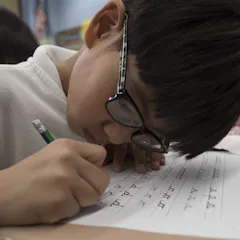
Handwriting is a learned skill that must be taught through direct, developmentally progressive, consistent and sustained instruction. Teachers will need professional development and resources.

Children’s books that feature Asian protagonists are rare. Two scholars decided to offer their own in their attempt to reduce racial prejudice.
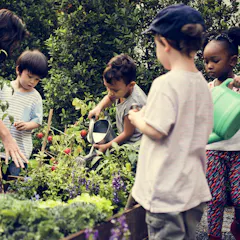
Having a vast and deep vocabulary affords precision and nuance in making meaning of the world, and this is key to children becoming proficient readers.

Political will is key to tackling pupils’ literacy struggles.

These interventions have the potential to boost South African children’s literacy.
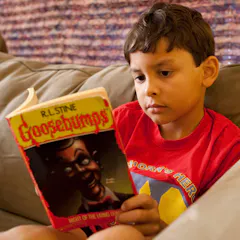
Sensitivity edits benefit copyright holders, who wish to keep less tasteful elements of the works they control out of the public eye.

Let Dahl’s books be seen for what they are: things of the past, to be appreciated as such.

How to make a ‘fortune teller’ or ‘chatterbox’ with children, and why the paper activity targets many developmental domains at once.
Top contributors
-

Professor, Werklund School of Education, University of Calgary
-
Sessional Instructor, Faculty of Education, University of Windsor
-
Professor of Elementary Literacy, Ontario Institute for Studies in Education, Department of Curriculum, Teaching and Learning, University of Toronto
-
Professor, Canada Research Chair in Determinants of Child Development, Owerko Centre at the Alberta Children’s Hospital Research Institute, University of Calgary
-
Assistant Professor, Department of Psychology, Université de Montréal
-
Associate Professor, Werklund School of Education, University of Calgary
-
Professor Emeritus, School of Communication Sciences and Disorders, Dalhousie University
-
Associate Professor of Education, York University, Canada
-
Professor, Department of Applied Psychology and Human Development, University of Toronto
-
Senior Lecturer in Creative Writing, University of Bristol
-
Senior Researcher, University of the Western Cape
-
Clinical Professor, Psychiatry, McMaster University
-
Associate Professor, Faculty of Education, University of Windsor
-
Associate Professor (Language and Literacy in Education), University of Cape Town
-
Professor of Education, Deakin University