
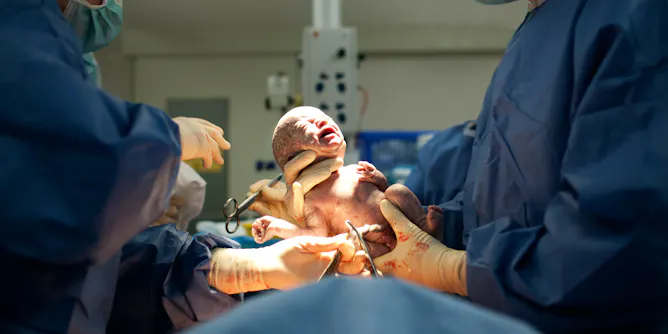
We looked at almost 300,000 births and found those mothers in the private system were more likely to have a caesarean – even if they didn’t really want or need one.
Articles on Childbirth
Displaying 61 - 80 of 189 articles

Go back to 17th- and 18th-century England and France and you’ll see the same sort of handwringing over birthrates that we’re seeing today.

First-hand family accounts and photographs trace the difficulties and traumas of giving birth and looking after a baby during a pandemic.

The plight of women who had to give birth alone during the pandemic is a good starting point to discuss a better childbirth experience for all women.
Many pregnant women who request planned caesarean deliveries are simply told no, despite guidelines advising doctors who disagree to offer referral or transfer care.

Comprehensive sexuality education is needed to equip young girls and boys with pregnancy prevention knowledge before they have sex.
There will be lessons we can learn for the future of childbearing once the pandemic is over.

Studies in poor countries have highlighted disparities in respectful and responsive care during childbirth based on women’s socioeconomic status and other characteristics.

The pandemic will affect types of care and social beliefs about reproduction in the longer term.
Anaesthesia aims to relieve labour pains, whereas natural methods aim to help women cope with it. What does the evidence say about the options?
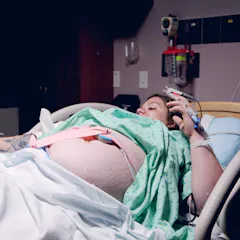
The evidence doesn’t necessarily support the widespread use of cardiotocography to monitor baby during labour. Women need to be aware there’s another option.
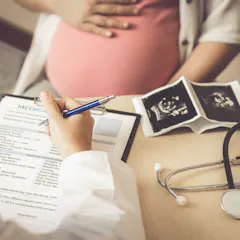
Tokophobia goes beyond normal childbirth concerns and worries and becomes an intense and irrational fear of pregnancy and/or labour.
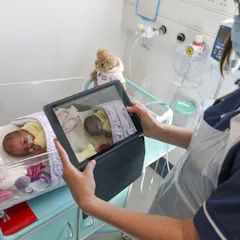
The way in which the pandemic has altered the maternity experience has unexpected echoes with expectant mothers during the second world war.

Newborn babies can pick up GBS from their mother’s vaginal tract during childbirth.
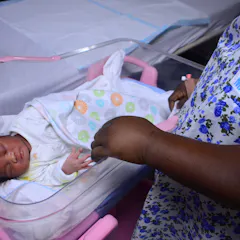
Unfortunately, disrespectful and neglectful treatment of women during childbirth, including verbal, physical and emotional abuse is not uncommon.
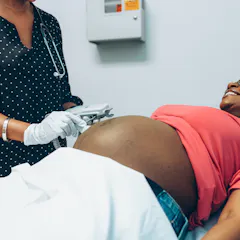
Measures put in place to curb the spread of COVID-19 may worsen the already poor access to quality maternal health services in parts of the continent.

Hypnobirthing aims to reduce fear and pain during childbirth. But while the evidence suggests it’s associated with decreased use of some pain medications, it doesn’t affect epidural rates.
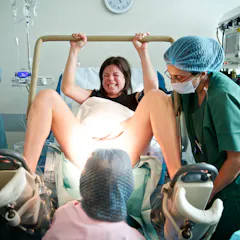
Most women in the US give birth lying flat on their back, anesthetized. An obstetrician investigates why this is and whether this is always the best approach.

Despite celebrity endorsements and growing popularity of the practice, there’s still little scientific proof to support these claims.

More places around the world are experiencing days with record high temperatures. These prolonged hot spells may have unanticipated impacts on pregnant women, triggering early deliveries.
Top contributors
-

Professor of Midwifery, Associate Dean Research and HDR, Midwifery Discipline Leader, Western Sydney University
-
Caroline Homer is a Friend of The Conversation.
Deputy Director (Gender Equity, Diversity and Inclusion), Burnet Institute
-
Professor of Midwifery, Monash University
-
Assistant Professor of Obstetrics, Gynecology and Reproductive Biology, Harvard University
-
Professor in Midwifery, University of Sydney
-
Professor of Maternal and Child Health, University of Stirling
-
Senior Lecturer in Midwifery, Monash University
-
Associate professor, University of California, San Francisco
-
Professor of Midwifery and Dean in the Faculty of Health Sciences, Southern Cross University
-
Senior Research Fellow in Maternal and Reproductive Health, University of Hull
-
Associate professor, London School of Hygiene & Tropical Medicine
-
Associate Professor of Midwifery, Western Sydney University
-
NHMRC Early Career Fellow, The Kids Research Institute Australia
-
Lecturer, King's College London
-
Postdoctoral Fellow, University of Warwick