
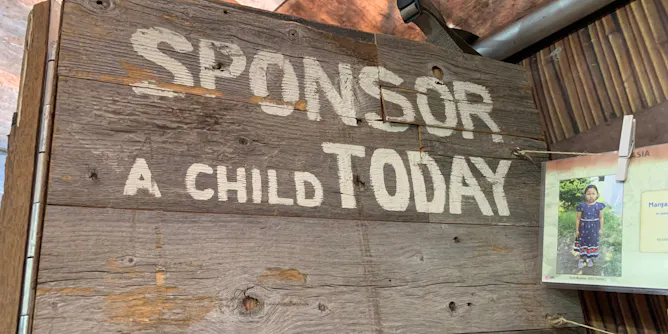
Child sponsorship is often billed as a significant way of improving children’s lives. However, sponsorship is based on narratives that fail to address the role of rich countries in global poverty.
Articles on Child poverty
Displaying 41 - 60 of 109 articles

Employing children as waste pickers lowers costs but exposes them to hazards.

States taking the strictest stands against abortion tend to have among the worst statistics in the nation on child and family well-being.

A tax credit expansion played a big role in child poverty reduction. But the government’s failure to reach all eligible Americans meant many families never got that temporary benefit.

One 11-year old girl told us she knows once rent is paid, there is almost nothing left over. So she never takes school excursion notes home, in case the cost is too much.

The late 1970s marked a high point for economic equality in the UK. Returning to the progressive policies that made that possible could solve today’s cost of living crisis.

An alternative approach to measuring poverty detected a decline in 2021, amid a surge in government support for low-income families.

Poverty reduction targets have largely failed to account for the pandemic or the cost of living crisis. This week’s budget seems unlikely to change that.
Australia has a wide gap in educational outcomes between children in poverty and their better-off peers. A new study indicates why reducing child poverty is the best way to lift our educational game.

The 2021 child tax credit expansion helped lift millions of families with children out of hunger. After those payments ended in December 2021, those families may again face food insufficiency.
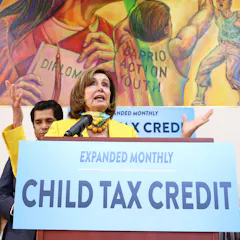
Proponents of using the child tax credit to alleviate poverty need to reach an agreement with those who insist that it must encourage low-income parents to work.

As the year ends, New Zealand has done well in important global measures of success. But closer to home, the numbers often told a different story.

Experts explain the significance of this new ‘allowance.’
The economic and emotional impact of COVID-19 has not been shared equally. Now is the time to start rebalancing that burden.

Students who have desks at home tend to do better academically. So why isn’t more attention given to this issue, as it is to the digital divide?

Many studies conducted in recent years tie lower poverty rates for children to better health and higher pay when they grow up.

For middle-class and wealthy families, securing government aid tends to be free of hassles. For low-income families, the process is often stigmatizing and the benefits meager.
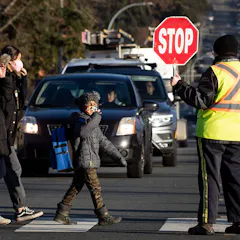
Comprehensive early childhood education, mental health support, internet connectivity and post-secondary funding are part of reducing the consequences of poverty so all students may excel.

This benefit, together with other features of the latest relief package, may greatly reduce child poverty.

Monthly payments to families with children could lift millions of US children out of poverty.
Top contributors
-

Director of the Roy McKenzie Centre for the Study of Families and Children, Te Herenga Waka — Victoria University of Wellington
-
Professor of Social Policy, University of York
-
Professor, Department of Social Policy, London School of Economics and Political Science
-
Distinguished Professor of Sociology and Public Policy, UMass Amherst
-
Chair professor, Glasgow Caledonian University
-
Professor of Law, University of Tennessee
-
Professor of Housing & Social Policy, HHAUS Housing, Homelessness & Urban Studies, Swinburne University of Technology
-
Professor of Public Policy and Economics, University of California, Berkeley
-
Professor of Law, University of Waikato
-
Reader in Food, Nutrition and Public Health, University of Westminster
-
Professor of Education and Social Policy; Director of the Institute for Policy Research, Northwestern University
-
Visiting Fellow, School of Policy Studies, University of Bristol
-
Honorary Associate Professor, Economic Policy Centre, Auckland Business School, University of Auckland, Waipapa Taumata Rau
-
Professor of Education and Public Policy, Durham University
-
Professor of Economics, University of Maryland; Director, Aspen Economic Strategy Group, University of Maryland