

As a child worker, Miss Huang might seem like an uncanny ghost of a bygone era of childhood. But she’s closer to a prophet, warning viewers about what a work-obsessed future holds.
Articles on Child labor
Displaying all articles
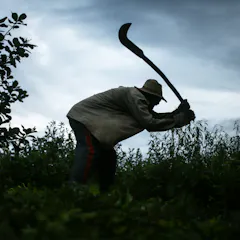
To stop a crime, it helps to understand who these criminals are and how they think.

Family vlogging can seem benign, even heartwarming. But kids can’t consent to appear in these videos − and, in most states, have no claim to any of the earnings.
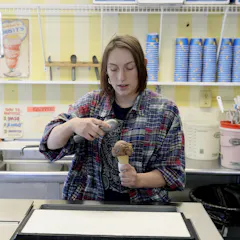
Better training and supervision make younger workers less vulnerable to injuries.
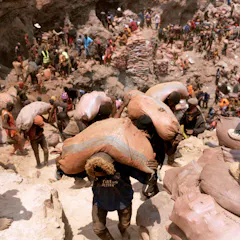
A new EU law would require thousands of multinational companies, including many based in the US, to look for signs of human rights abuses in their supply chains.
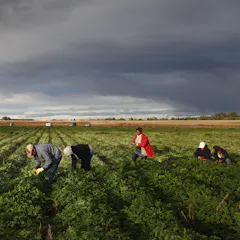
Agriculture is one of the most dangerous industries in the US, with workers exposed to vehicles, chemicals and heavy equipment. Women working on farms face another risk: sexual assault.
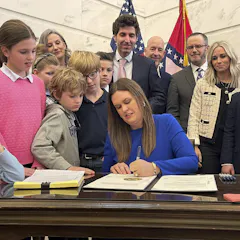
Some of the biggest changes to child labor laws are in Iowa and Arkansas.
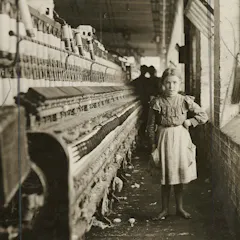
While Lewis Hine’s early-20th century photographs of working children compelled Congress to limit or ban child labor, the US Department of Labor is now under fire for failing to enforce these laws.

If we have learned anything from the fight against modern slavery, it is that addressing the issue takes extensive time, resources and long-term commitments.

Two food scientists, an entomologist, an anthropologist, a veterinarian and a historian walk into a bar (of chocolate) and tell bitter and sweet stories of this favorite treat.
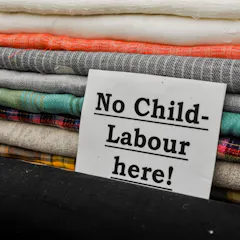
While it may be challenging for organizations to manage all the activities within their global supply chains, there are best practices they can adopt to prevent modern slavery.
Global estimates of modern-day slavery by the United Nations reveal improving methods for calculating the data.

An anthropologist writes that despite best efforts, there is no guarantee that children may not have been exploited in the production process of chocolate.

War rugs are more reflections of market forces than memorials to suffering.
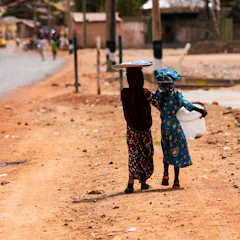
Children’s work circumstances put their welfare in danger, policy and action are needed urgently from government and non-governmental organisations.
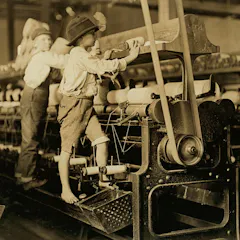
More than a fifth of US children were working in 1900, and many Americans saw nothing wrong with that. It took decades of activism and court battles plus economic upheaval to change course.

All 36 states in Nigeria must adopt the Child Rights Act to safeguard their children.

The food we eat and the products we use should not contribute to human misery. While companies hold some blame, so do consumers who avoid dealing with the consequences of their purchasing decisions.

July 30 marks the United Nations’ World Day Against Trafficking in Persons. How can computer scientists help combat this problem?
Top contributors
-

Professor of Anthropology, Rochester Institute of Technology
-
Associate Professor of Political Science, University of Richmond
-
Assistant Professor of American History, Bard College
-
Associate Professor of Political Science, Kansas State University
-
Senior Lecturer & Head, Department of Social Work, Faculty of Social Sciences,, University of Benin
-
Assistant Professor of Business Law, University of Connecticut
-
Senior Lecturer in Law, London South Bank University
-
Senior Food Scientist at the CSU Spur Food Innovation Center, Colorado State University
-
Assistant Professor of Business & Society, Beedie School of Business, Simon Fraser University
-
Ph.D. Candidate in Rural Sociology & International Agriculture and Development, Penn State
-
Associate Teaching Professor of Supply Chain Management, Thompson Rivers University
-
Assistant Director of the Program in Community Action, Connecticut College
-
Associate Professor of Supply Chain Management, Thompson Rivers University
-
Visiting Scholar, University of California, Berkeley
-
Lecturer in Law, University of Hull