
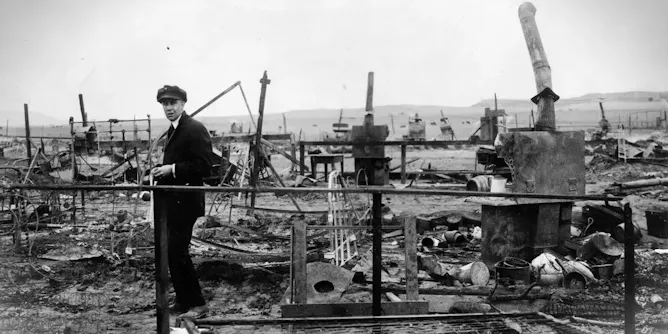
The Ludlow strike was one of the most bitter and violent in U.S. labor history.
Articles on Labor history
Displaying 1 - 20 of 21 articles

The former senator rose to great influence during the Hawke and Keating Labor governments, but his career was also marked by controversy.

The retirement of United Mine Workers of America’s longtime president is a reminder that labor and religion have always been entangled in coal country.
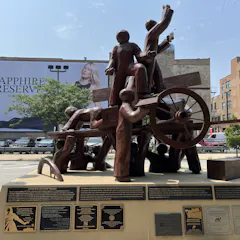
Both holidays arose at the same time, nearly 150 years ago, in the midst of an explosive labor uprising.
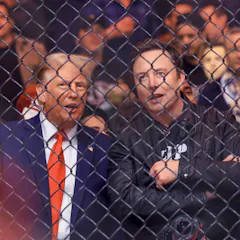
The struggle has yielded both compromises and new strips of red tape for more than 100 years.
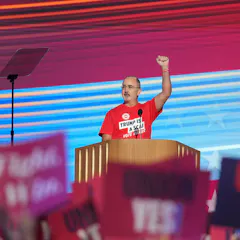
It’s too reductive to simply smear scabs as sellouts. It’s important to understand why some workers might be motivated to weather scorn, rejection and even violence from their peers.
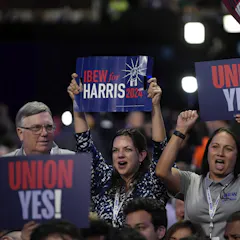
Both sides took this marriage for granted until Southern Democrats, concerned that labor unions would organize Black workers across the South, joined pro-business Republican colleagues in Congress.

On March 7, workers at the Ford Rouge River plant marched for better working conditions, sparking America’s labor movement. Almost a century later, a quiet park honors their memory.

A memorial at the site of the 1911 fire remembers those who died; a cadre of young Jewish women helped push for change in the wake of the tragedy.
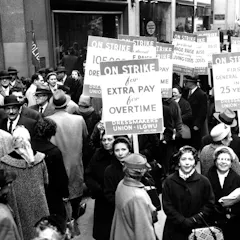
Many of the reasons for strikes now – low compensation, technological change, job insecurity and safety concerns – mirror the motives that workers had for walking off the job in decades past.
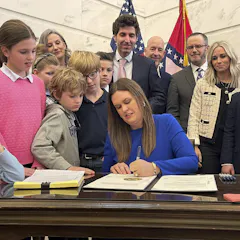
Some of the biggest changes to child labor laws are in Iowa and Arkansas.
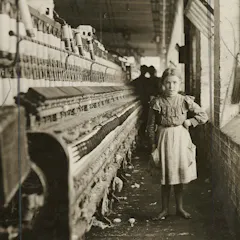
While Lewis Hine’s early-20th century photographs of working children compelled Congress to limit or ban child labor, the US Department of Labor is now under fire for failing to enforce these laws.
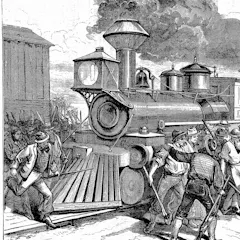
President Joe Biden called on Congress to intervene to avoid a strike that he said would ‘devastate our economy.’

The country’s reliance on ‘at-will’ employment means that companies face few restrictions when they want to downsize their workforces.
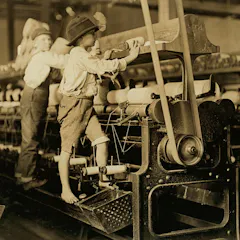
More than a fifth of US children were working in 1900, and many Americans saw nothing wrong with that. It took decades of activism and court battles plus economic upheaval to change course.
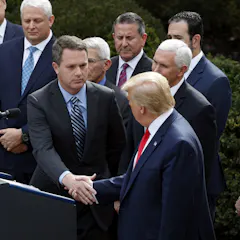
If government and business collaborate with workers, a scholar of labor relations writes, current economic problems could get less severe, the recovery smoother and lasting prosperity more likely.
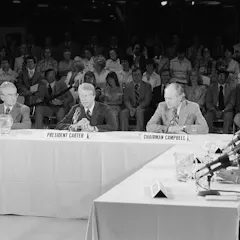
It’s dismantling the Office of Personnel Management and relocating hundreds of USDA research jobs on short notice.

In the abstract, this near-mythic figure represents bravery, hard work and manliness.
Nearly one in five employed Americans is bound by a contract restricting moves to rival companies. Here’s one way to make those arrangements less common.
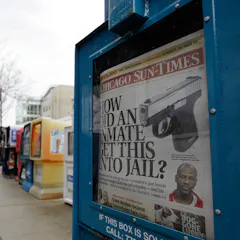
Giving labor unions a financial stake in a company such as a newspaper can offer unique advantages that could benefit employees, society and the bottom line.
Top contributors
-

Assistant Professor of American History, Bard College
-
Professor Emeritus of Management, Colorado State University
-
Professor of U.S. History and Labor Studies, UMass Lowell
-
Research Scholar, Boise State University
-
Curator and Head of Special Collections and Gallery, University of Maryland, Baltimore County
-
Associate Professor of Political Science, Kansas State University
-
Professor of Sociology, University of Michigan-Dearborn
-
Associate Professor of Sociology and Director of the Labor Center, UMass Amherst
-
Associate Professor of History, Chatham University
-
Assistant Professor of Communication, California State University San Marcos
-
Professor of History, University of Rhode Island
-
Professor of Social Work and Judaic Studies, University of Michigan
-
Associate Professor of American Literature, University of North Georgia
-
Assistant Professor of Political Science and Public Law, California State University, Los Angeles
-
Professor of History, University of Illinois Chicago