

It’s very metal.
Articles on Chemistry
Displaying 41 - 60 of 447 articles

Breweries nationwide create waste at several stages of the beer-making process. Repurposing parts of this waste could improve antibacterial drugs.
Unstable atoms emit fast-moving particles that can damage cells in the human body. Some atoms are far more unstable than others.

By trapping different molecules, metal-organic frameworks could make for efficient breath sensors that predict lung disease, cancer or diabetes.
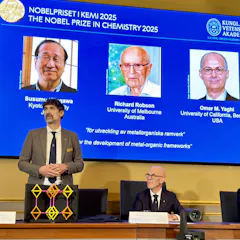
Just a gram of these tiny crystals can have an internal surface area as big as a soccer field. A materials expert explains the almost magical chemistry of MOFs.
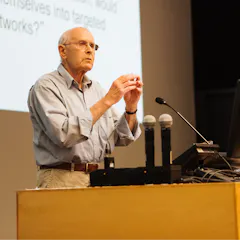
Richard Robson was struck by an idea in 1989. Decades later, his story shows the importance of fundamental science.
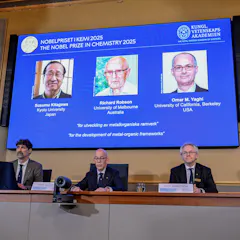
The metal-organic frameworks discovered by the three scientists are helping to revolutionise green technology and many other areas.
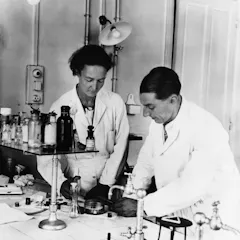
Marie Curie’s daughter Irene continued her family’s Nobel legacy by discovering artificial radioactivity.

An environmental engineer explains how his research team is developing a system containing bacteria, biochar and gel to break down pollutants in waterways.

A planetary scientist walks through the sensors and systems that went into the recent detection of potential biosignatures.

When a corpse flower bloomed on campus, atmospheric scientists got to work. What they discovered provides new evidence about the unique pollination strategies of a very unusual flower.
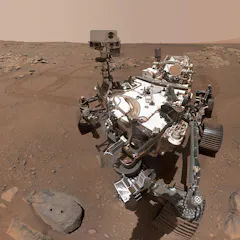
Unique, spotted rocks in Mars’ Jezero Crater could indicate that the planet once hosted life.

Two new studies challenge scientists’ previous theories on how the very first stars in the universe formed.

Mustard gas exposure is dangerous and traumatic – scientists are coming up with ways to detect its presence in the environment.
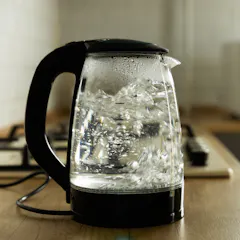
You may have heard that re-boiling water is not good for you. Here’s the truth.
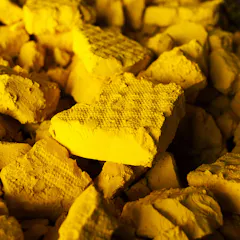
Uranium enrichment concentrates one specific type of the atom to create a substance that can generate massive amounts of energy.
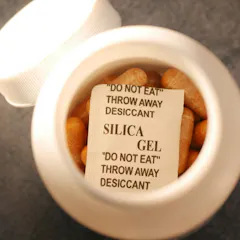
Preventing mould, decay and saving your phone after dropping it in water. What else can desiccants do?

Chemical manufacturing is an energy-intensive industry. A team of chemists is designing a technique that could power the necessary reactions with sunlight or LEDs.

This process of looking and asking questions about what you are looking at is needed at all levels of science, and science students can learn through arts-inspired visual analysis.
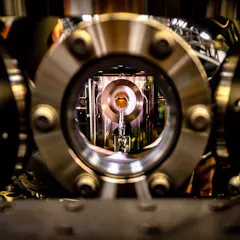
Quantum computers are getting closer and closer to being useful in the real world.
Top contributors
-

Professor of Science Communication and Chemistry, University of Hull
-
Senior Lecturer in Chemistry, University of Birmingham
-
Associate Professor in Chemistry and Associate Head Learning and Teaching, University of Tasmania
-
Associate Professor of Chemistry, University of Richmond
-
Assistant Professor of Chemistry, Trinity University
-
Honorary Associate Professor, University of Leicester
-
Senior Lecturer in Chemistry, Swinburne University of Technology
-
Associate Professor of Chemistry, University of Richmond
-
Postdoctoral research associate, University of Oxford
-
Professor of Chemistry, UNSW
-
CBRN defence scientist, Charles Darwin University
-
Materials Chemist and Science Communicator, University of Sheffield
-
Professor (Food Science & Human Nutrition), Singapore Institute of Technology
-
Associate professor, Monash University
-
Professor, The University of Queensland