

A study found 5-year-olds were more likely to cheat on a task after researchers told them they were smart.
Articles on Cheating
Displaying 1 - 20 of 72 articles

The resignation and death of the Cambridge professor is the latest chapter in a centuries-old struggle over originality and intellectual ownership – one intensified by the rise of generative AI.

If this new development – designed to show if a text is AI-generated – sounds too good to be true, that’s because it is.

As schools consider AI guidelines, educators are also thinking about how they can adjust their assignments to accurately measure what students are actually learning.

Power and pleasure collide with Black hopes and dreams in the show that has sparked global conversation.

Students have always cheated in exams. But instead of handwritten notes, they might now use AI-enabled glasses.

Research has found that when you manipulate people to doubt free will, bad things happen – including cheating and aggression. But does it hold up?
Some students might arrive at college with already formed cheating habits, and a mentality that justifies the practice.

A philosopher of sport guides readers through the ethics of Diego Maradona’s most celebrated goal – and his most controversial.

A sociologist who researches AI’s impact on work and education argues there are ethical dimensions to generative AI that institutions are not considering.

Unusual words or punctuation may serve as ‘tells’ that something has been written by a chatbot. But even with that knowledge, most people struggle to discern human writing from AI-generated text.

The online reaction to the extra-marital affair that was caught on the Jumbotron at a Coldplay concert raises the question: why does infidelity, especially among the powerful, provoke such public outrage?
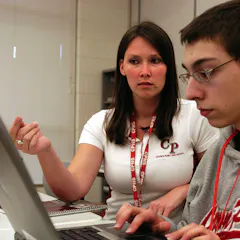
If educators want to make valid inferences about what students know and can do, assessments like drafts, works-in-progress and repeated observations of student learning are needed.

Everyone knows a kid who cheats at Monopoly, backyard cricket or perhaps even a test at school.
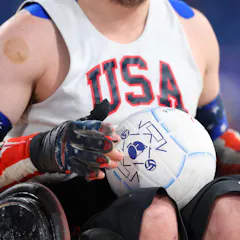
Parasports couldn’t exist without classifying competitors by their physical and mental limitations. But the process is far from perfect, and a handful of athletes have tried to game the system.

This incident potentially impacts the nation’s international reputation and trust in Canadian athletes and raises questions about Canada’s commitment to ethical standards in sports.

Since ChatGPT was released a year ago, we have been asking Australian university students and academics about their use of generative AI.
A survey about college writing instructors’ fears and anxieties about AI demonstrates that student cheating isn’t their only concern. And in fact, many have embraced it as a teaching tool.

Will allowing doping open new horizons of sports performance?

Schools are blocking access to ChatGPT on their computers to try to prevent students from cheating. Two experts on academic cheating offer a very different strategy.
Top contributors
-

Senior Lecturer in Ethics, Department of Sport and Exercise Sciences, Swansea University
-
Associate Professor, College of Information & Communication Technology, School of Engineering and Technology, CQUniversity Australia
-
Professor of Philosophy, Wake Forest University
-
Professor of Educational Psychology, University of Wollongong
-
Roger J. Kreuz is a Friend of The Conversation.
Associate Dean and Feinstone Interdisciplinary Research Professor, University of Memphis
-
Thomas Lancaster, Imperial College London
-
Professor of Film & Media Studies, University of California, Irvine
-
Professor, Director of the Centre for Robotics, Queensland University of Technology
-
Lecturer in Social Psychology, Lancaster University
-
Director of Undergraduate Programs, Texas Woman's University
-
Associate Professor; Director: Academic Integrity, Adelaide University
-
Assistant Professor of English, Texas Woman's University
-
Professor of English and Education, Central Michigan University
-
Associate Director: Curriculum Development and Support, Teaching Innovation Unit, Adelaide University
-
Professor of Business Administration, Harvard University