

Some students might arrive at college with already formed cheating habits, and a mentality that justifies the practice.
Articles on Exam cheating
Displaying all articles

AI models can now produce meaningful responses to exam and assignment questions. We’ll have to embrace them if we want the next few years to go smoothly.

A new study of academic integrity policies and practices at 41 Australian universities found little evidence of changes to deal with cheating and academic misconduct arising from online assessment.
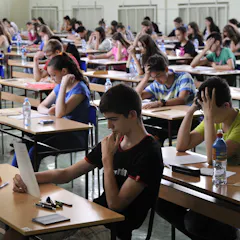
When COVID forced exams online, reports of cheating were rife and proctoring software was problematic. But in-person exams are also flawed, so now’s the time to rethink how assessment works.

Recent allegations of cheating by university students in online exams suggest the students are adapting faster than the education system itself – and that should change.

In order to keep students honest, research suggests that educators should focus on what’s driving them to learn in the first place.
If you’re feeling guilt or shame about something, there are several proven ways to move past it. First, take responsibility and, then, forgive yourself. Here’s how to do that.
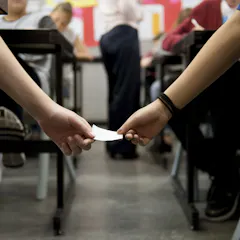
What is cheating? Sometimes, teachers and academics disagree on exactly what constitutes academic misconduct, but getting someone to proofread your work is generally considered fine.

Authentic assessment is perceived as being harder to outsource, and has been adopted by many Australian university teachers. But that doesn’t mean students won’t still cheat on them.

Online students tend to be older, which might explain why new data suggest they’re less likely to cheat. But even with these data, the evidence is mixed.

Changes to student assessment can help to reduce the potential for academic misconduct.

It doesn’t matter how assessments are given to students, as students can still find a way to cheat.
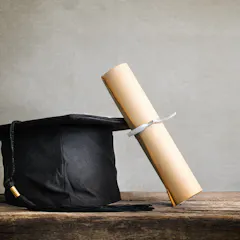
Fake degrees are bad news for universities and employers.
Top contributors
-

Thomas Lancaster, Imperial College London
-
Associate Director: Curriculum Development and Support, Teaching Innovation Unit, Adelaide University
-
Pro vice-chancellor (Education and Quality), Swinburne University of Technology
-
Senior Lecturer in Communication, Deakin University
-
Associate Professor of Education, Texas State University
-
Associate Professor, College of Information & Communication Technology, School of Engineering and Technology, CQUniversity Australia
-
Teaching Consultant, Te Kunenga ki Pūrehuroa – Massey University
-
Professor and Associate Director of the Centre for Change and Complexity in Learning (C3L), Education Futures, Adelaide University
-
Associate Professor & Enterprise Research Fellow in Education Futures, Adelaide University
-
Professor of Psychology, Flinders University
-
University Teaching Consultant, Te Kunenga ki Pūrehuroa – Massey University
-
Research Analyst, Columbia University
-
Honorary Fellow, The University of Melbourne
-
Professor and Director, Mitchell Institute, Victoria University
-
Associate Professor; Director: Academic Integrity, Adelaide University